


Numerical Investigation of Inlet Pressure Perturbations Effects on Hydrogen-Fueled Rotating Detonation Characteristics
-
摘要: 为研究进口压力扰动对旋转爆轰波(Rotating Detonation Wave,RDW)传播特性的影响,本文基于OpenFOAM平台,采用二维欧拉方程,在进口处施加高频小幅(5 kHz/0.1 MPa)压力扰动,对不同当量比(equivalence ratio,ER)条件下的旋转爆轰特性进行了数值研究。结果表明,不同当量比下的RDW波数及传播模态对进口压力扰动具有显著响应,其变化主要受双波对撞过程及爆轰波前反应物填充特性的共同影响。燃烧室通过自适应调整平衡了能量释放和RDW稳定传播,使系统最终稳定在不同波数的非线性动态平衡状态。在压力扰动作用下,燃烧室内RDW各项特征和参数随扰动频率发生周期性响应,其中RDW结构对扰动更为敏感。当量比及RDW传播模态则共同决定了燃烧释热水平及出口推力,其中比冲主要受当量比控制,与RDW波数变化的相关性较弱。总体而言,高频小幅进口压力扰动主要影响旋转爆轰波的波动结构和传播模态,而对整体性能参数平均特性的影响有限。Abstract: To investigate the effects of inlet pressure perturbations on the propagation characteristics of rotating detonation waves (RDWs), numerical simulations were conducted using the OpenFOAM platform and the two-dimensional Euler equations coupled with detailed chemical kinetics. A two-dimensional unfolded rotating detonation combustor model was established to represent the annular chamber. Periodic boundary conditions were applied in the circumferential direction, and non-reflecting boundary conditions were imposed at the outlet. Discretized premixed injection units were specified at the inlet to simulate the reactant supply process. High-frequency, small-amplitude pressure perturbations with a frequency of 5 kHz and an amplitude of 0.1 MPa were superimposed on the inlet total pressure with a mean value of 1 MPa, while the inlet total temperature was fixed at 300 K. Hydrogen–air mixtures with equivalence ratios ranging from 0.6 to 1.6 were considered to examine the influence of reactant composition on RDW behavior under perturbed inlet conditions. The governing equations were solved using a density-based compressible reacting-flow solver with a finite-volume discretization scheme. Convective fluxes were calculated using the KNP central-upwind scheme with a van Leer limiter, and time integration was performed using a second-order Crank–Nicolson method. A detailed hydrogen–air chemical reaction mechanism consisting of 27 elementary reactions was employed to capture detonation dynamics. The results indicate that the RDW wavenumber and propagation mode exhibit significant responses to inlet pressure perturbations at different equivalence ratios, which are mainly governed by the dual-wave collision process and the reactant replenishment characteristics ahead of the detonation front. The combustor adaptively balances the energy release and stable RDW propagation, allowing the system to stabilize at different wavenumbers through a nonlinear dynamic equilibrium. Under inlet pressure perturbations, flow parameters and RDW characteristics exhibit periodic responses at the perturbation frequency, with the RDW structure being more sensitive to the perturbations. The equivalence ratio and RDW propagation mode jointly determine the combustion heat release level and the outlet thrust, whereas the specific impulse is primarily controlled by the equivalence ratio and shows a weak correlation with the RDW wavenumber. High-frequency, small-amplitude inlet pressure perturbations mainly affect the wave structure and propagation mode of RDWs, while the mean performance parameters are only weakly influenced.
-
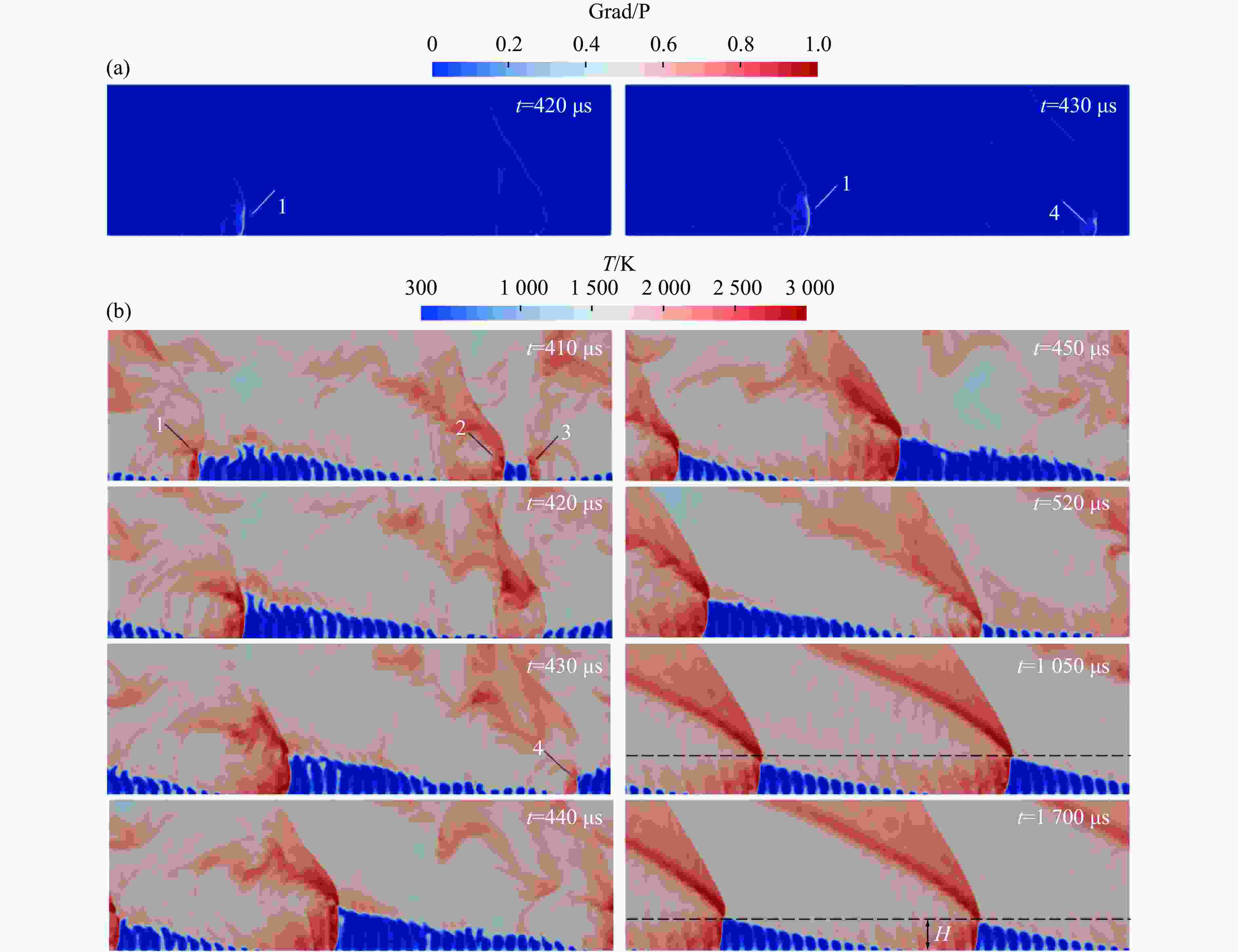
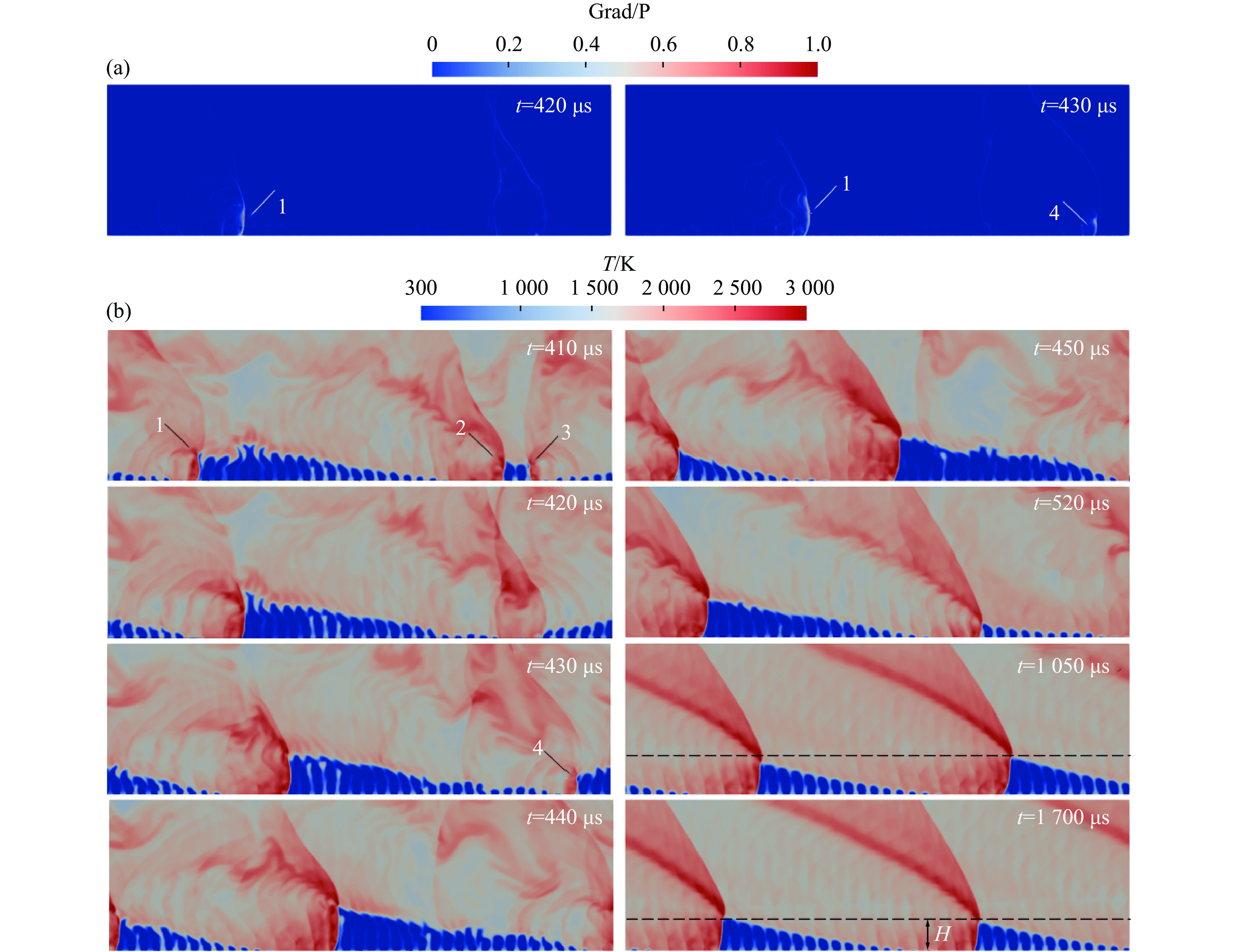
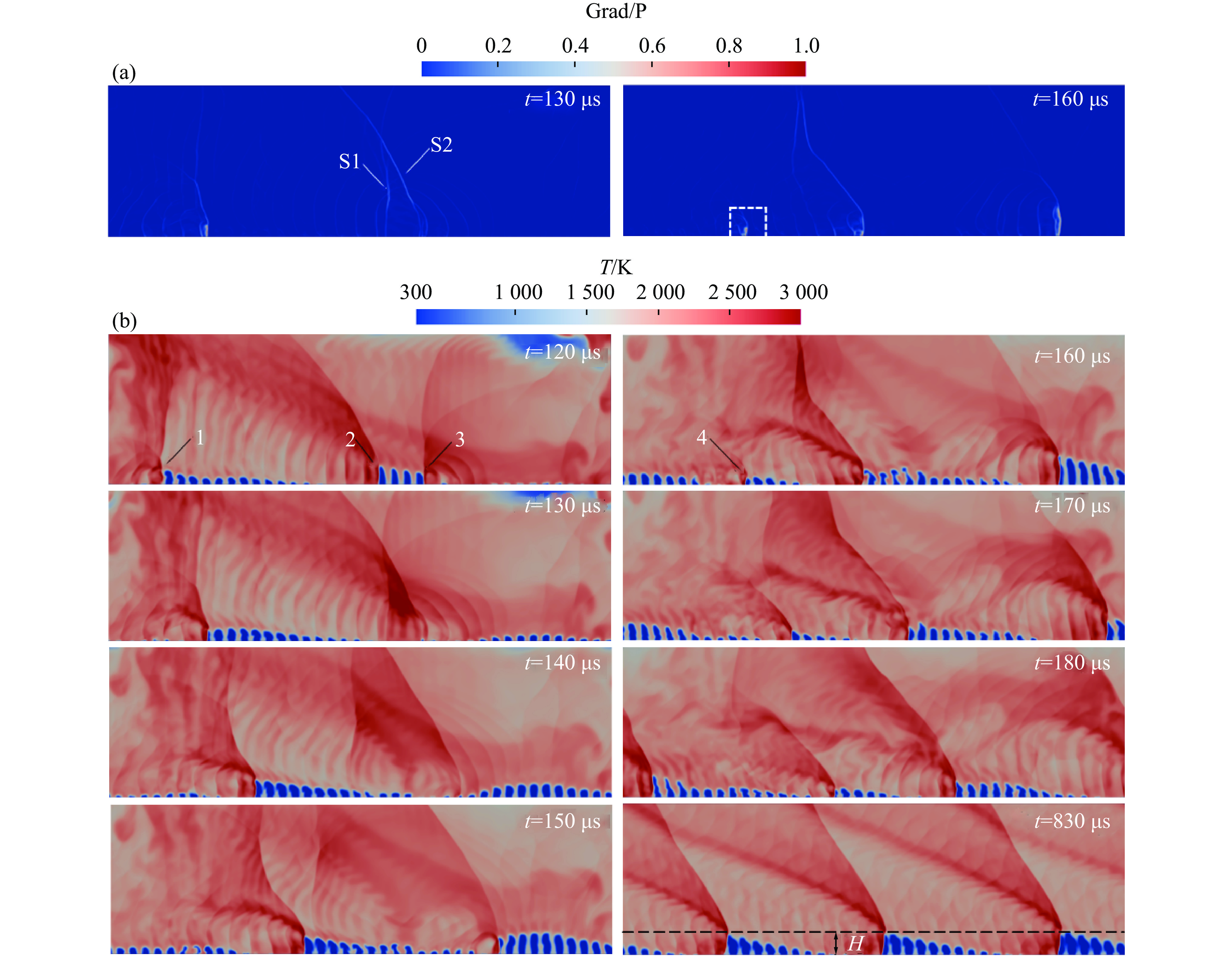
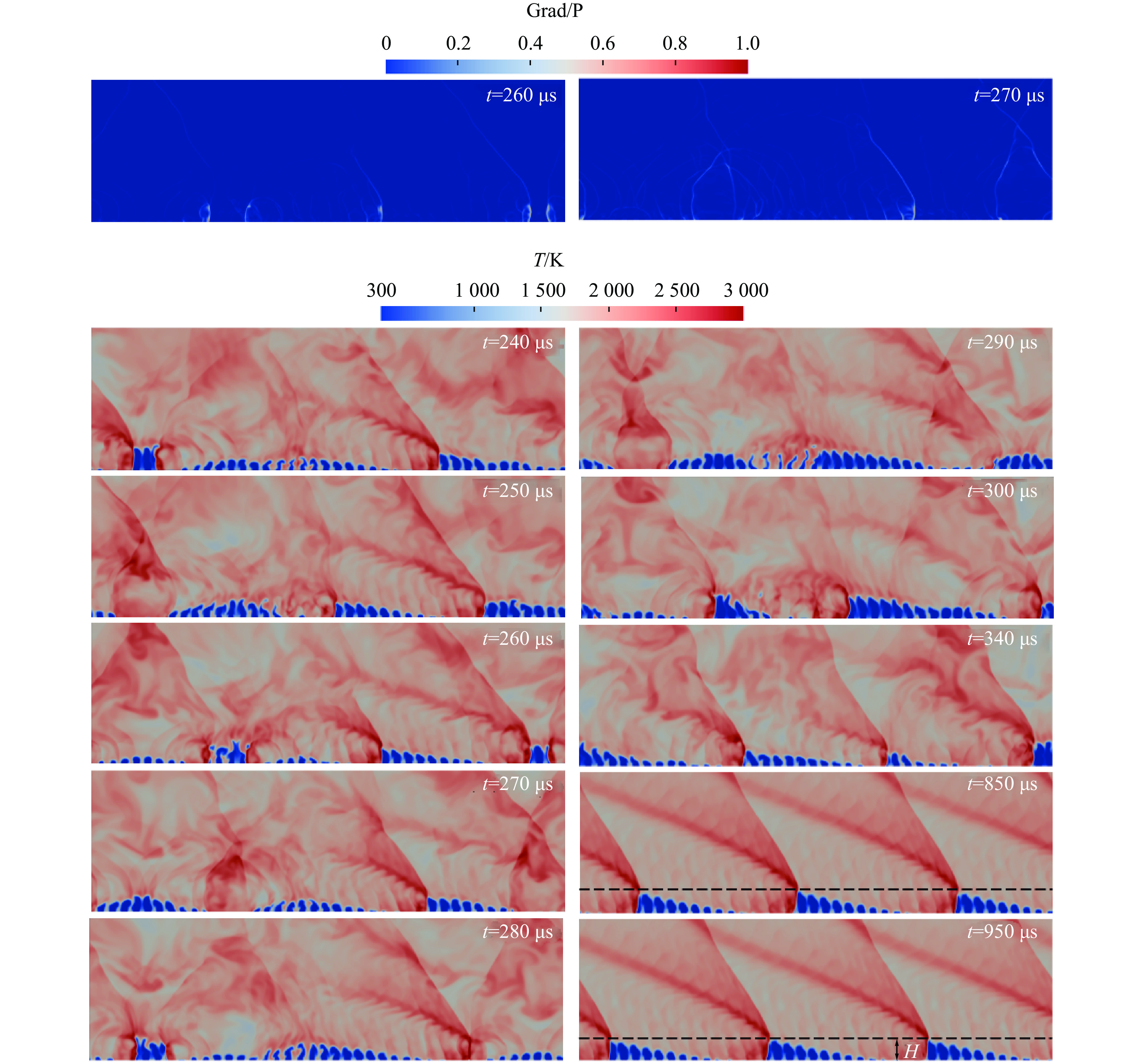
图 5 Case 2中不同时刻的压力梯度与温度云图
Figure 5. Pressure gradient and temperature contours at different times in Case 2
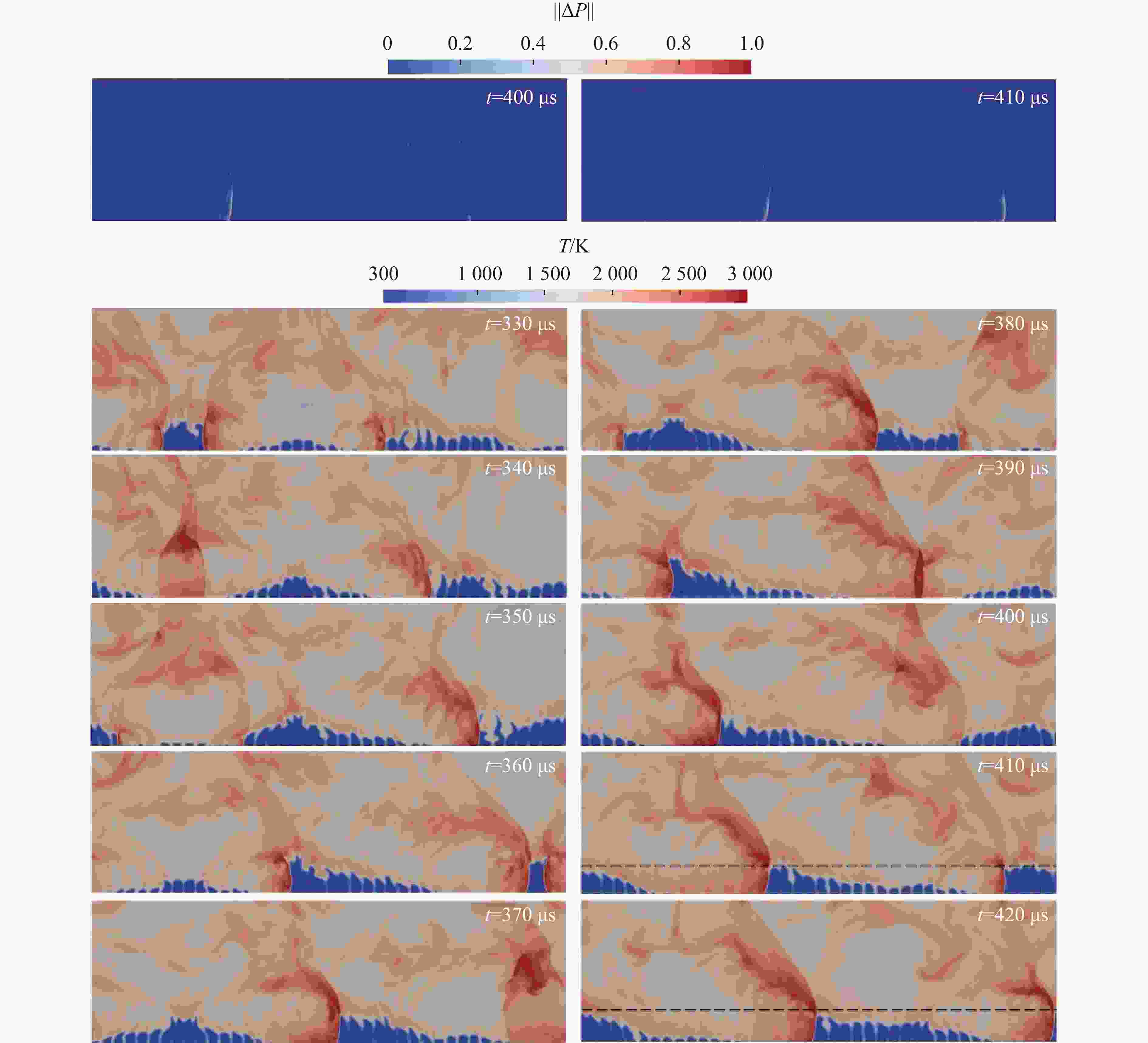
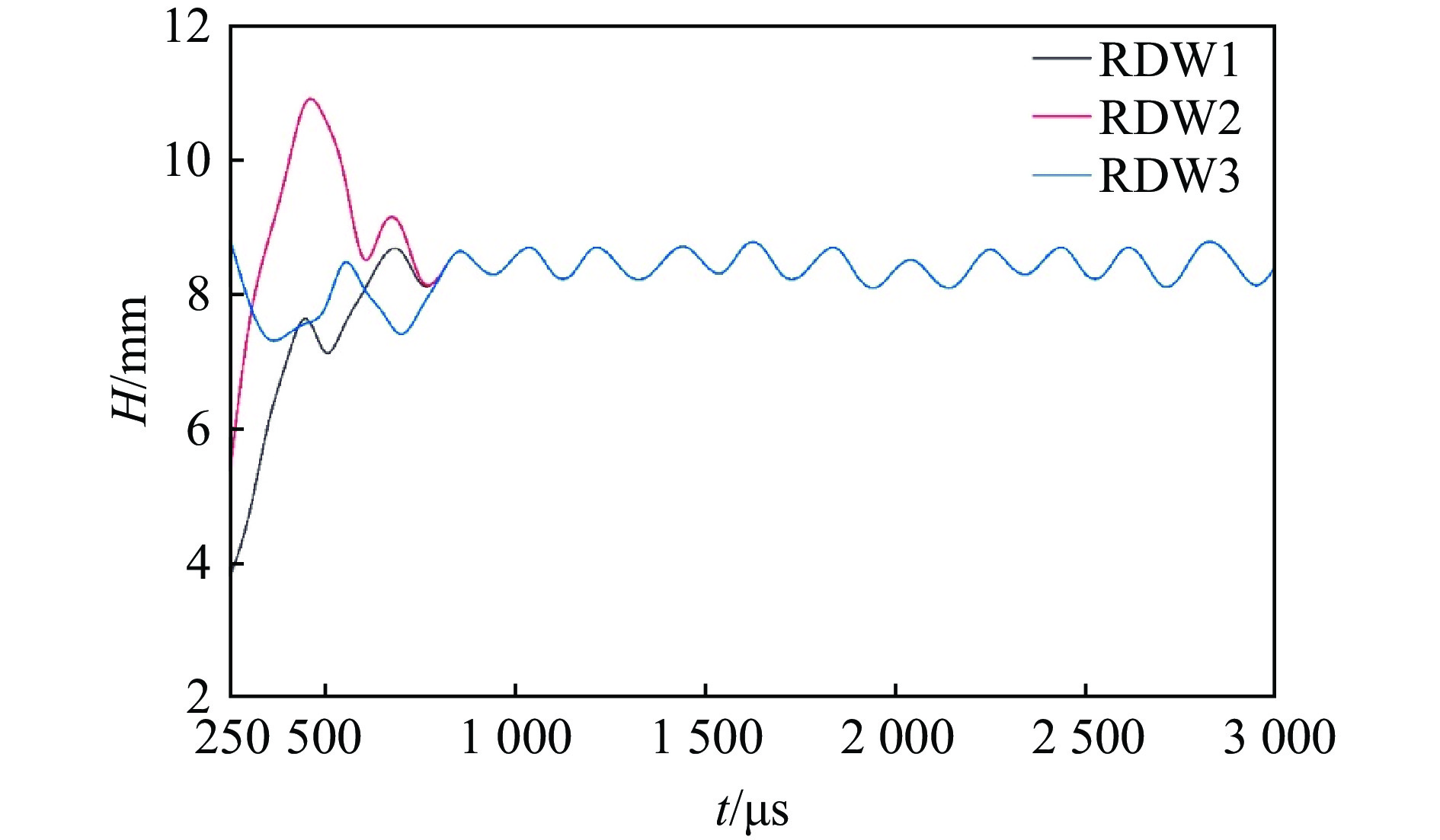
图 7 Case 6中不同时刻的压力梯度与温度云图
Figure 7. Pressure gradient and temperature contours at different times in Case 6
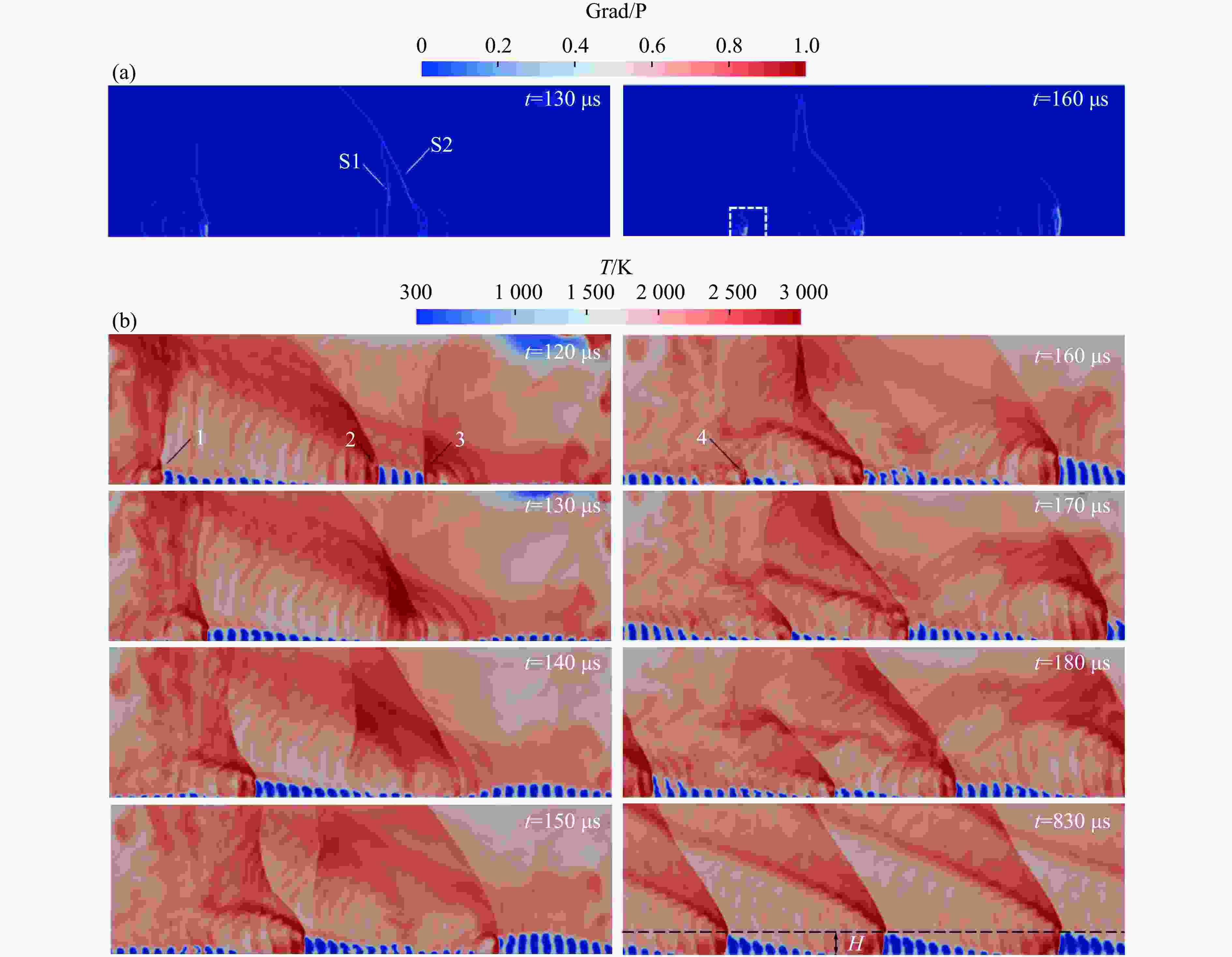
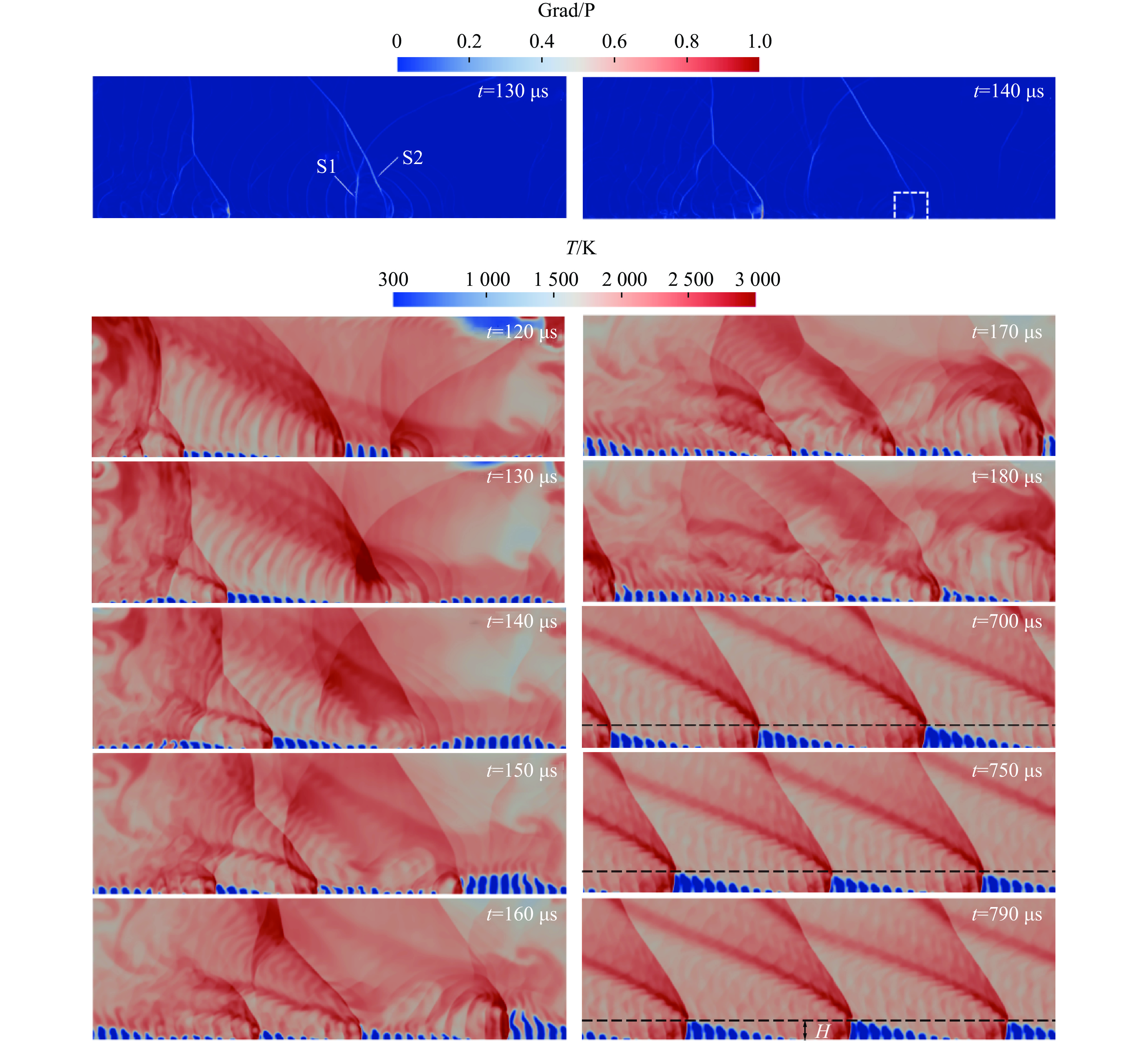
图 8 Case 3中不同时刻的压力梯度与温度云图
Figure 8. Pressure gradient and temperature contours at different times in Case 3
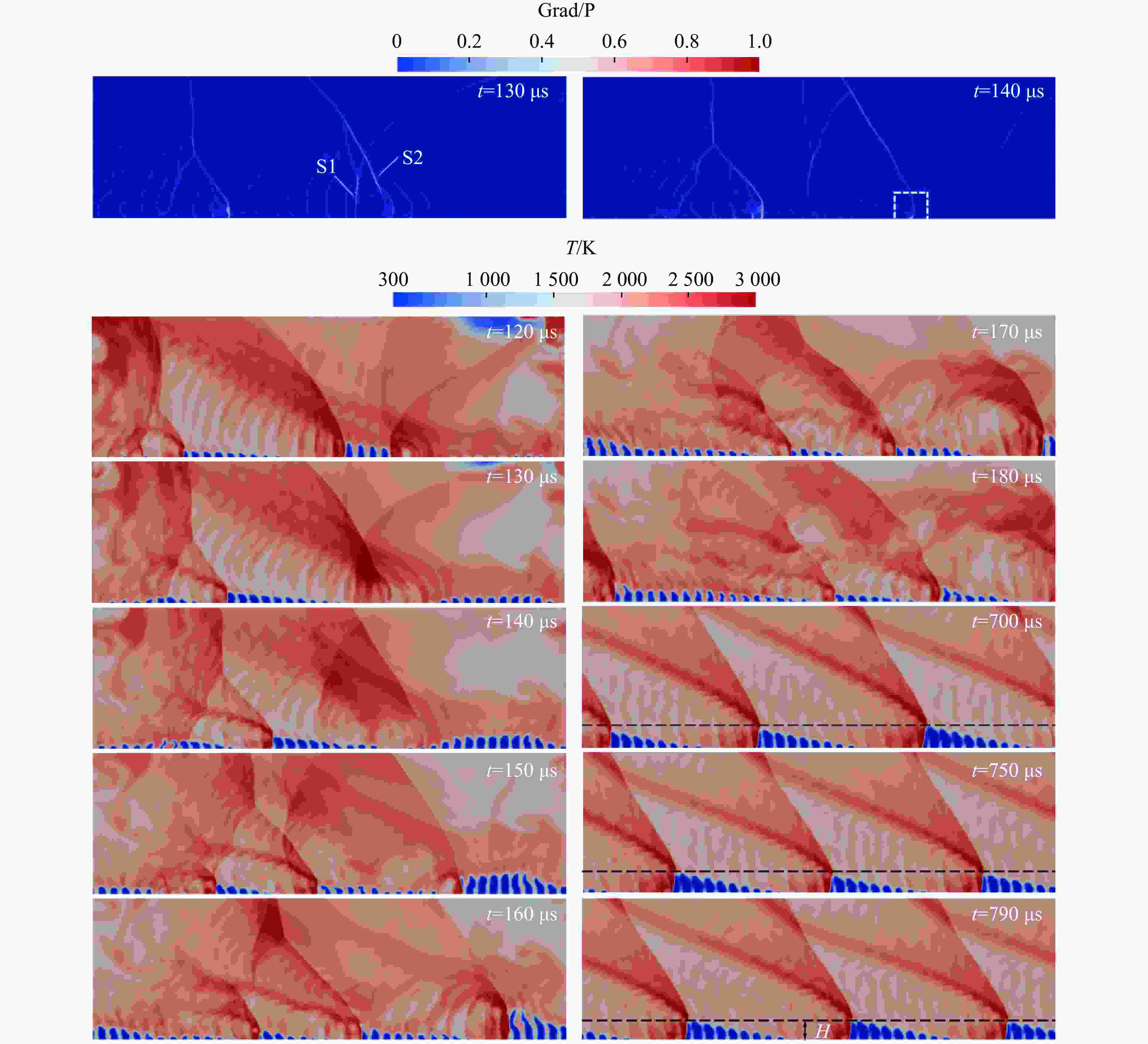
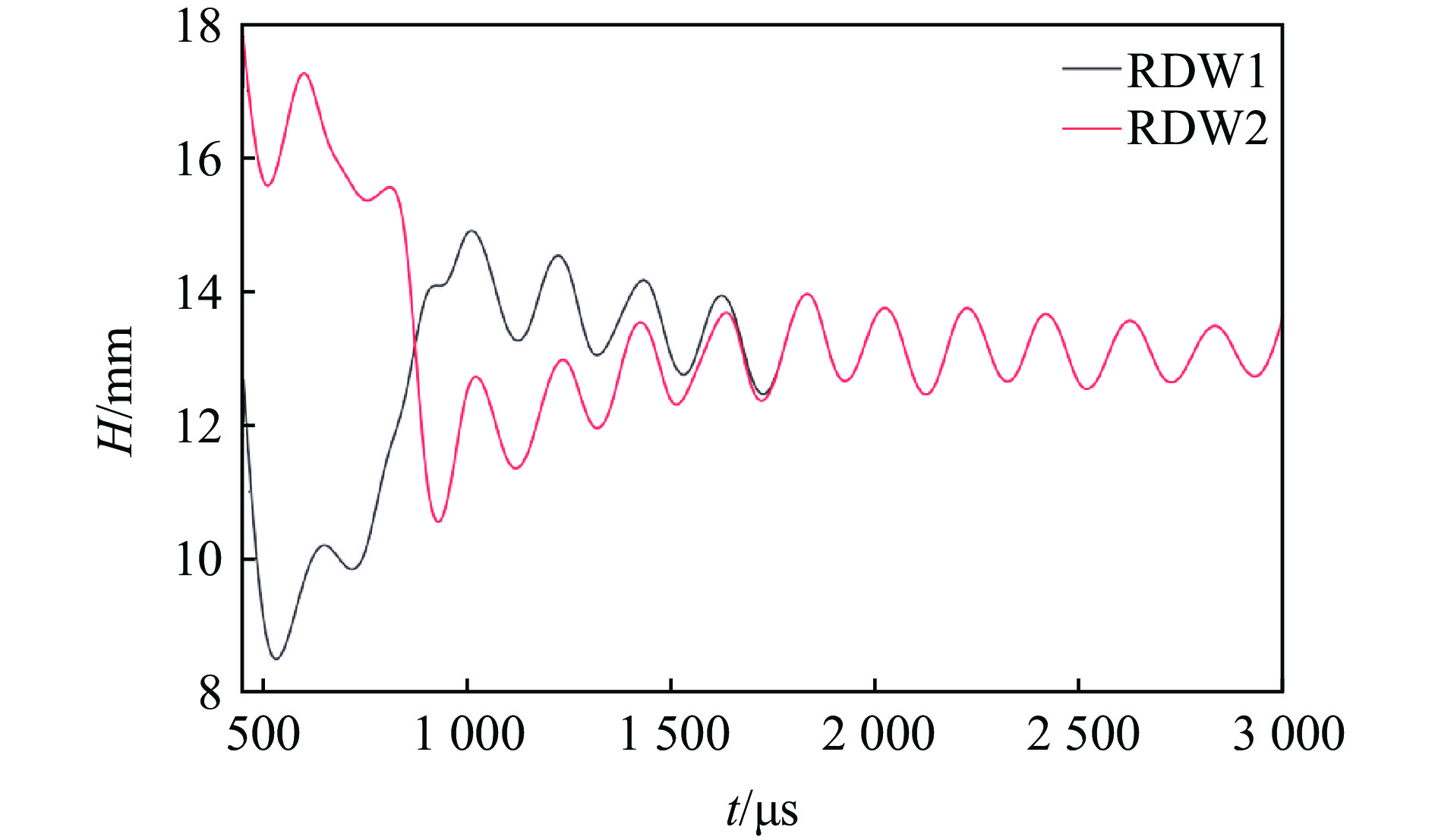
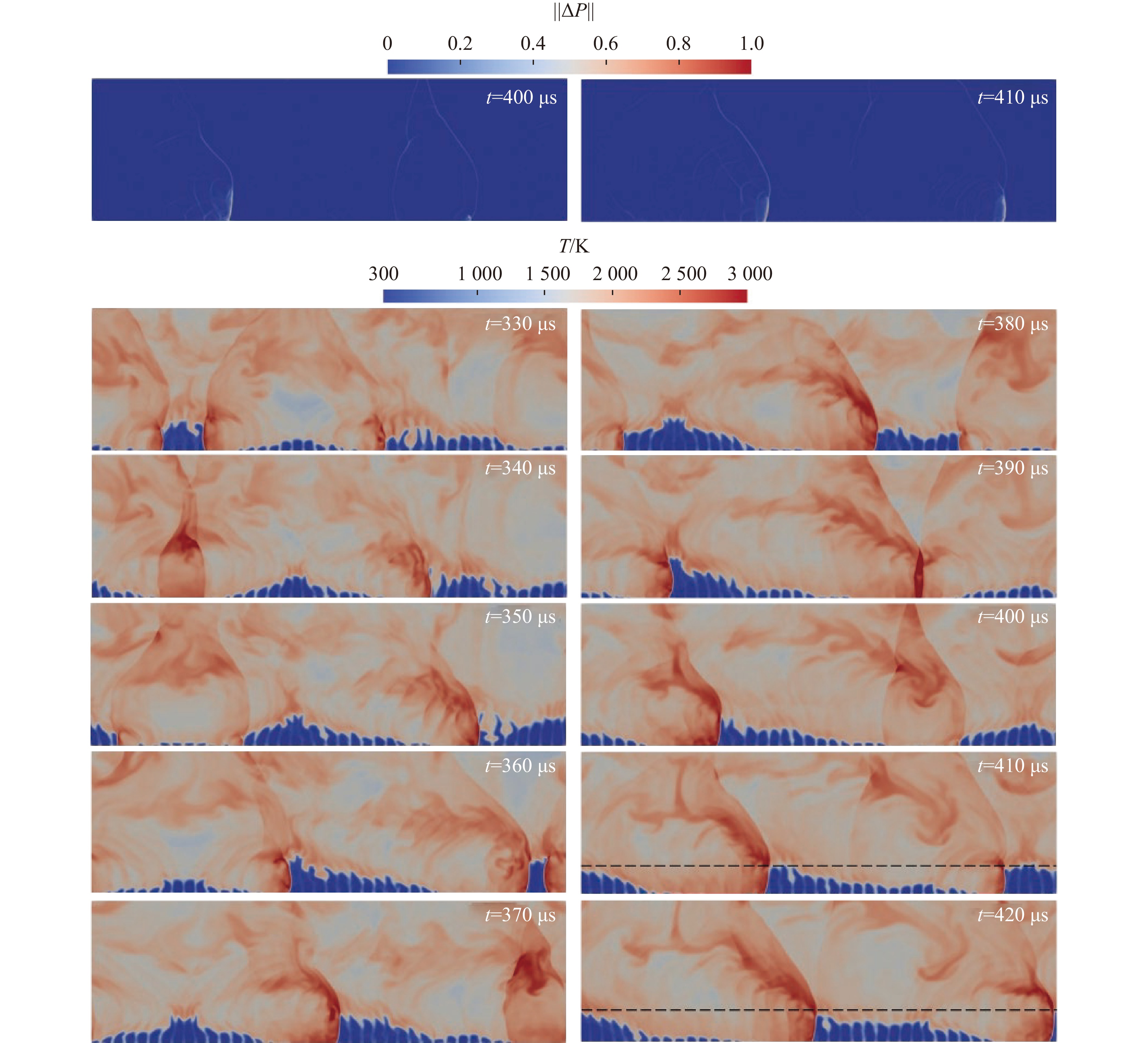
图 10 Case 4中不同时刻的压力梯度与温度云图
Figure 10. Pressure gradient and temperature contours at different times in Case 4
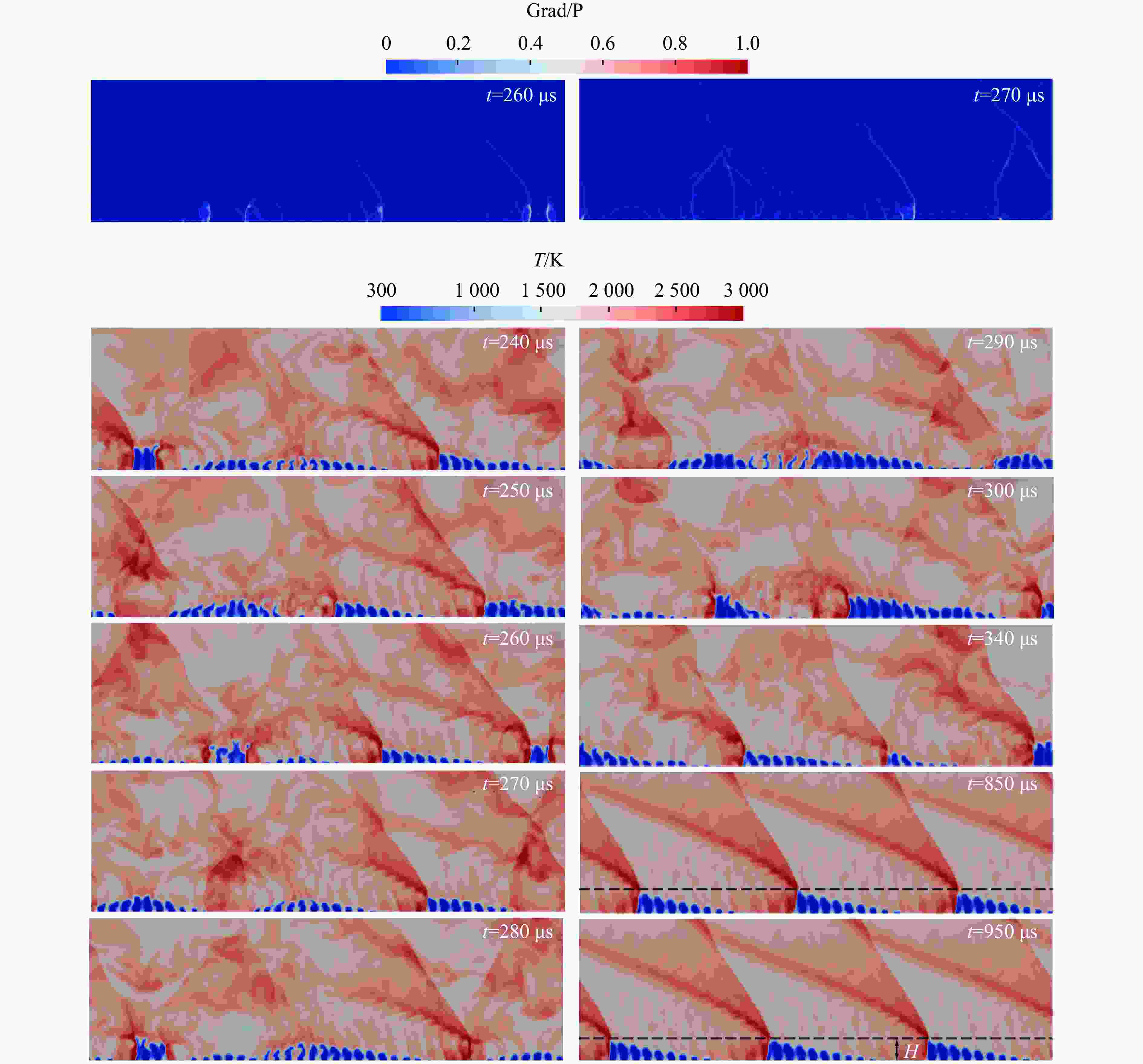
图 11 Case 5中不同时刻的压力梯度与温度云图
Figure 11. Pressure gradient and temperature contours at different times in Case 5
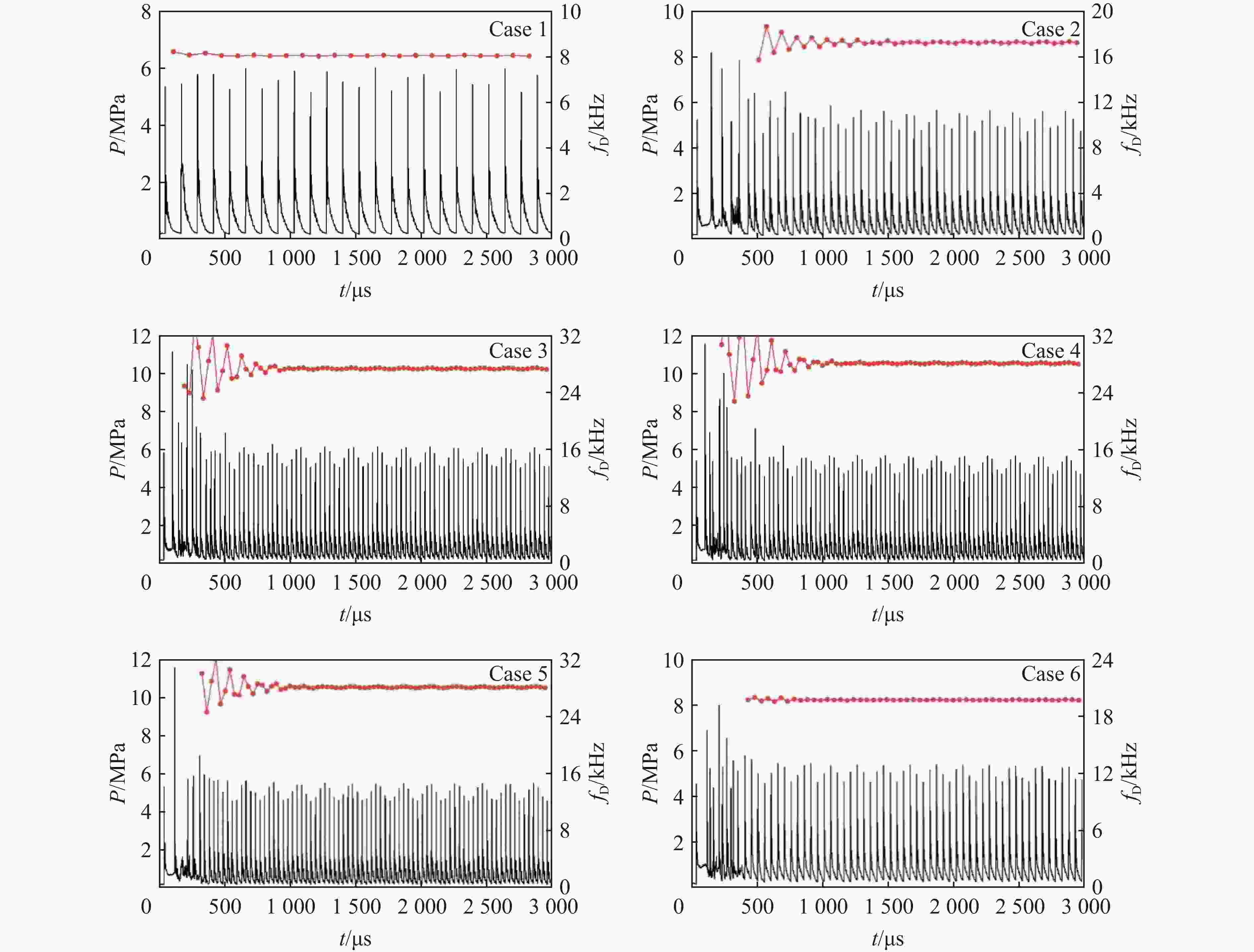
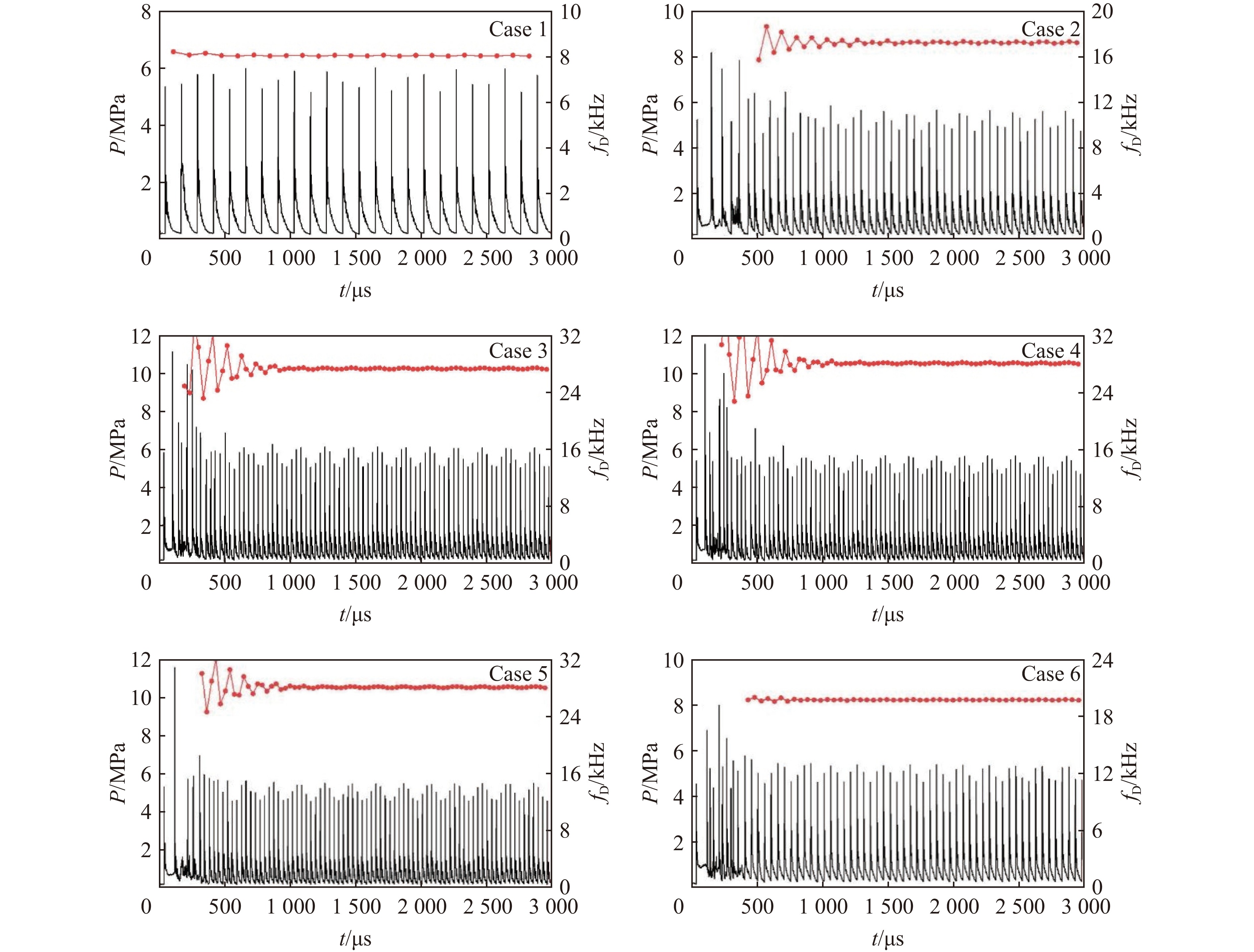
图 12 监测点压力信号的演化以及RDW传播频率的变化
Figure 12. The evolution of pressure signals at monitoring point and the change of RDW propagation frequency
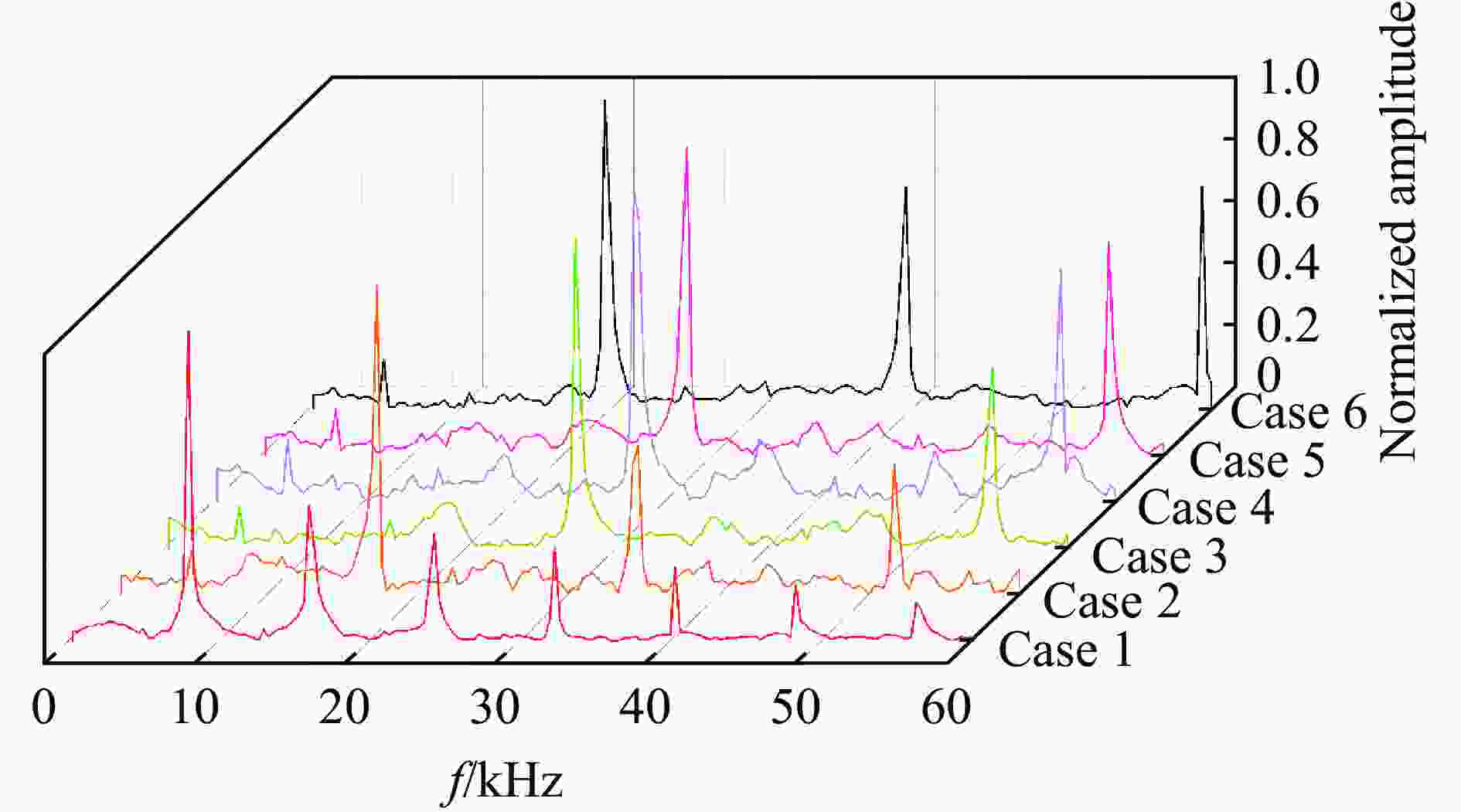
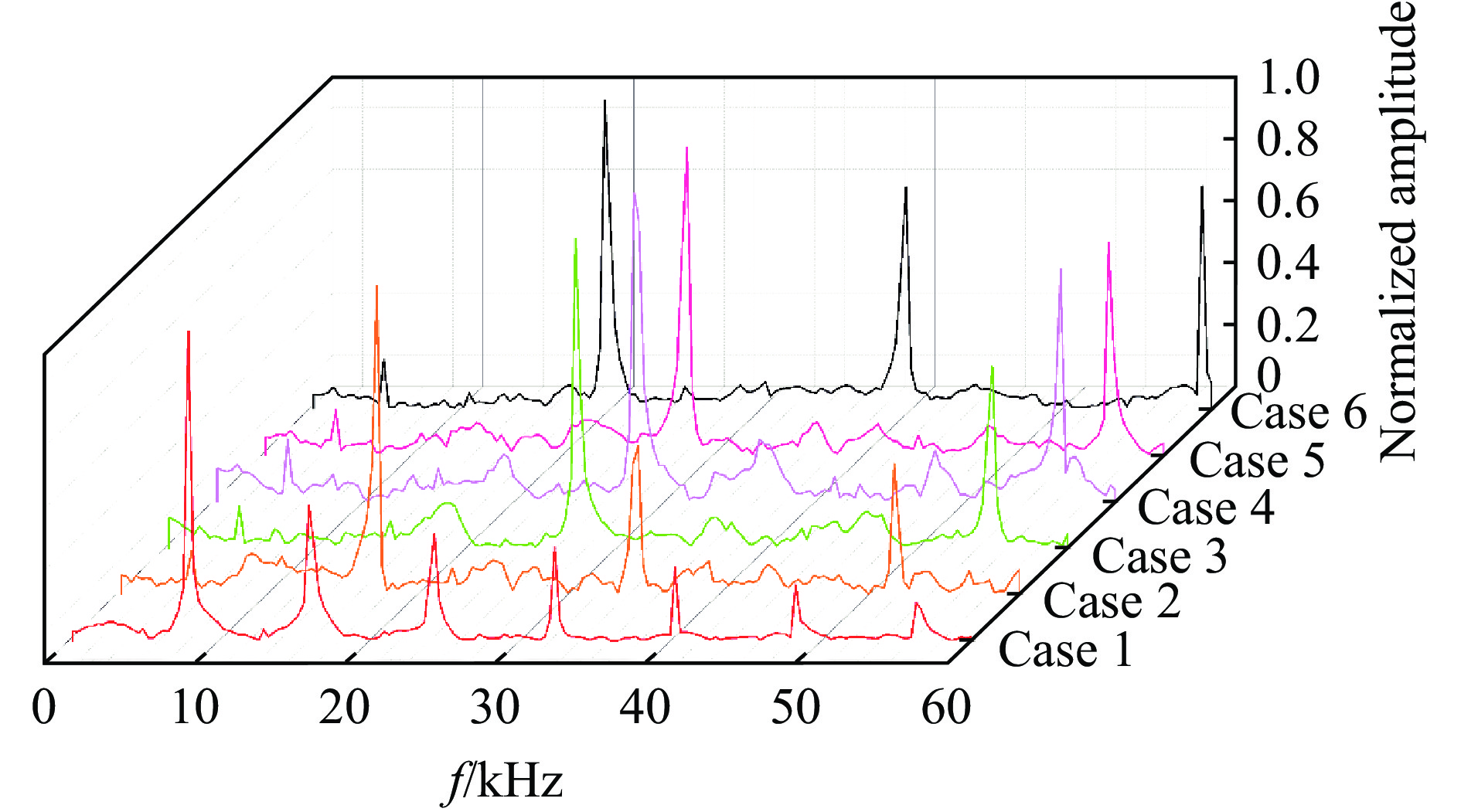
图 13 不同当量比下压力信号的FFT结果
Figure 13. FFT results of pressure signals under different equivalence ratios
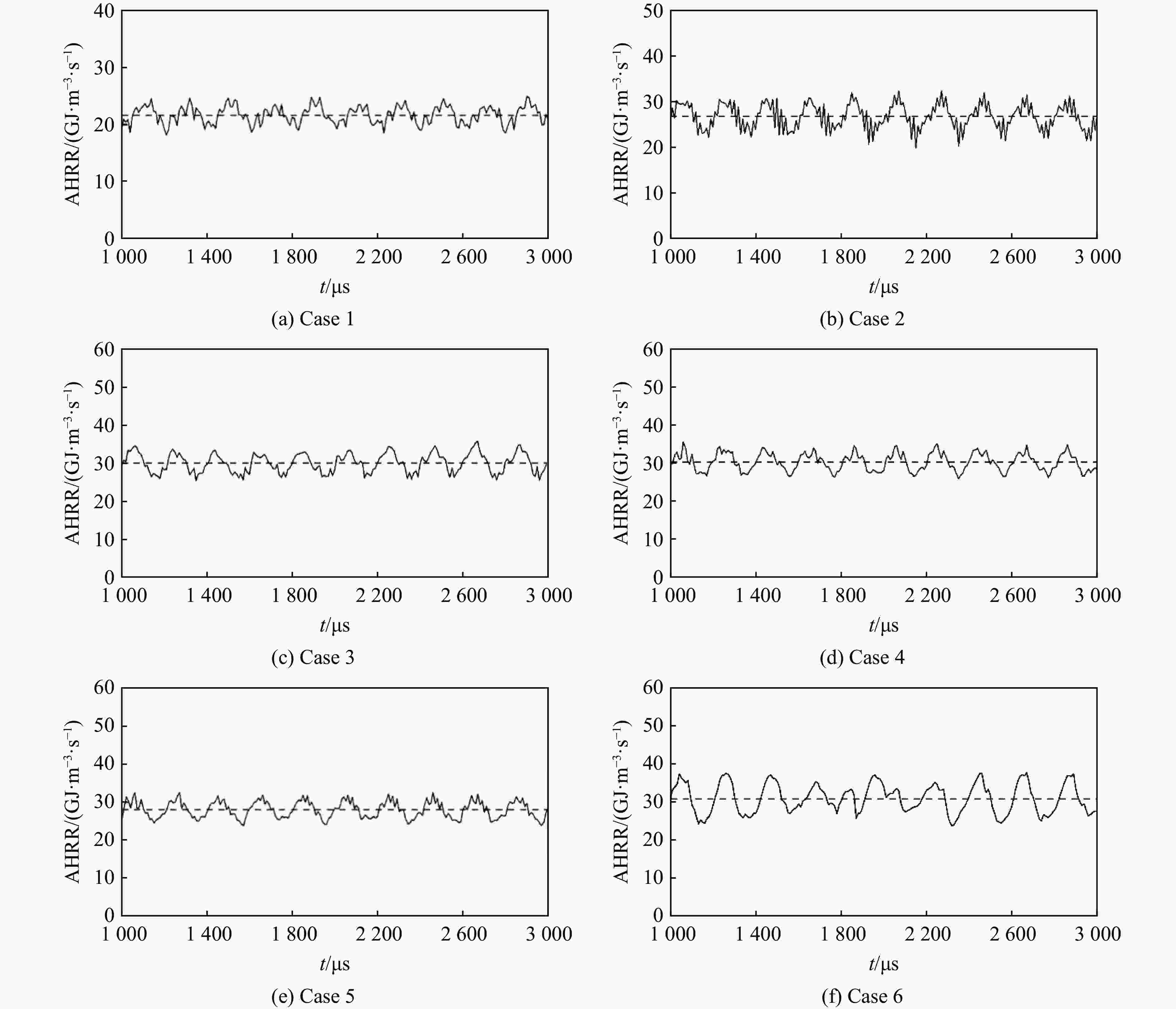
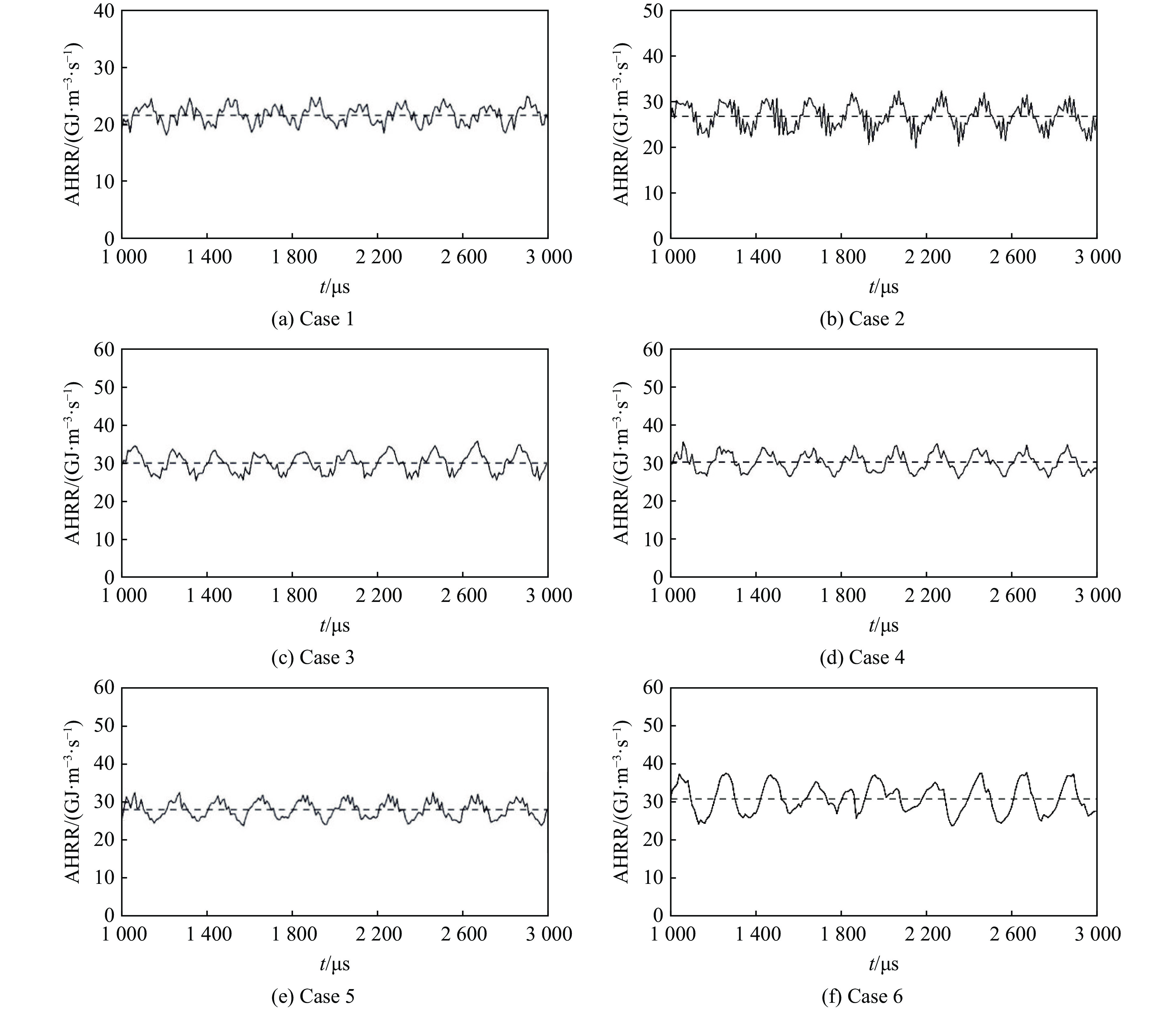
图 14 不同当量比下平均热释放速率随时间变化曲线
Figure 14. Variation of mean heat release rate with time for different equivalence ratios
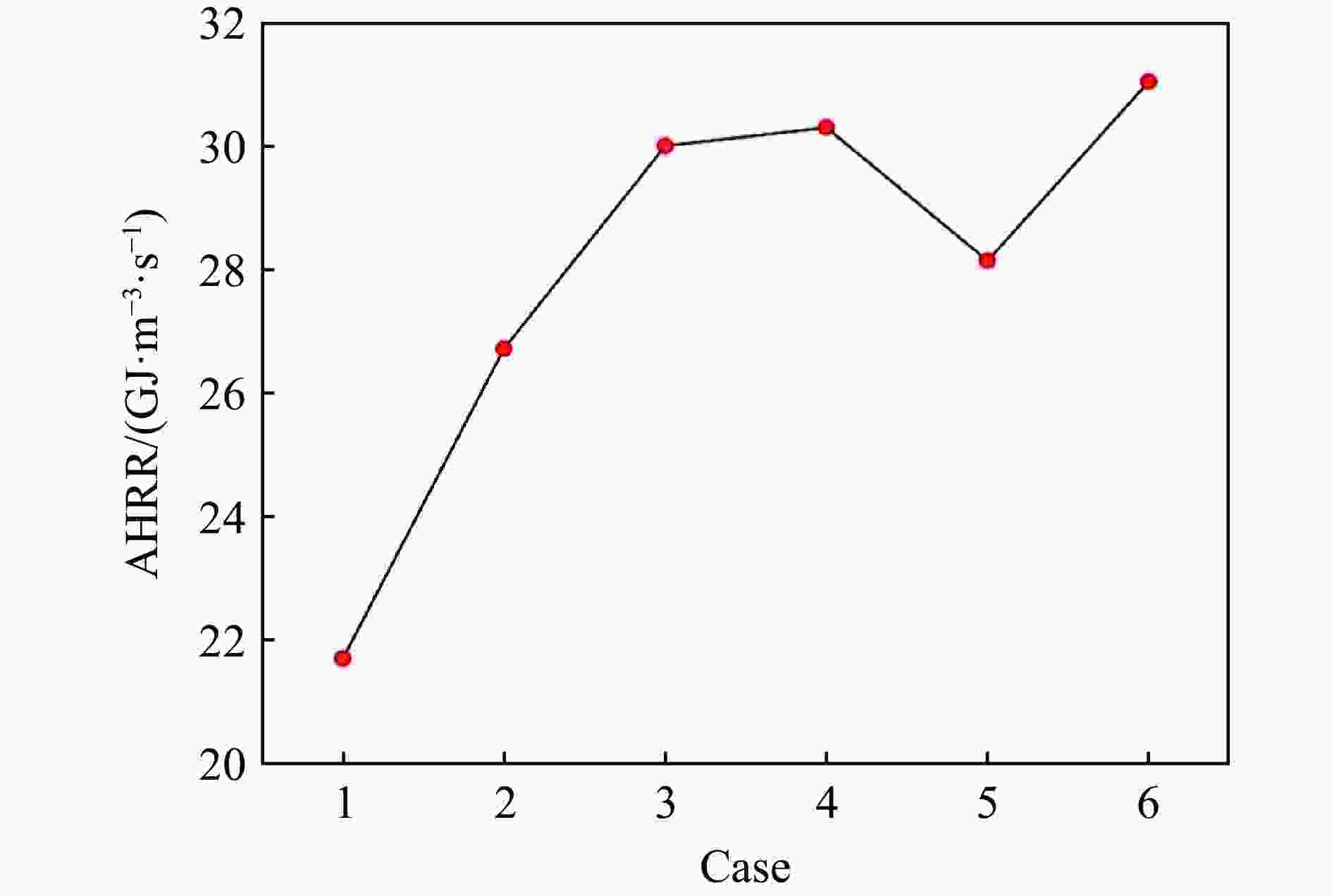
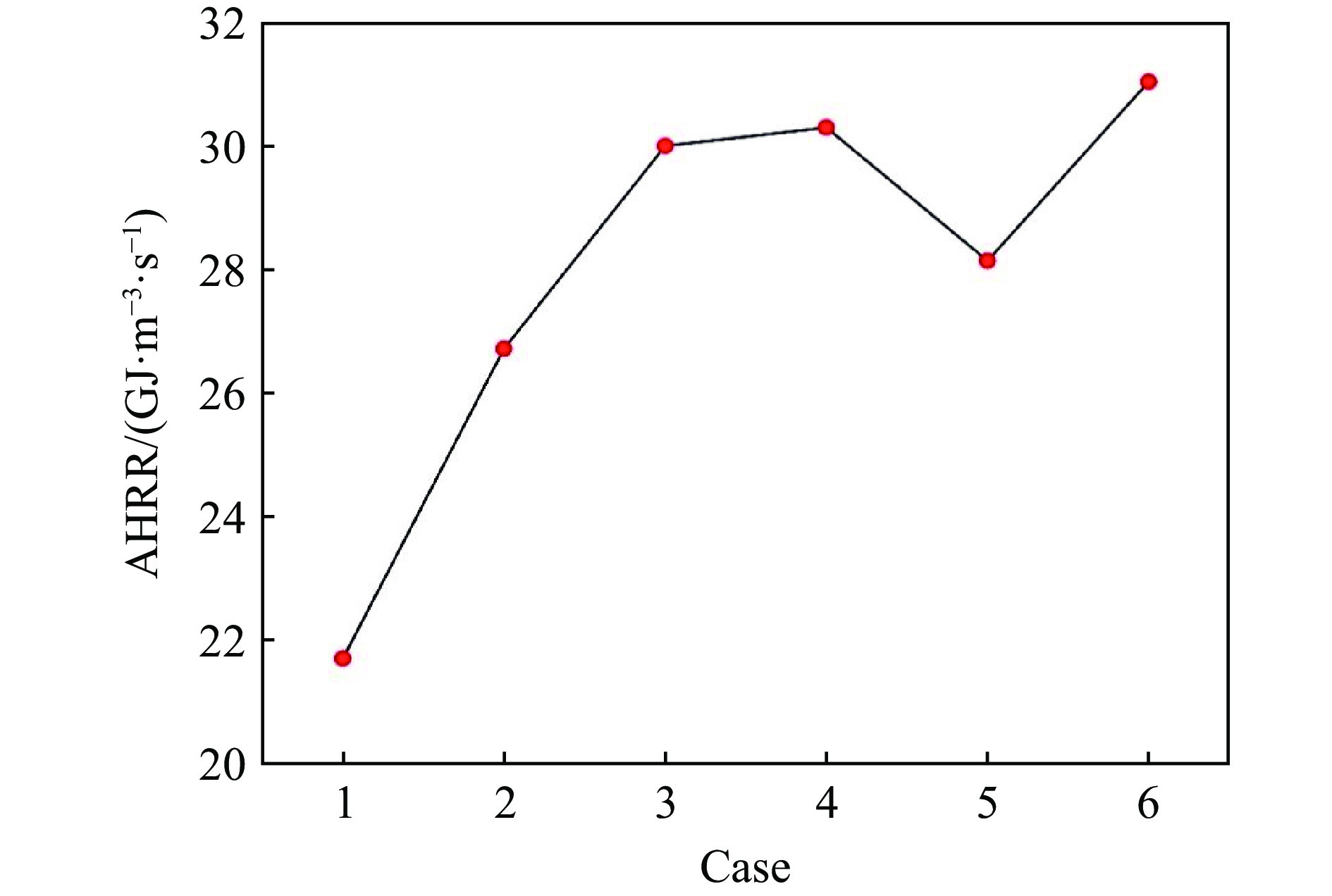
图 15 Case 1~Case 6平均热释放速率均值的变化曲线
Figure 15. Variation of the mean heat release rate for Case 1-Case 6
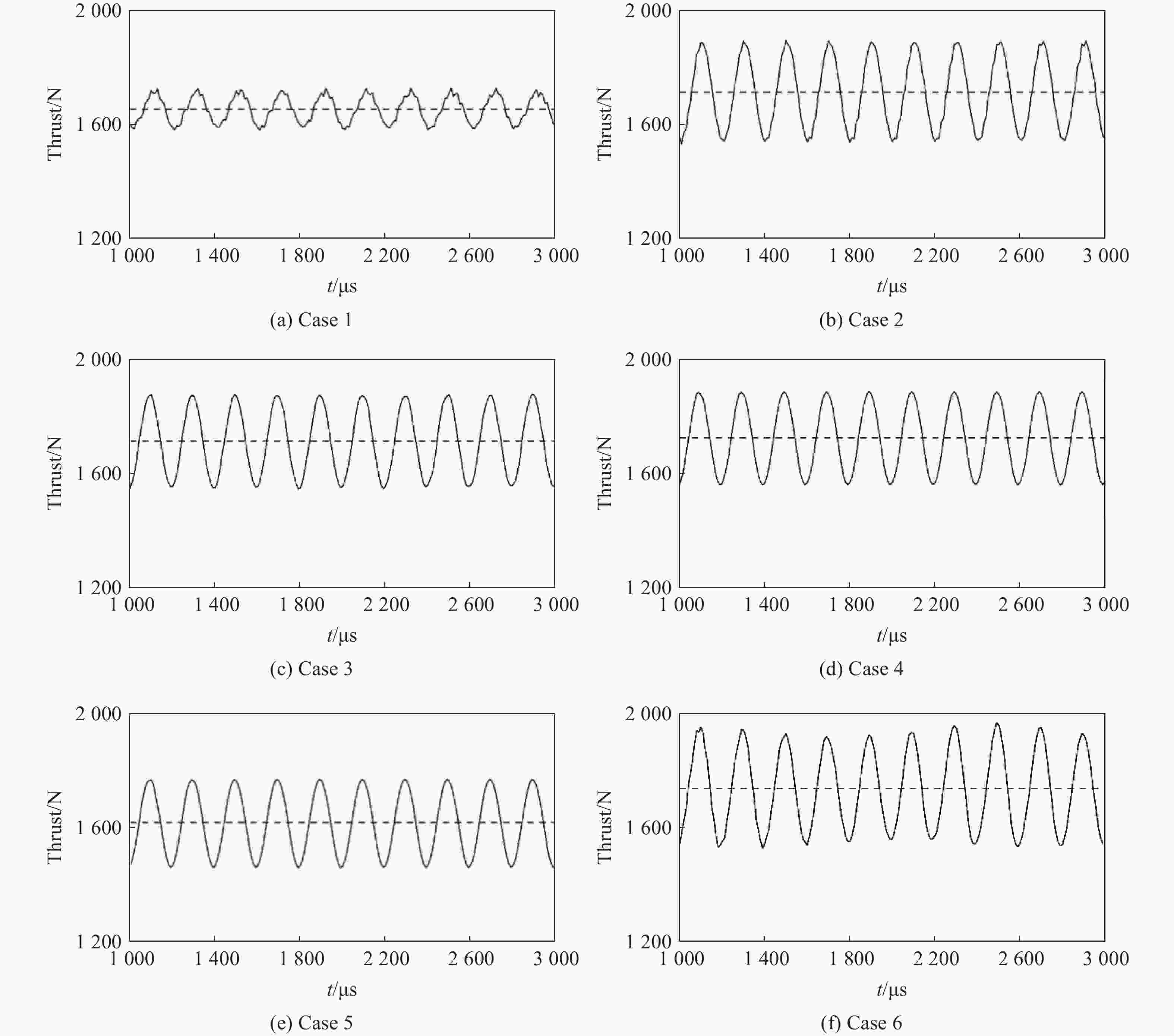
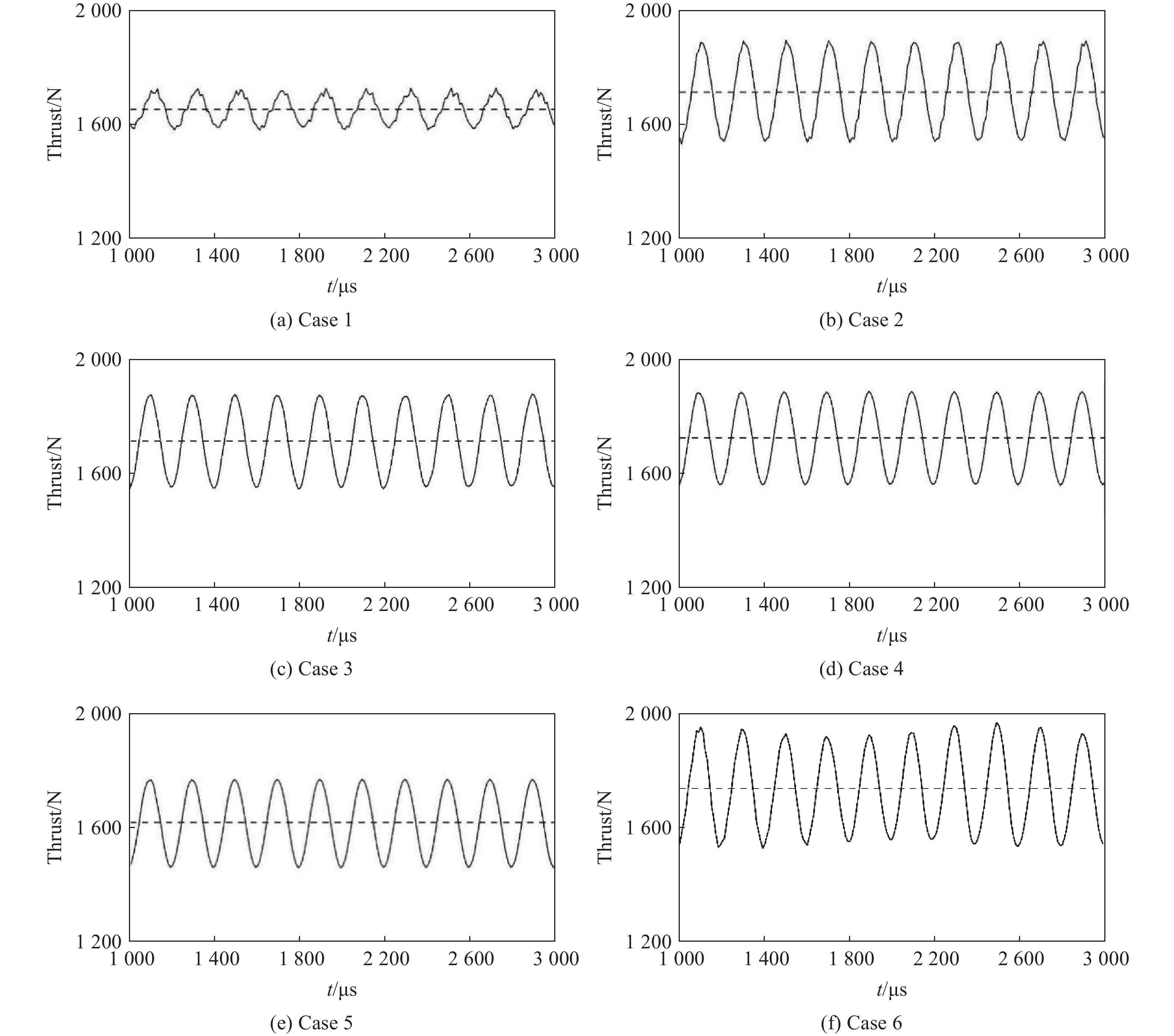
图 16 不同当量比下推力随时间变化曲线
Figure 16. Variation of thrust with time for different equivalence ratios
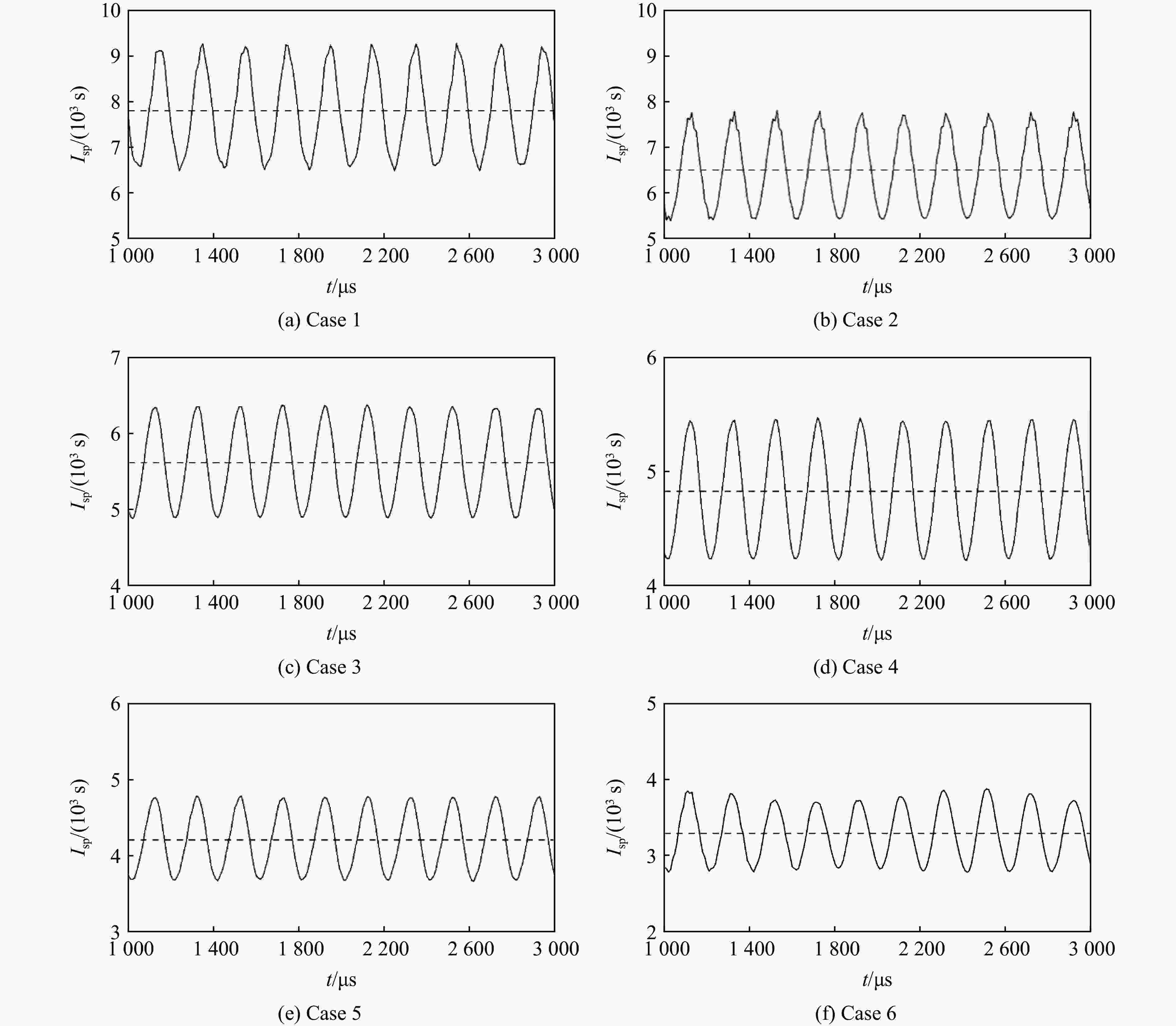
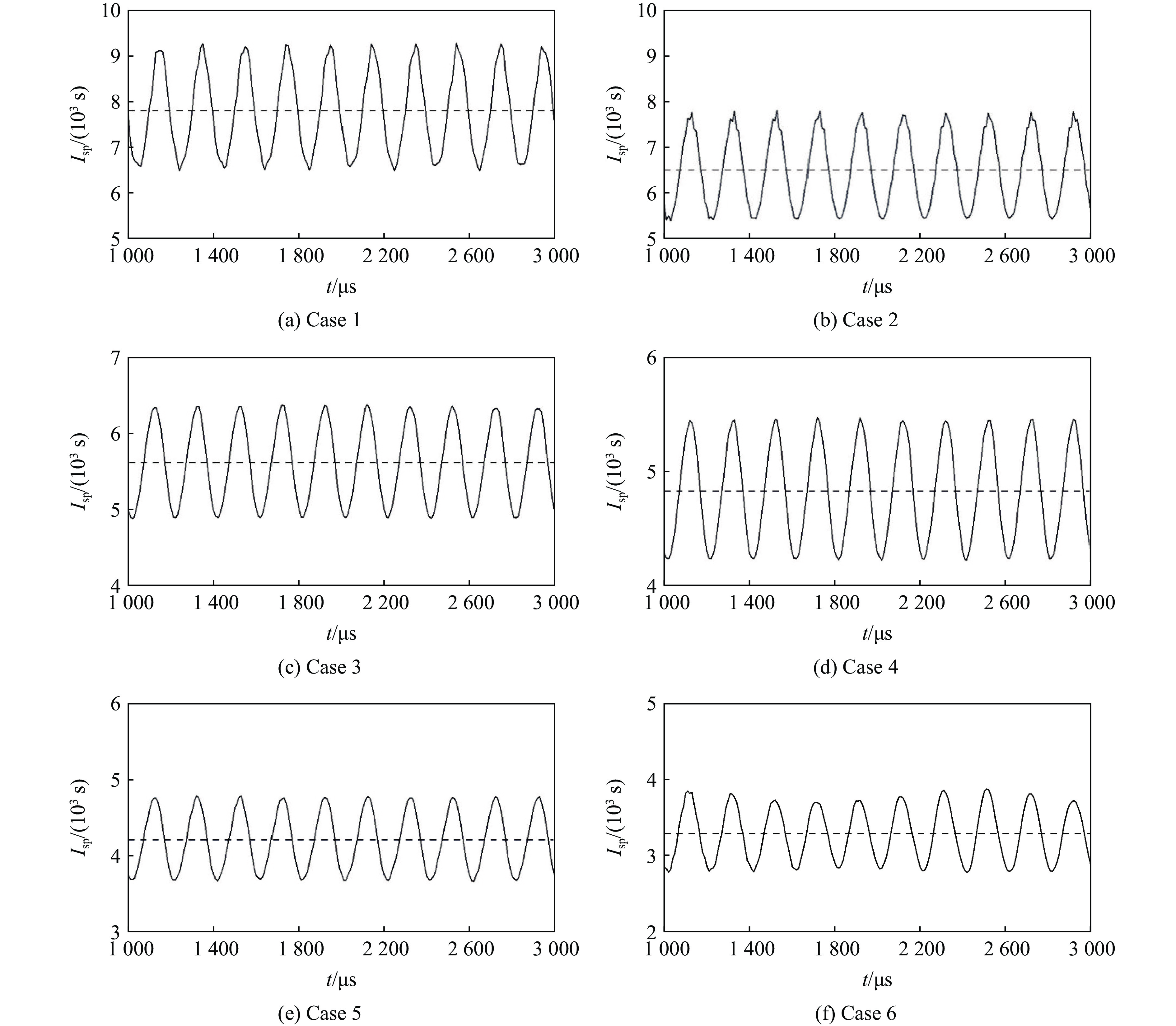
图 18 不同当量比下比冲随时间变化曲线
Figure 18. Variation of specific impulse with time for different equivalence ratios
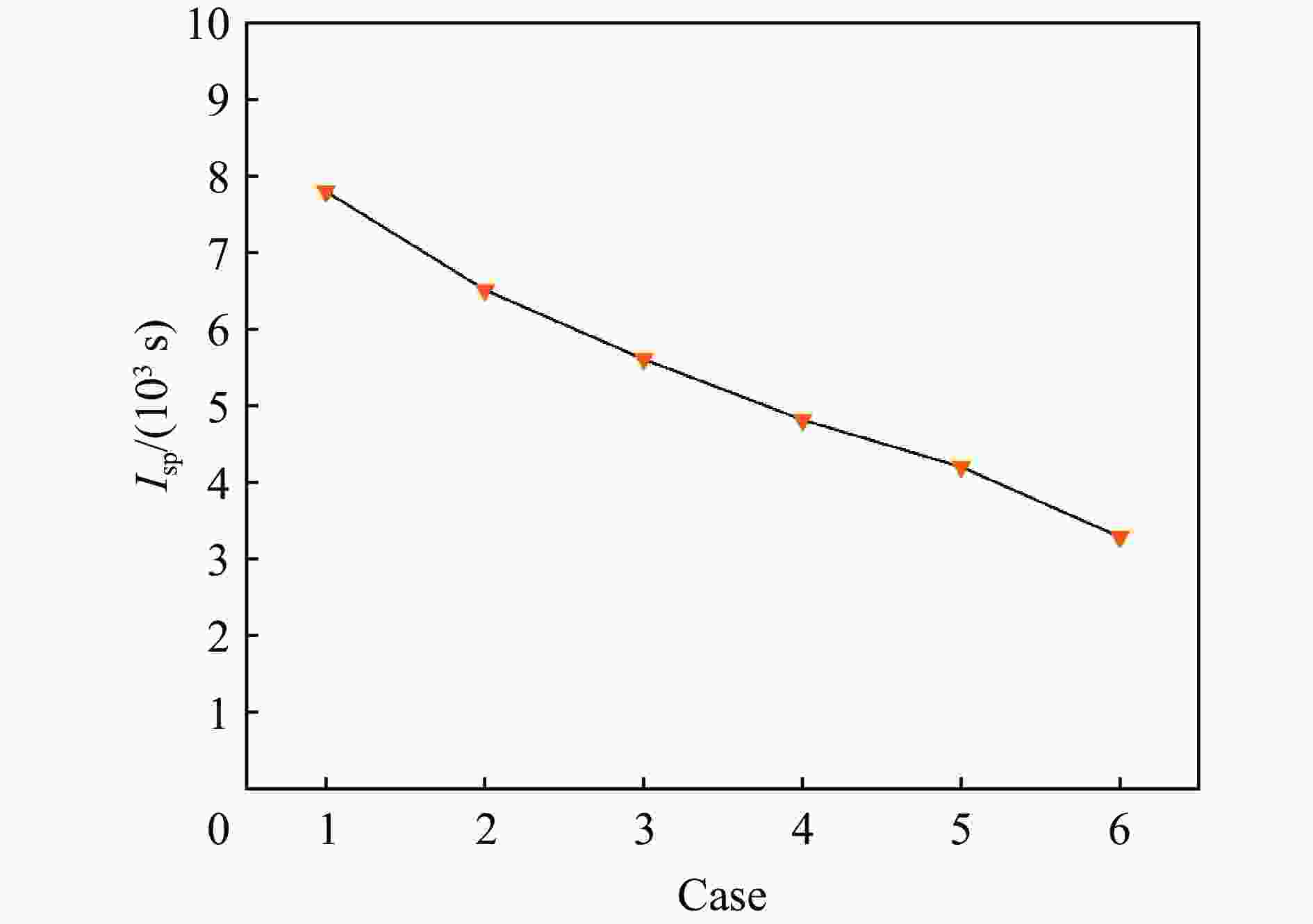
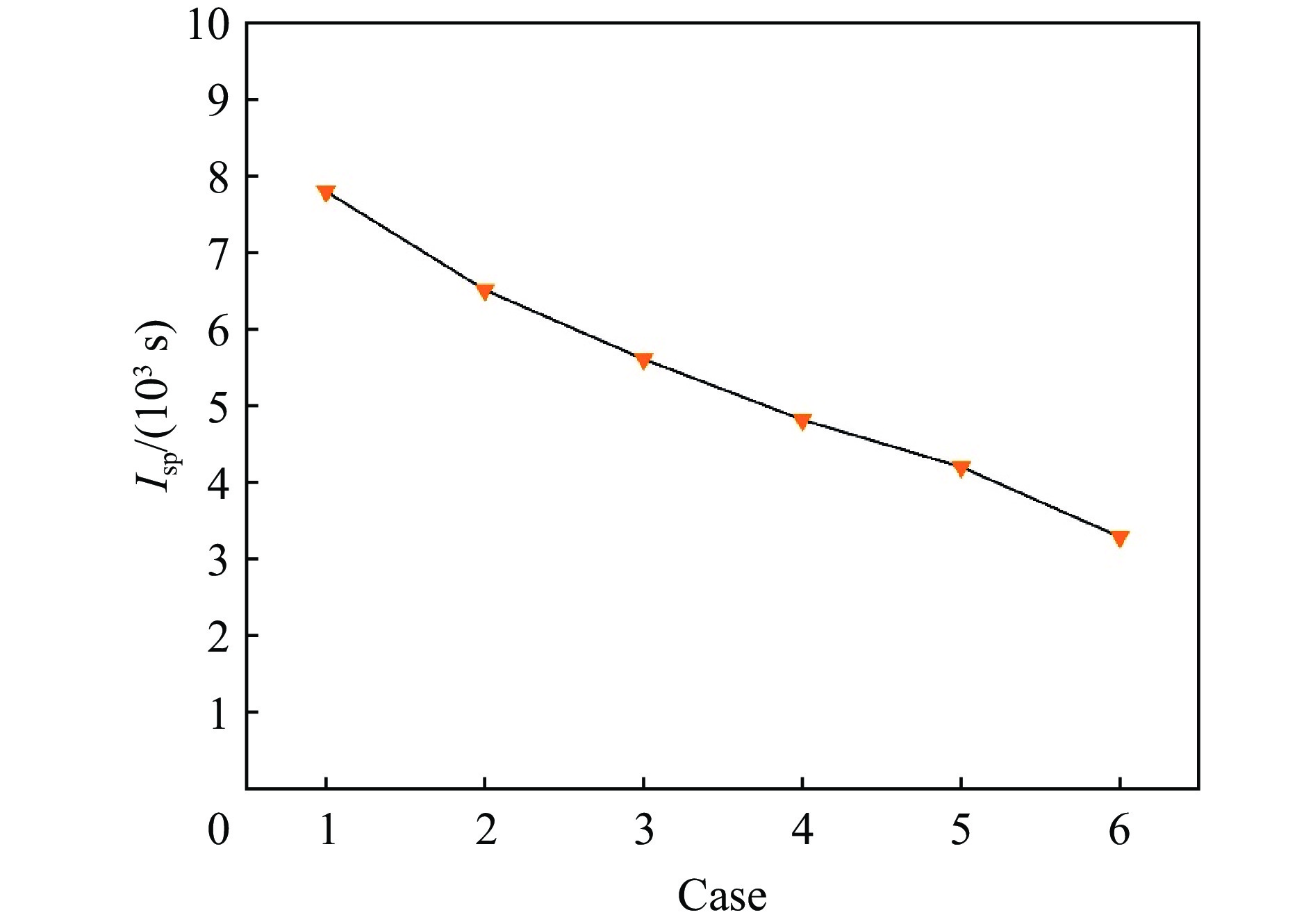
图 19 Case 1~Case 6比冲均值的变化曲线
Figure 19. Variation of mean specific impulse for Case 1-Case 6
表 1 计算算例设置
Table 1. Computational case settings
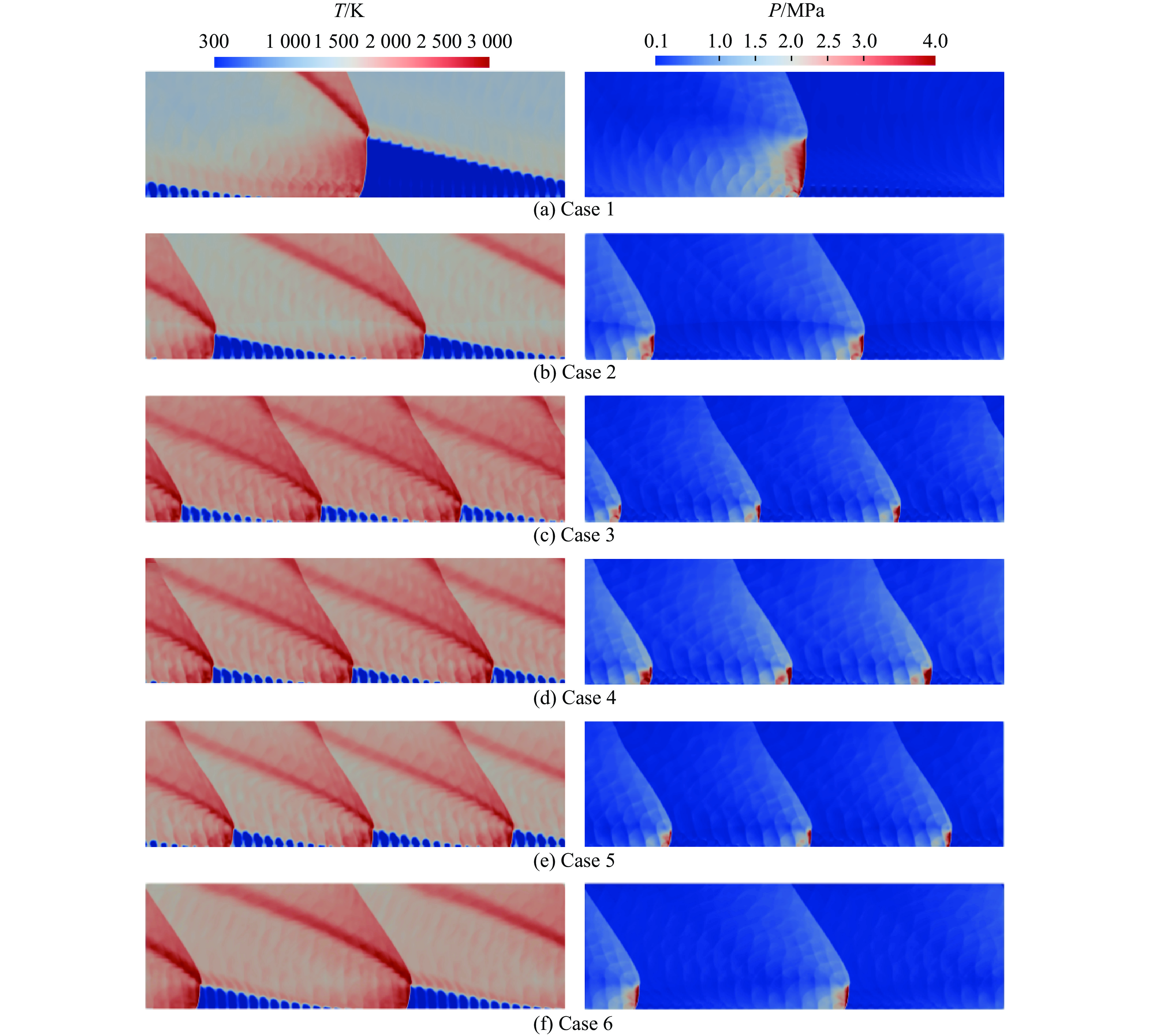
Case A/MPa f/kHz ER 1 0.1 5 0.6 2 0.1 5 0.8 3 0.1 5 1.0 4 0.1 5 1.2 5 0.1 5 1.4 6 0.1 5 1.6  下载: 导出CSV
表 2 不同网格尺寸下的RDW速度及峰值压力
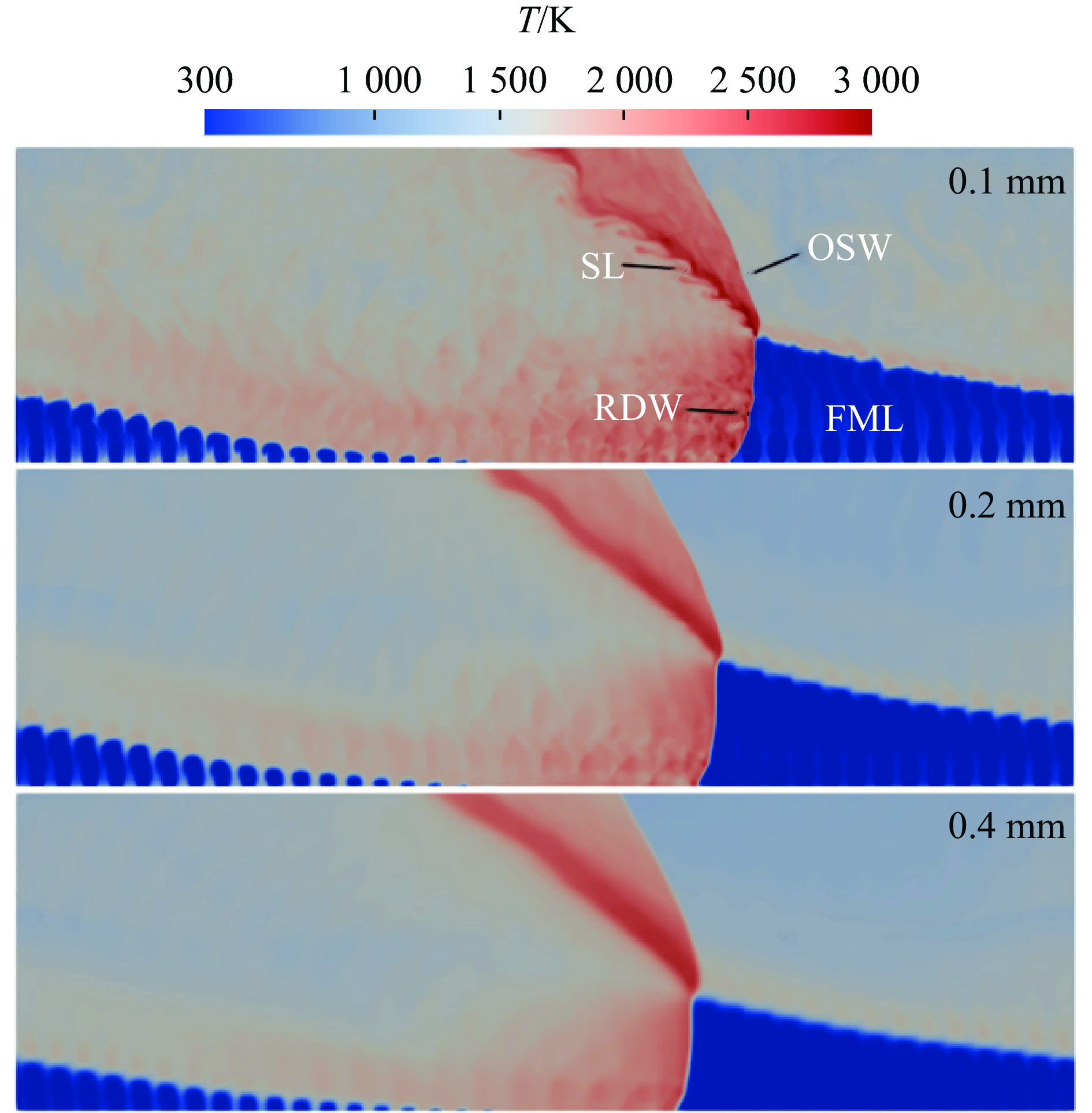
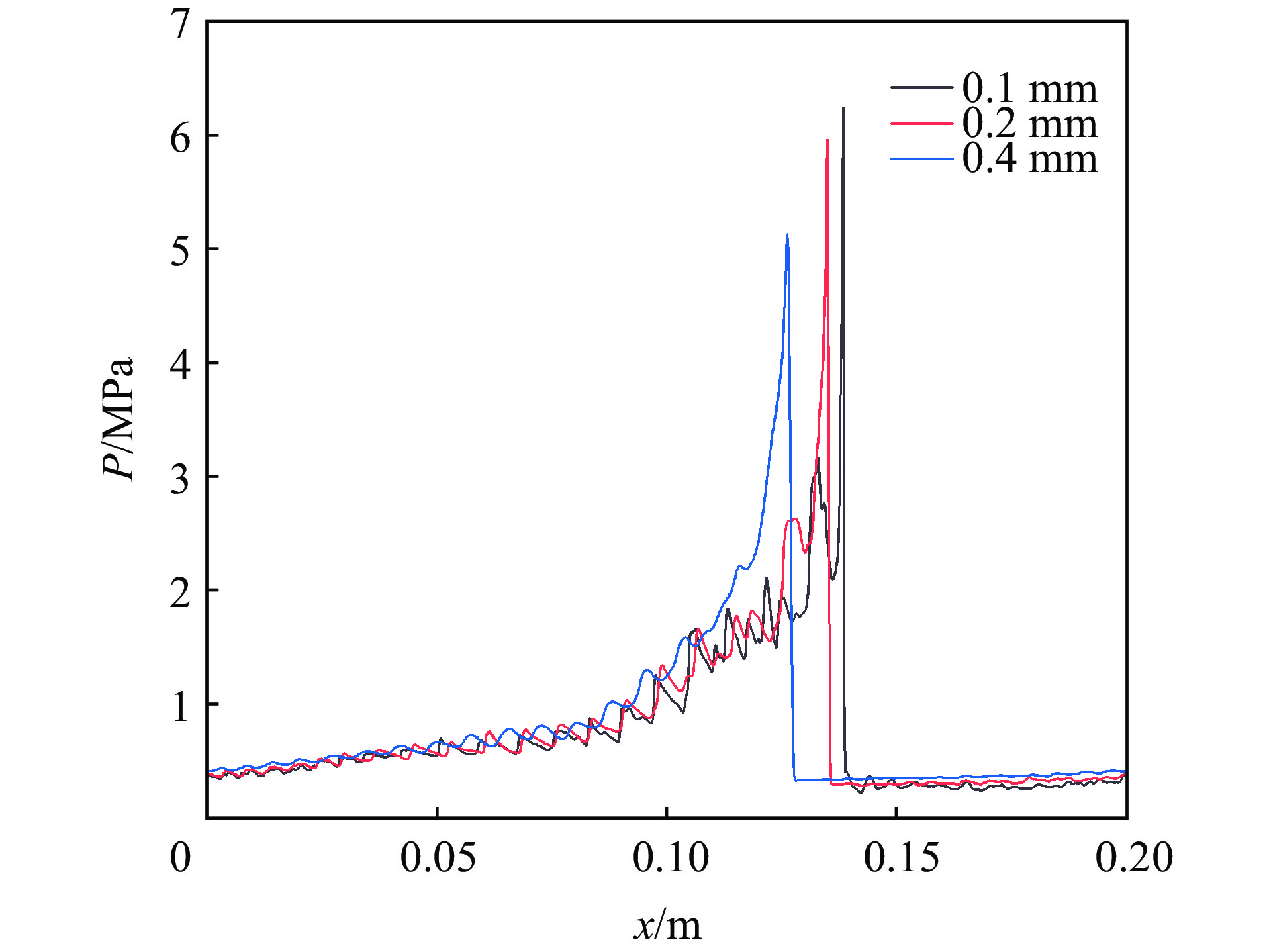
Table 2. Velocity and peak pressure of RDW under different grid sizes
网格尺寸/mm RDW速度/(m·s−1) RDW峰值压力/MPa 0.1 1 697 6.14 0.2 1 690 5.96 0.4 1 679 5.31
下载: 导出CSV
表 3 所有算例的RDW传播特性
Table 3. RDW propagation characteristics of all cases
Case ER $ \overline{f} $/kHz Vcal/(m·s−1) VCJ/(m·s−1) VDef/% 1 0.6 8.08 1 615.97 1 718.72 5.97 2 0.8 17.32 1 731.98 1 871.33 7.45 3 1.0 27.49 1 832.42 1 981.29 7.51 4 1.2 28.37 1 891.48 2 036.59 7.13 5 1.4 28.24 1 882.47 2 063.52 8.77 6 1.6 19.79 1 978.94 2 100.21 5.77
下载: 导出CSV
-
[1] TANG X M, WANG J P, SHAO Y T. Three-dimensional numerical investigations of the rotating detonation engine with a hollow combustor [J]. Combustion and Flame, 2015, 162(4): 997–1008. DOI: 10.1016/j.combustflame.2014.09.023. [2] YAO S B, WANG J P. Multiple ignitions and the stability of rotating detonation waves [J]. Applied Thermal Engineering, 2016, 108: 927–936. DOI: 10.1016/j.applthermaleng.2016.07.166. [3] WANG Y N, CHEN Y L, WU W B, et al. Numerical study on the effect of carbon particles on flow field characteristics of rotating detonation engine [J]. Aerospace Science and Technology, 2023, 142: 108585. DOI: 10.1016/j.ast.2023.108585. [4] GAO S J, PENG H, HUANG Y, et al. Numerical simulations and theoretical analysis of the forward shock wave in a non-premixed air-breathing rotating detonation combustor [J]. Physics of Fluids, 2024, 36(6): 066101. DOI: 10.1063/5.0206965. [5] MA J Z, LUAN M Y, XIA Z J, et al. Recent progress, development trends, and consideration of continuous detonation engines [J]. AIAA Journal, 2020, 58(12): 4976–5035. DOI: 10.2514/1.j058157. [6] RAMAN V, PRAKASH S, GAMBA M. Nonidealities in rotating detonation engines [J]. Annual Review of Fluid Mechanics, 2023, 55: 639–674. DOI: 10.1146/annurev-fluid-120720-032612. [7] ZHU Y J, ZHANG S L, CHEN H W, et al. Liquid fuels in rotating detonation engines: advances and challenges [J]. Physics of Fluids, 2024, 36(12): 121305. DOI: 10.1063/5.0244664. [8] HE X J, GONG X P, WANG J P, et al. Investigation of the total pressure gain in rotating detonation combustors with dilution holes [J]. Physics of Fluids, 2024, 36(4): 045103. DOI: 10.1063/5.0195613. [9] 严宇, 王致程, 胡洪波, 等. 环形燃烧室中自燃推进剂的非稳态旋转爆震现象 [J]. 火箭推进, 2023, 49(6): 55–62,81. DOI: 10.3969/j.issn.1672-9374.2023.06.007.YAN Y, WANG Z C, HU H B, et al. Unsteady rotating detonation phenomenon of hypergolic propellant in annular combustor [J]. Journal of Rocket Propulsion, 2023, 49(6): 55–62,81. DOI: 10.3969/j.issn.1672-9374.2023.06.007. [10] 祝文超, 宋玉, 王宇辉, 等. 不同燃烧室结构下的碳/空气两相旋转爆轰发动机数值研究 [J]. 推进技术, 2024, 45(11): 2309062. DOI: 10.13675/j.cnki.tjjs.2309062.ZHU W C, SONG Y, WANG Y H, et al. Numerical study of carbon/air two-phase rotating detonation engines with different combustor configurations [J]. Journal of Propulsion Technology, 2024, 45(11): 2309062. DOI: 10.13675/j.cnki.tjjs.2309062. [11] YU J T, YAO S B, LI J Z, et al. Experimental investigation of the hydrogen-air rotating detonation engine with cat-ear-shaped film cooling holes [J]. International Journal of Hydrogen Energy, 2024, 89: 1454–1465. DOI: 10.1016/j.ijhydene.2024.09.316. [12] FAN W J, PENG H Y, LIU S J, et al. Initiation process of non-premixed continuous rotating detonation wave through Schlieren visualization [J]. Combustion and Flame, 2024, 265: 113437. DOI: 10.1016/j.combustflame.2024.113437. [13] ZHOU S B, MA Y, LIU F, et al. Effects of a straight guide vane on the operating characteristics of rotating detonation combustor [J]. Acta Astronautica, 2023, 203: 135–145. DOI: 10.1016/j.actaastro.2022.11.051. [14] WU Y W, WENG C S, ZHENG Q, et al. Experimental research on the performance of a rotating detonation combustor with a turbine guide vane [J]. Energy, 2021, 218: 119580. DOI: 10.1016/j.energy.2020.119580. [15] QIU Y M, WU Y W, HUANG Y K, et al. Heat transfer characteristics of H2/air rotating detonation combustor [J]. Physics of Fluids, 2024, 36(1): 016131. DOI: 10.1063/5.0179717. [16] HOU Y C, CHENG M, SHENG Z H, et al. Unsteady conjugate heat transfer simulation of wall heat loads for rotating detonation combustor [J]. International Journal of Heat and Mass Transfer, 2024, 221: 125081. DOI: 10.1016/j.ijheatmasstransfer.2023.125081. [17] ANAND V, ST. GEORGE A, GUTMARK E. Amplitude modulated instability in reactants plenum of a rotating detonation combustor [J]. International Journal of Hydrogen Energy, 2017, 42(17): 12629–12644. DOI: 10.1016/j.ijhydene.2017.03.218. [18] FROLOV S M, ZVEGINTSEV V I, IVANOV V S, et al. Hydrogen-fueled detonation ramjet model: wind tunnel tests at approach air stream Mach number 5.7 and stagnation temperature 1500 K [J]. International Journal of Hydrogen Energy, 2018, 43(15): 7515–7524. DOI: 10.1016/j.ijhydene.2018.02.187. [19] WEN H C, XIE Q F, WANG B. Propagation behaviors of rotating detonation in an obround combustor [J]. Combustion and Flame, 2019, 210: 389–398. DOI: 10.1016/j.combustflame.2019.09.008. [20] XIA Z J, MA H, LIU C, et al. Experimental investigation on the propagation mode of rotating detonation wave in plane-radial combustor [J]. Experimental Thermal and Fluid Science, 2019, 103: 364–376. DOI: 10.1016/j.expthermflusci.2019.01.032. [21] SOSA J, BURKE R, AHMED K A, et al. Experimental evidence of H2/O2 propellants powered rotating detonation waves [J]. Combustion and Flame, 2020, 214: 136–138. DOI: 10.1016/j.combustflame.2019.12.031. [22] ZHOU S B, MA H, ZHOU C S, et al. Experimental research on the propagation process of rotating detonation wave with a gaseous hydrocarbon mixture fuel [J]. Acta Astronautica, 2021, 179: 1–10. DOI: 10.1016/j.actaastro.2020.10.027. [23] BAI Q D, HAN J X, ZHANG S J, et al. Experimental study on the auto-initiation of rotating detonation with high-temperature hydrogen-rich gas [J]. Physics of Fluids, 2023, 35(4): 045121. DOI: 10.1063/5.0144322. [24] WU Y W, GUO J X, XU G, et al. Wave mode observation of hydrogen/oxygen driven rotating detonations in the hollow and annular rotating detonation rocket engine [J]. Physics of Fluids, 2024, 36(11): 115105. DOI: 10.1063/5.0237542. [25] WANG J P, HAN J X, BAI Q D, et al. Experimental study on rotating detonation characteristics and multiple waves evolution mechanisms in CH4/CO/H2 gas mixtures [J]. International Journal of Hydrogen Energy, 2025, 115: 101–112. DOI: 10.1016/j.ijhydene.2025.03.071. [26] ZHENG H T, MENG Q Y, ZHAO N B, et al. Numerical investigation on H2/Air non-premixed rotating detonation engine under different equivalence ratios [J]. International Journal of Hydrogen Energy, 2020, 45(3): 2289–2307. DOI: 10.1016/j.ijhydene.2019.11.014. [27] ZHAO M J, ZHANG H W. Origin and chaotic propagation of multiple rotating detonation waves in hydrogen/air mixtures [J]. Fuel, 2020, 275: 117986. DOI: 10.1016/j.fuel.2020.117986. [28] YAO K P, YANG P F, TENG H H, et al. Effects of injection parameters on propagation patterns of hydrogen-fueled rotating detonation waves [J]. International Journal of Hydrogen Energy, 2022, 47(91): 38811–38822. DOI: 10.1016/j.ijhydene.2022.09.051. [29] CHEN H W, SI C W, WU Y, et al. Numerical investigation of the effect of equivalence ratio on the propagation characteristics and performance of rotating detonation engine [J]. International Journal of Hydrogen Energy, 2023, 48(62): 24074–24088. DOI: 10.1016/j.ijhydene.2023.03.190. [30] WANG F, LIU Q Y, WENG C S. On the feasibility and performance of the ammonia/hydrogen/air rotating detonation engines [J]. Physics of Fluids, 2023, 35(6): 066133. DOI: 10.1063/5.0152609. [31] HU J H, ZHANG B. Time/frequency domain analysis of detonation wave propagation mechanism in a linear rotating detonation combustor [J]. Applied Thermal Engineering, 2024, 255: 124014. DOI: 10.1016/j.applthermaleng.2024.124014. [32] XIONG A, DANG Y T, ZHANG Y Z, et al. Study on the combustion characteristics of high-speed non-premixed reactants enhanced by rotating detonation jet [J]. Aerospace Science and Technology, 2025, 162: 110207. DOI: 10.1016/j.ast.2025.110207. [33] CHEN H W, SI C W, HU H B, et al. Effects of the perturbation inlet on the evolution and oscillation characteristics of multiple rotating detonation waves [J]. Aerospace Science and Technology, 2023, 141: 108586. DOI: 10.1016/j.ast.2023.108586. [34] ZHANG X J, WANG Y N, CHENG M, et al. Numerical research on the propagation characteristics and evolution mechanisms of rotating detonation waves with the spatial fluctuation of inlet total pressure [J]. Physics of Fluids, 2024, 36(9): 096122. DOI: 10.1063/5.0226308. [35] WANG Y N, ZHANG X J, LIU P L, et al. Effect of the inlet spatial fluctuation on the gas–solid continuous rotating detonation flow field characteristics [J]. Physics of Fluids, 2024, 36(7): 076107. DOI: 10.1063/5.0215308. [36] YAO S, HAN X, LIU Y, et al. Numerical study of rotating detonation engine with an array of injection holes [J]. Shock Waves, 2017, 27(3): 467–476. DOI: 10.1007/s00193-016-0692-6. [37] YAO S B, MA Z, ZHANG S J, et al. Reinitiation phenomenon in hydrogen-air rotating detonation engine [J]. International Journal of Hydrogen Energy, 2017, 42(47): 28588–28598. DOI: 10.1016/j.ijhydene.2017.09.015. [38] FUJII J, KUMAZAWA Y, MATSUO A, et al. Numerical investigation on detonation velocity in rotating detonation engine chamber [J]. Proceedings of the Combustion Institute, 2017, 36(2): 2665–2672. DOI: 10.1016/j.proci.2016.06.155. [39] SCHWER D, KAILASANATH K. Numerical investigation of the physics of rotating-detonation-engines [J]. Proceedings of the Combustion Institute, 2011, 33(2): 2195–2202. DOI: 10.1016/j.proci.2010.07.050. [40] MCGOUGH D. Detonation modeling in OpenFOAM using adaptive mesh refinement [D]. Boulder: University of Colorado at Boulder, 2020. [41] JIAO Z T, WANG K, XIAO Q, et al. Characteristic velocity analysis of the total pressure gain of rotating detonation combustors [J]. Proceedings of the Combustion Institute, 2024, 40(1/2/3/4): 105626. DOI: 10.1016/j.proci.2024.105626. [42] CHEN H W, LI R Z, WU Y, et al. Numerical study on rotating detonation combustion with the discrete distribution of partially pre-vaporized n-heptane sprays [J]. Fuel, 2024, 356: 129650. DOI: 10.1016/j.fuel.2023.129650. [43] 吴敏宣, 白桥栋, 翁春生, 等. C2H4/CH4/H2混合气旋转爆轰波传播特性数值模拟研究 [J]. 推进技术, 2022, 43(11): 210712. DOI: 10.13675/j.cnki.tjjs.210712.WU M X, BAI Q D, WENG C S, et al. Numerical simulation of rotating detonation wave propagation characteristics of C2H4/CH4/H2 mixture [J]. Journal of Propulsion Technology, 2022, 43(11): 210712. DOI: 10.13675/j.cnki.tjjs.210712. [44] 孟豪龙, 翁春生, 武郁文, 等. 环形燃烧室中凹腔对C2H4/Air旋转爆轰流场影响的数值模拟 [J]. 兵工学报, 2022, 43(5): 1063–1074. DOI: 10.12382/bgxb.2021.0249.MENG H L, WENG C S, WU Y W, et al. Numerical simulation of cavity influence on C2H4/air rotating detonation flow field in annular combustor [J]. Acta Armamentarii, 2022, 43(5): 1063–1074. DOI: 10.12382/bgxb.2021.0249. [45] 陈煌威, 吴宇, 李润泽, 等. 扰动进口影响多重旋转爆轰波演化及振荡特性的数值研究 [J]. 推进技术, 2024, 45(11): 2307001. DOI: 10.13675/j.cnki.tjjs.2307001.CHEN H W, WU Y, LI R Z, et al. Numerical investigation on influence of perturbation inlet on evolution and oscillation characteristics of multiple rotating detonation waves [J]. Journal of Propulsion Technology, 2024, 45(11): 2307001. DOI: 10.13675/j.cnki.tjjs.2307001. [46] KURGANOV A, NOELLE S, PETROVA G. Semidiscrete central-upwind schemes for hyperbolic conservation laws and Hamilton—Jacobi equations [J]. SIAM Journal on Scientific Computing, 2001, 23(3): 707–740. DOI: 10.1137/s1064827500373413. [47] CRANK J, NICOLSON P. A practical method for numerical evaluation of solutions of partial differential equations of the heat-conduction type [J]. Mathematical Proceedings of the Cambridge Philosophical Society, 1947, 43(1): 50–67. DOI: 10.1017/S0305004100023197. [48] MARINOV N M, WESTBROOK C K, PITZ W J. Detailed and global chemical kinetics model for hydrogen [M]//CHAN S H. Transport Phenomena in Combustion. New York: Routledge, 1996: 118-129. DOI: 10.1201/9780203735138. [49] XIA Z J, LUAN M Y, LIU X Y, et al. Numerical simulation of wave mode transition in rotating detonation engine with OpenFOAM [J]. International Journal of Hydrogen Energy, 2020, 45(38): 19989–19995. DOI: 10.1016/j.ijhydene.2020.05.100. [50] SHI X Y, PAN J F, JIANG C, et al. Effect of obstacles on the detonation diffraction and subsequent re-initiation [J]. International Journal of Hydrogen Energy, 2022, 47(10): 6936–6954. DOI: 10.1016/j.ijhydene.2021.12.026. [51] SI C W, ZHAO M, ZHU Y J. On the interaction between a detonation wave and an inert gas plug: a numerical investigation [J]. Physics of Fluids, 2023, 35(12): 126104. DOI: 10.1063/5.0176644. [52] LAWSON J, SHEPHERD J. Shock and detonation toolbox installation instructions [M]. Pasadena: California Institute of Technology, 2019. [53] WANG Y H, WANG J P. Effect of equivalence ratio on the velocity of rotating detonation [J]. International Journal of Hydrogen Energy, 2015, 40(25): 7949–7955. DOI: 10.1016/j.ijhydene.2015.04.072. [54] SUN J, ZHOU J, LIU S J, et al. Numerical investigation of a rotating detonation engine under premixed/non-premixed conditions [J]. Acta astronautica, 2018, 152: 630–638. DOI: 10.1016/j.actaastro.2018.09.012. -

计量
- 文章访问数: 420
- HTML全文浏览量: 87
- PDF下载量: 76
- 被引次数: 0