


Fast prediction of blast loading for three-dimensional urban building clusters based on Bayesian deep active learning
-
摘要: 城市爆炸载荷快速预测对于防灾设计、应急救援及灾后重建具有重要意义。针对现有基于深度学习的预测模型依赖大量高质量样本、建模成本高且样本利用率低的问题,提出一种基于贝叶斯深度主动学习(Bayesian deep active learning, BDAL)的三维城市建筑群爆炸载荷快速预测方法。研究在三维空间构建规则化城市建筑群,设定包含能量源当量、起爆距离、建筑尺寸及街道特征的七维参数空间,采用全因子实验设计系统生成参数组合,并利用blastFoam软件开展三维数值模拟,获取关键位置超压峰值数据。基于贝叶斯推断实现模型参数的概率化建模,结合主动采样策略量化预测不确定性并优化样本选择,从而提升样本利用效率。测试结果显示,在780组未经训练样本上,该方法的平均绝对百分比误差为13.1%,预测区间覆盖真实值的概率为85.9%,单点预测响应时间小于20 ms,仅需约50%的标注数据即可达到与全样本训练的被动式深度学习模型相近的精度。结果表明,该方法可在典型规则化三维城市环境中实现高效、低成本的爆炸载荷预测,具有防灾减灾领域的应用潜力。Abstract: To address the high cost and low sample efficiency of deep learning-based blast loading prediction in urban environments, a Bayesian deep active learning (BDAL) method is proposed. The objective is to significantly reduce the dependency on large-scale, high-fidelity numerical simulation data while maintaining prediction accuracy and providing reliable uncertainty quantification. A three-dimensional typical urban building cluster consisting of a 3×3 regular array of cuboid buildings was constructed. A seven-dimensional parameter space was defined, including explosive charge equivalence (
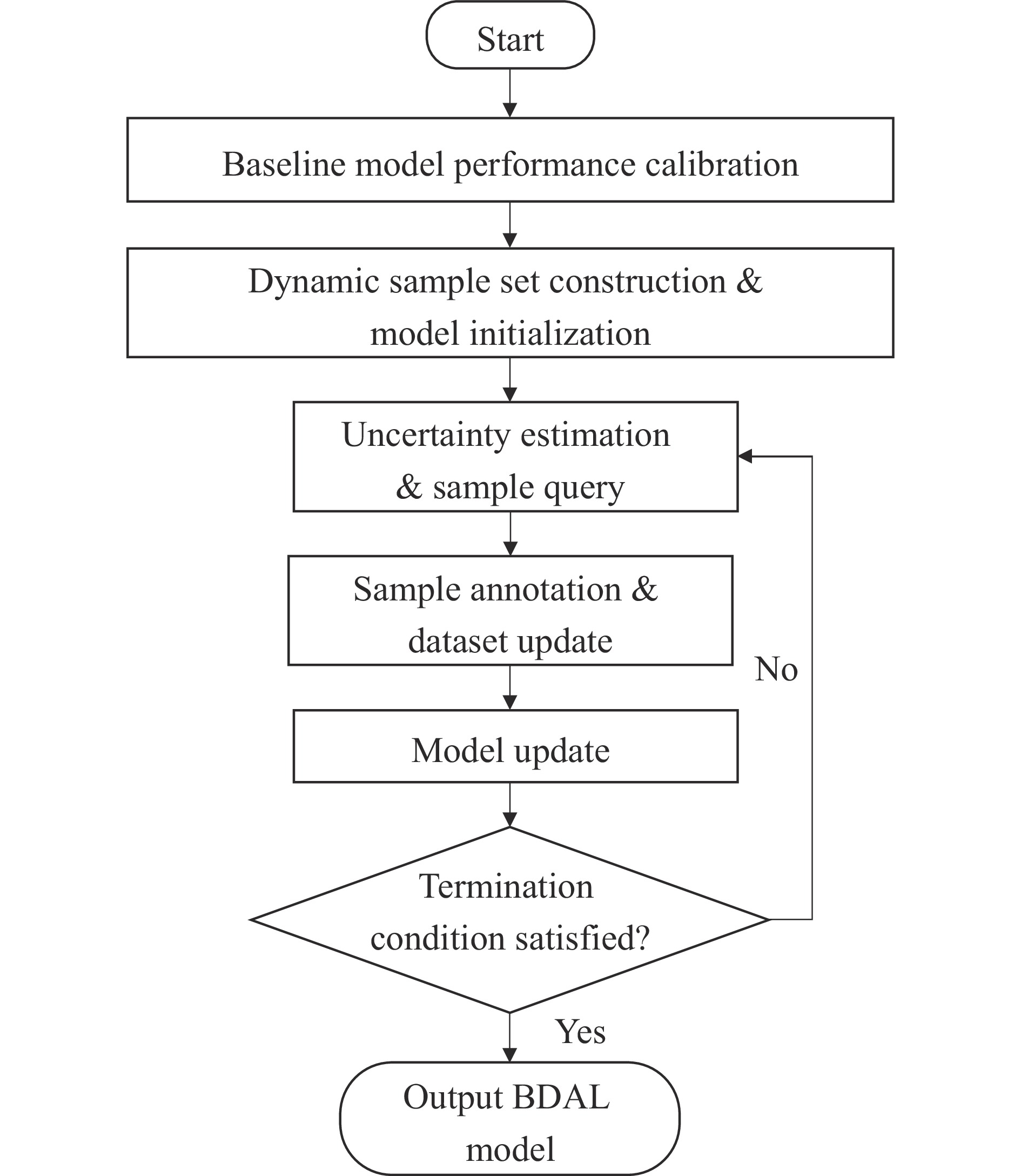
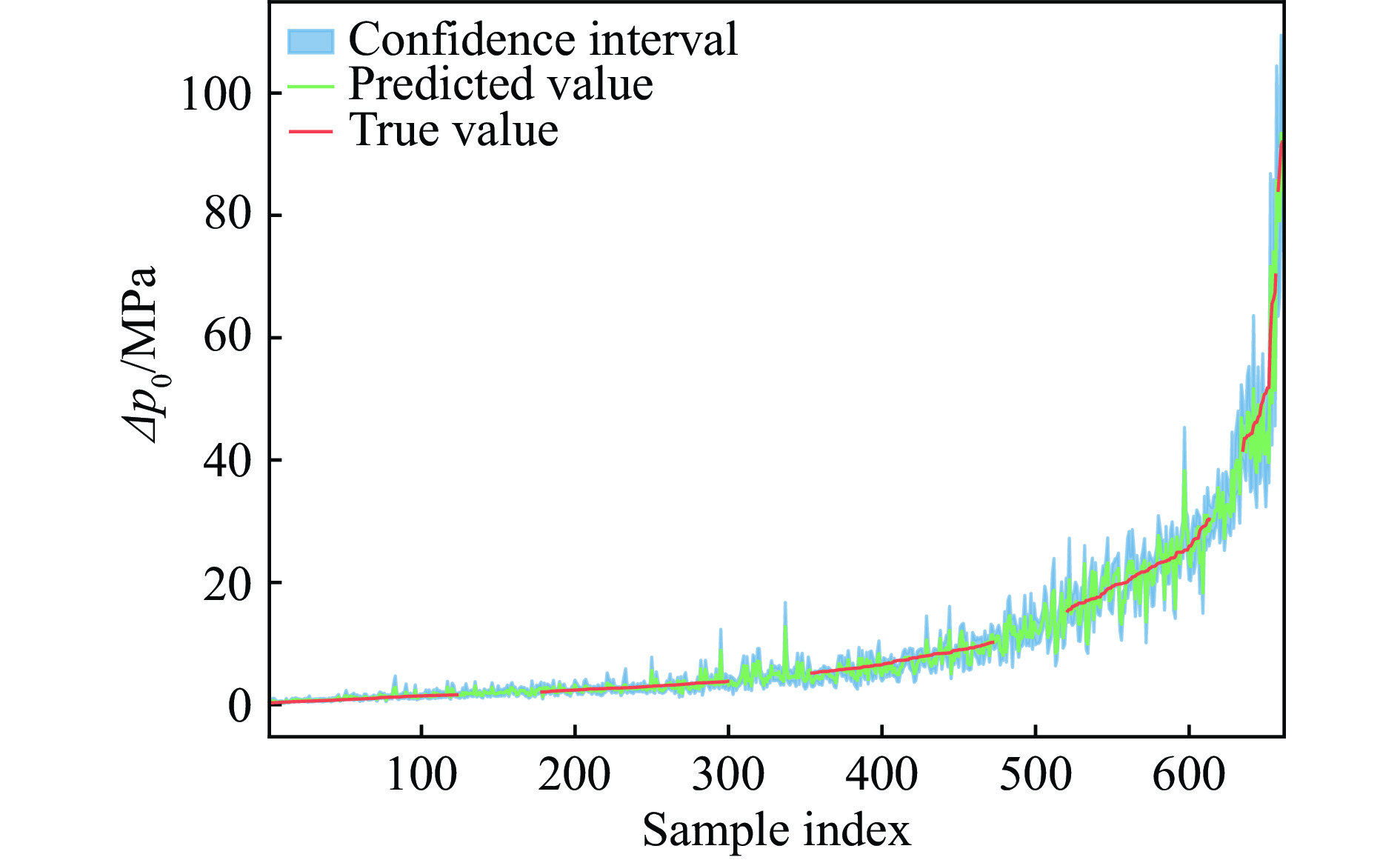
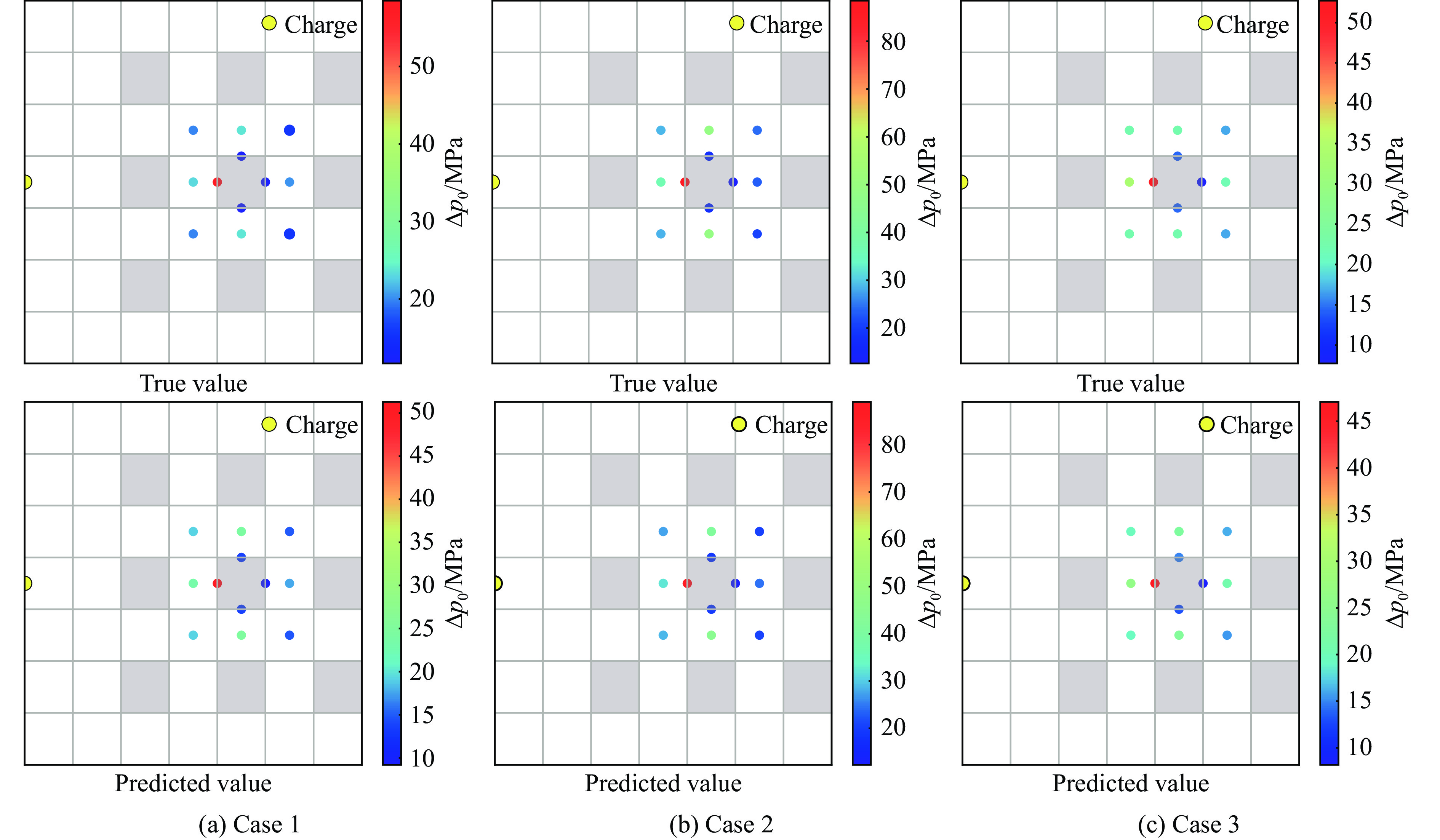
1000 ,2000 ,3000 kT), detonation distance (1000 , 2000,3000 m), building length (10, 20, 30 m), building width (20, 40 m), building height (75, 100 m), street length (50, 75, 100 m), and street width (50, 75 m). A full factorial experimental design was employed, generating 648 parameter combinations. For each combination, the open-source computational fluid dynamics (CFD) software blastFoam was used to perform three-dimensional numerical simulations of blast wave propagation. The background mesh size was set to 30 m based on grid sensitivity analysis, and adaptive mesh refinement (AMR) with local refinement level 2 and dynamic refinement level 1 was applied to capture shock wave details. Peak overpressure values were recorded at 12 points of interest (POIs) in the building cluster, resulting in a dataset of7776 samples. A BDAL framework was then developed. Bayesian inference was integrated into a deep neural network to enable probabilistic modeling of parameters. Monte Carlo (MC) dropout was adopted as an approximate variational inference method to estimate predictive uncertainty. An uncertainty-driven active sampling strategy was designed: the predictive variance of each unlabeled sample was computed via 30 stochastic forward passes with dropout enabled. Samples with variance exceeding 85% of the maximum variance were selected as candidates, and the top 28 cases (336 samples) with the highest variance were chosen in each active learning cycle. These selected samples were labeled by the blastFoam simulator and added to the training set. The model was retrained iteratively until the relative improvement in mean absolute percentage error (MAPE) fell below 1% or the labeled set reached the full training size. On a test set of 780 unseen samples (65 cases), the proposed BDAL method achieved an MAPE of 13.1% and an R2 of 0.972 for peak overpressure prediction. The 95% prediction interval covered the true values in 85.9% of the cases, with a normalized mean prediction interval width (NMPIW) of 0.026. Single-point prediction response time was below 20 ms, representing a speedup of more than 105 compared to high-fidelity numerical simulations. Compared to passive deep learning models trained on the full dataset, the BDAL method required only about 50% of labeled data to reach comparable prediction accuracy. In a comparative experiment with 50% training data, BDAL achieved a MAPE of 17.2%, while a conventional fully connected neural network (FCNN) and a three-dimensional direction-encoded Bayesian neural network (3D-DeBNN) gave MAPEs of 52.9% and 22.6%, respectively. The proposed Bayesian deep active learning method enables efficient and low-cost blast loading prediction in typical regularized urban environments. It effectively reduces the dependency on large-scale numerical simulation data, maintains high prediction accuracy and reliable uncertainty quantification, and meanwhile achieves millisecond-level inference speed. The method shows strong potential for disaster prevention and mitigation applications, such as pre-disaster anti-blast design and post-disaster emergency response.-
Key words:
- three-dimensional typical city /
- blast loading /
- Bayesian deep learning /
- active learning
-
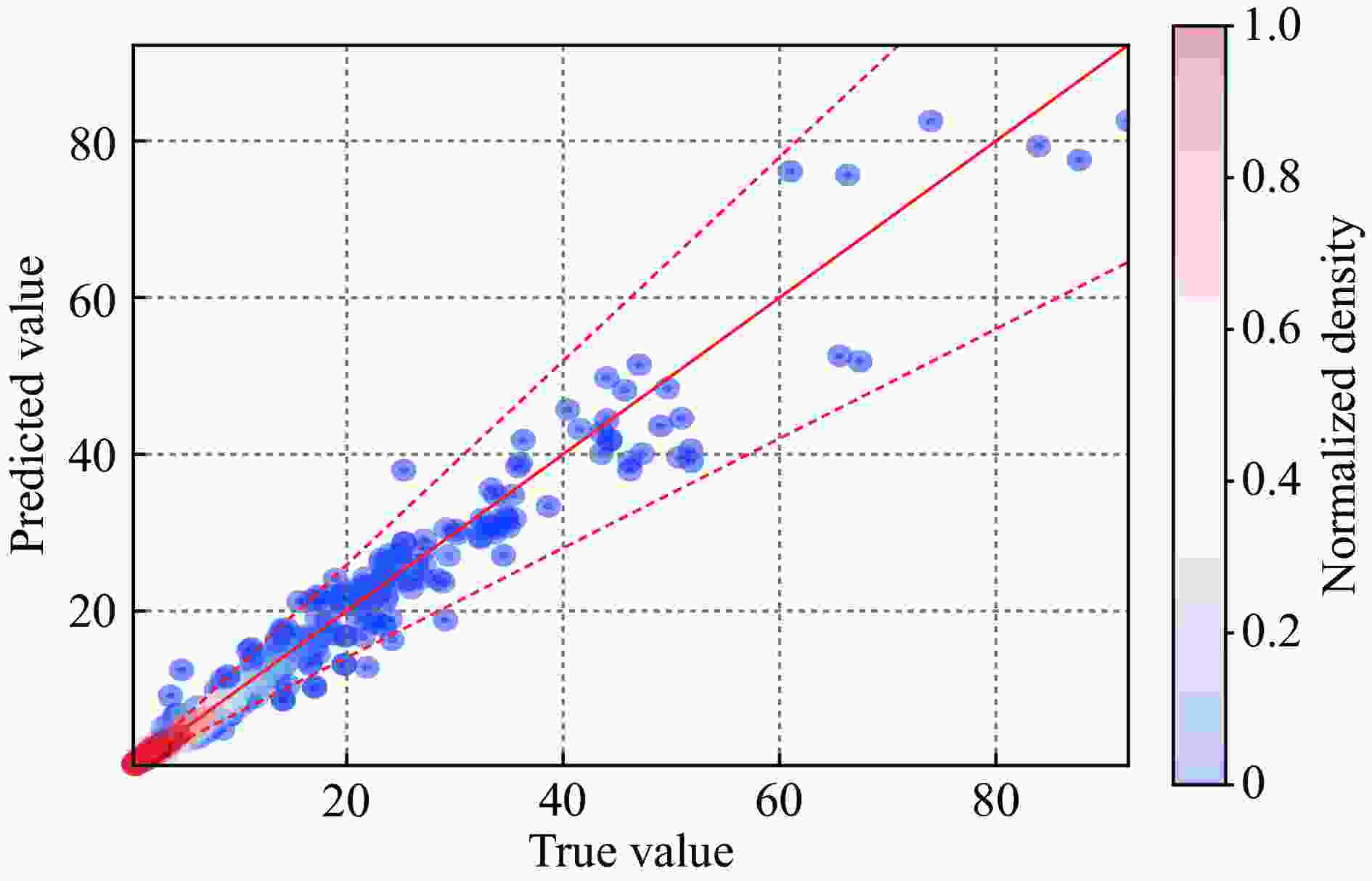
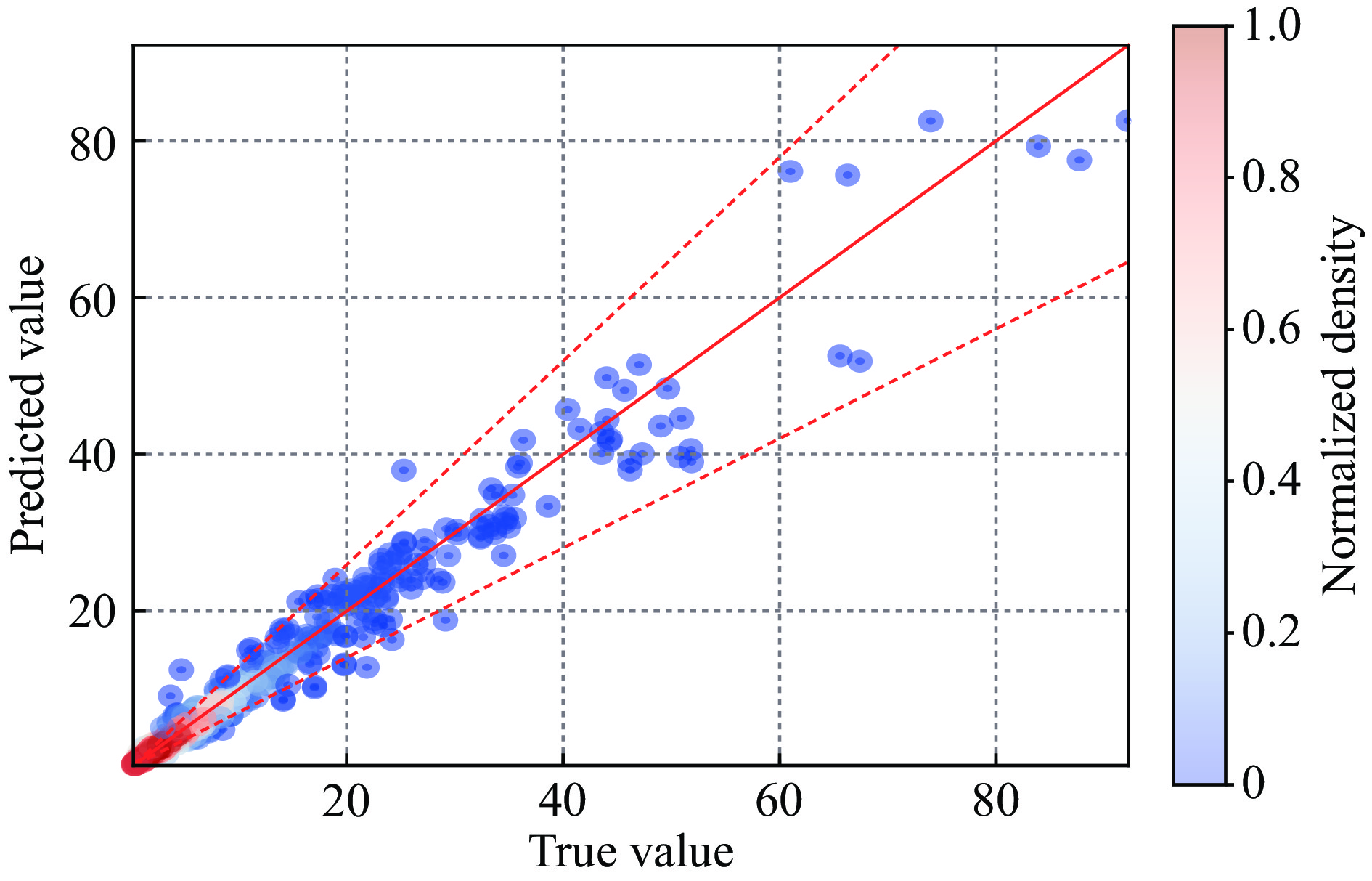
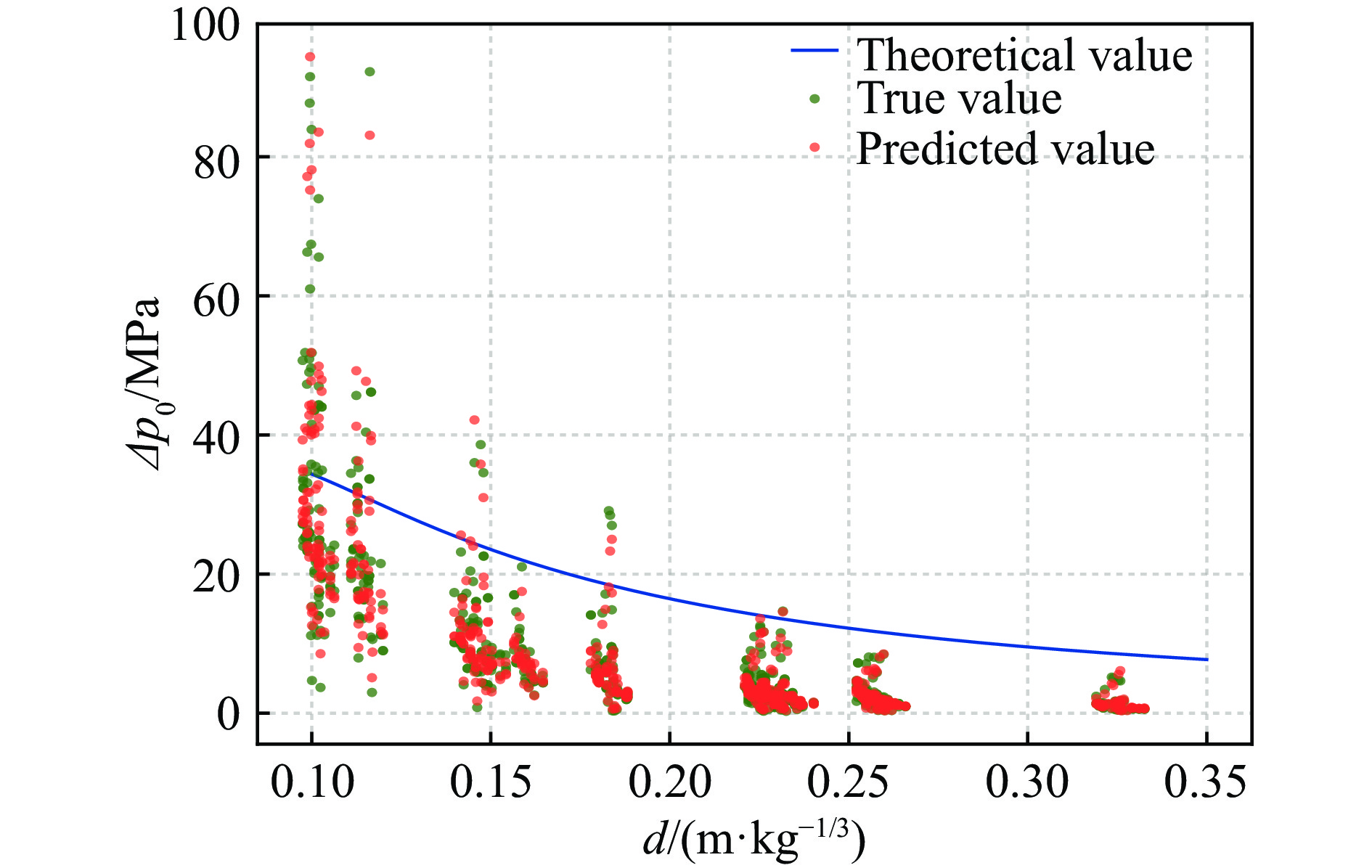
图 6 数值模拟真实值与模型预测值散点图
Figure 6. Scatter plots of the numerical simulation value and the model-predicted value
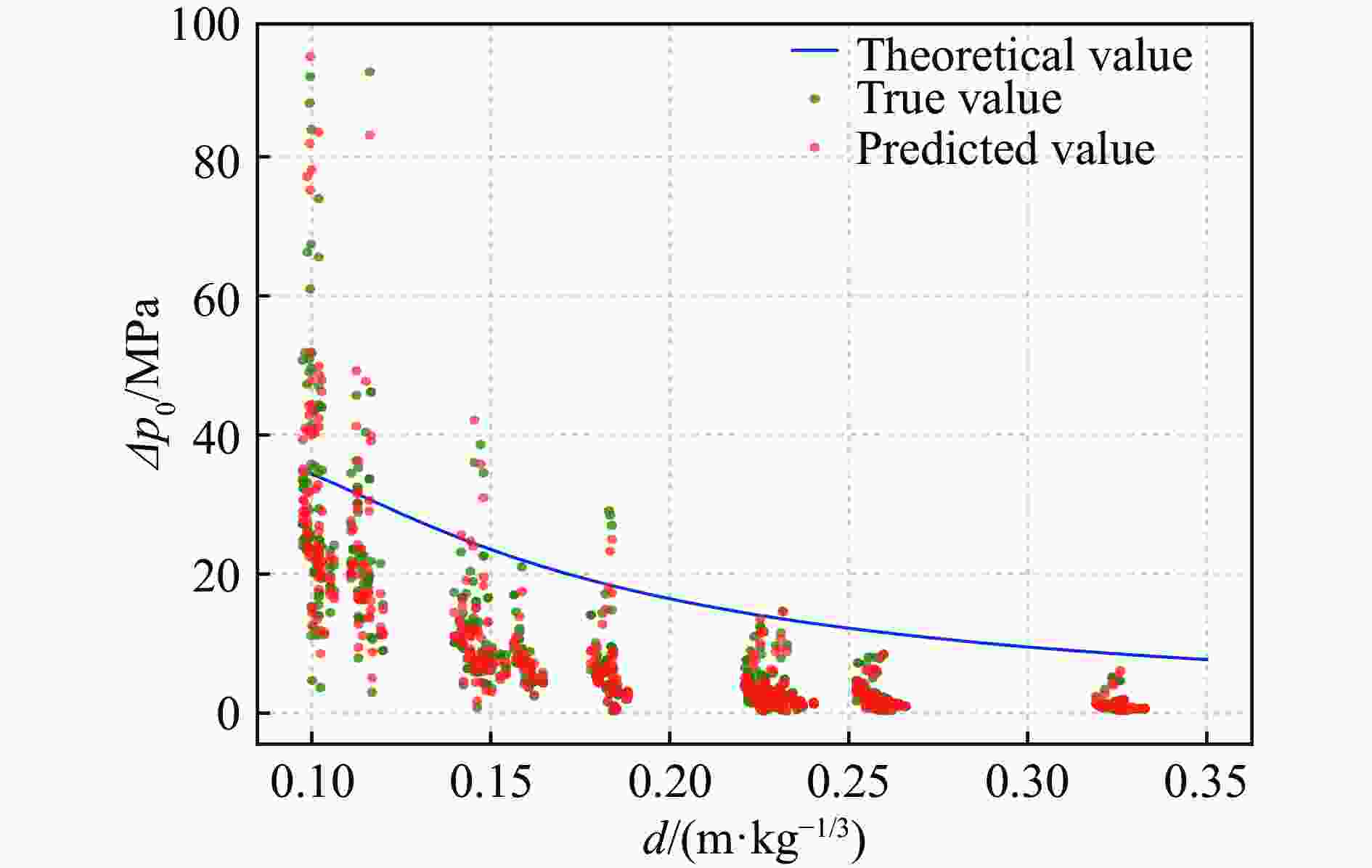
图 8 超压峰值随比例距离变化情况
Figure 8. The variation of peak overpressure with the scaled distance
表 1 场景参数设计
Table 1. Scene parameter design
参数 符号 单位 参数取值 爆源 爆源当量 Q kT ( 1000 ,2000 ,3000 )起爆距离 R m ( 1000 ,2000 ,3000 )结构 建筑物长 l m (10, 20, 30) 建筑物宽 w m (20, 40) 建筑物高 h m (75, 100) 街道 街道长 ls m (50, 75, 100) 街道宽 ws m (50, 75)  下载: 导出CSV
表 2 超参数搜索范围
Table 2. Hyperparameter search range
超参数 网格搜索范围 优化器 [SGD, Adam, RMSprop] 初始学习率 [ 0.0001 , 0.001, 0.01, 0.1]训练轮次 [ 5000 ,10000 ,15000 ]随机失活率 [0.1, 0.15, 0.2, 0.3, 0.5]
下载: 导出CSV
表 3 数值模拟与模型训练平台配置
Table 3. Configurations of numerical simulation and model training platforms
平台 处理器 内存 操作系统 天河二号超级计算中心 2×12 Intel Xeon E5- 2692 v2/单节点128GB/单节点 Linux lon26 3.10.0-514.el7.x86_64 本地台式机 AMD Ryzen7 3700X 8核 32 GB Windows10
下载: 导出CSV
表 4 BDAL模型的超压峰值预测结果
Table 4. Prediction results of peak overpressure by BDAL model
数据集 MAPE/% R2 PICP/% NMPIW/% 训练集 14.2 0.974 89.3 2.1 测试集 13.1 0.972 85.9 2.6
下载: 导出CSV
表 5 超压峰值随当量变化趋势
Table 5. The variation trends of peak overpressure with equivalent value
位置 POI编号 数据来源 增长百分比/% 趋势误差/% 街道中心点 1 真实值 189.1 12.9 预测值 201.9 2 真实值 190.2 3.5 预测值 193.7 3 真实值 177.7 14.0 预测值 191.7 5 真实值 186.1 4.3 预测值 181.8 8 真实值 183.9 5.2 预测值 178.7 建筑表面点 4 真实值 186.8 12.2 预测值 174.6 6 真实值 185.2 8.6 预测值 193.9 7 真实值 184.6 24.0 预测值 208.6
下载: 导出CSV
表 6 不同方法的性能对比
Table 6. Performance comparison of different methods
方法 50%训练样本 100%训练样本 MAPE R2 PICP NMPIW MAPE R2 PICP NMPIW BDAL 0.172 0.945 0.722 0.060 0.131 0.972 0.859 0.026 FCNN 0.529 0.388 − − 0.160 0.967 − − 3D-DeBNN 0.226 0.875 0.620 0.078 0.137 0.971 0.854 0.025
下载: 导出CSV
-
[1] SMITH P D, ROSE T A. Blast wave propagation in city streets—an overview [J]. Progress in Structural Engineering and Materials, 2006, 8(1): 16–28. DOI: 10.1002/pse.209. [2] RATCLIFF A, RIGBY S, CLARKE S, et al. A review of blast loading in the urban environment [J]. Applied Sciences, 2023, 13(9): 5349. DOI: 10.3390/app13095349. [3] 张大民, 张昆, 汤文辉, 等. 剪力墙建筑物在强爆炸作用下的动响应研究 [J]. 现代应用物理, 2022, 13(4): 041003. DOI: 10.12061/j.issn.2095-6223.2022.041003.ZHANG D M, ZHANG K, TANG W H, et al. Dynamic response of shear wall buildings under intense explosion [J]. Modern Applied Physics, 2022, 13(4): 041003. DOI: 10.12061/j.issn.2095-6223.2022.041003. [4] 柏准, 胡玉涛, 钱秉文, 等. 爆炸作用下浅埋直墙拱结构的毁伤评估方法与毁伤判据选择 [J]. 现代应用物理, 2024, 15(3): 031002. DOI: 10.12061/j.issn.2905-6223.2024.031002.BAI Z, HU Y T, QIAN B W, et al. Damage evaluation method and damage criterion selection of shallow straight-wall arch structure under explosion [J]. Modern Applied Physics, 2024, 15(3): 031002. DOI: 10.12061/j.issn.2905-6223.2024.031002. [5] 王澍霏, 钟巍, 王智环, 等. 爆炸荷载作用下单层钢化玻璃破坏状态的理论预测方法 [J]. 现代应用物理, 2020, 11(3): 031001. DOI: 10.12061/j.issn.2095-6223.2020.031001.WANG S F, ZHONG W, WANG Z H, et al. A theoretical prediction method for failure state of single-layer tempered glass under blast loading [J]. Modern Applied Physics, 2020, 11(3): 031001. DOI: 10.12061/j.issn.2095-6223.2020.031001. [6] REMENNIKOV A M. A review of methods for predicting bomb blast effects on buildings [J]. Journal of Battlefield Technology, 2003, 6(3): 5–10. [7] REMENNIKOV A M, ROSE T A. Modelling blast loads on buildings in complex city geometries [J]. Computers & Structures, 2005, 83(27): 2197–2205. DOI: 10.1016/j.compstruc.2005.04.003. [8] SHI Y C, LIU S Z, LI Z X, et al. Review on quick safety assessment of building structures in complex urban environment after extreme explosion events [J]. International Journal of Protective Structures, 2023, 14(3): 438–458. DOI: 10.1177/20414196221104146. [9] REMENNIKOV A M, MENDIS P A. Prediction of airblast loads in complex environments using artificial neural networks [J]. Transactions on the Built Environment, 2006, 87: 269–278. [10] 黄沛吉, 彭卫文, 冷春江, 等. 基于神经网络的密集城市建筑群爆炸载荷快速预测 [J]. 兵工学报, 2025, 46(8): 240987. DOI: 10.12382/bgxb.2024.0987.HUANG P J, PENG W W, LENG C J, et al. Rapid prediction of blast loading in dense urban building complex based on neural networks [J]. Acta Armamentarii, 2025, 46(8): 240987. DOI: 10.12382/bgxb.2024.0987. [11] SI D D, PAN Z F, ZHANG H P. Distribution characteristics and prediction of blast load on building surfaces in urban blocks [J]. Structures, 2025, 78: 109396. DOI: 10.1016/j.istruc.2025.109396. [12] DENNIS A A, RIGBY S E. Prediction of blast loads using machine learning approaches [C]//Earthquake Engineering and Dynamics for a Sustainable Future. Cambridge: Society for Earthquake and Civil Engineering Dynamics (SECED), 2023. [13] DENNIS A A, RIGBY S E. The direction-encoded neural network: a machine learning approach to rapidly predict blast loading in obstructed environments [J]. International Journal of Protective Structures, 2024, 15(3): 455–483. DOI: 10.1177/20414196231177364. [14] WANG Z Q, PENG J Z, HU J, et al. BlastGraphNet: an intelligent computational method for the precise and rapid prediction of blast loads on complex 3D buildings using graph neural networks [J]. Engineering, 2025, 49: 205–224. DOI: 10.1016/j.eng.2025.03.007. [15] DENNIS A A, SMYL D J, STIRLING C G, et al. A branching algorithm to reduce computational time of batch models: application for blast analyses [J]. International Journal of Protective Structures, 2023, 14(2): 135–167. DOI: 10.1177/20414196221085720. [16] DENNIS A A, STIRLING C, RIGBY S E. Towards the development of machine learning tools for blast load prediction [C]//Proceedings of the 6th International Conference on Protective Structures (ICPS6). Auburn: International Association of Protective Structures, 2023. [17] PANNELL J J, RIGBY S E, PANOUTSOS G. Application of transfer learning for the prediction of blast impulse [J]. International Journal of Protective Structures, 2023, 14(2): 242–262. DOI: 10.1177/20414196221096699. [18] HUANG Y, ZHU S J, CHEN S W. Deep learning-driven super-resolution reconstruction of two-dimensional explosion pressure fields [J]. Journal of Building Engineering, 2023, 78: 107620. DOI: 10.1016/j.jobe.2023.107620. [19] KANG M A, PARK C H. Prediction of peak pressure by blast wave propagation between buildings using a conditional 3D convolutional neural network [J]. IEEE Access, 2023, 11: 26114–26124. DOI: 10.1109/ACCESS.2023.3257345. [20] PENG W W, HUANG P J, LENG C J, et al. Blast loading prediction in a typical urban environment based on 3D direction-encoded Bayesian neural network [J]. Reliability Engineering & System Safety, 2025, 264: 111415. DOI: 10.1016/j.ress.2025.111415. [21] 黄阳, 罗定坤, 陈素文. 基于物理信息及数据融合驱动的复杂街区爆炸荷载快速计算方法 [J]. 爆炸与冲击, 2026, 46(5): 051411. DOI: 10.11883/bzycj-2025-0238.HUANG Y, LUO D K, CHEN S W. A physics-information and data fusion-driven method for rapid prediction of blast loads in complex urban environments [J]. Explosion and Shock Waves, 2026, 46(5): 051411. DOI: 10.11883/bzycj-2025-0238. [22] PAN M L, PENG W W, LENG C J, et al. Blast loading prediction of complex structures based on Bayesian deep active learning [J]. Applied Sciences, 2025, 15(3): 1147. DOI: 10.3390/app15031147. [23] 刘竟飞, 姜潮, 倪冰雨, 等. 基于主动学习与贝叶斯深度神经网络的高维多输出不确定性传播方法 [J]. 中国机械工程, 2024, 35(5): 792–801. DOI: 10.3969/j.issn.1004-132X.2024.05.004.LIU J F, JIANG C, NI B Y, et al. High dimensional multioutput uncertainty propagation method via active learning and Bayesian deep neural network [J]. China Mechanical Engineering, 2024, 35(5): 792–801. DOI: 10.3969/j.issn.1004-132X.2024.05.004. [24] LIU S Y, CHEN K, HU T L, et al. Uncertainty-aware complementary label queries for active learning [J]. Frontiers of Information Technology & Electronic Engineering, 2023, 24(10): 1497–1503. DOI: 10.1631/FITEE.2200589. [25] PENG W W, PAN M L, LENG C J, et al. Blast loading prediction in a typical urban environment based on Bayesian deep learning [J]. Engineering Applications of Computational Fluid Mechanics, 2025, 19(1): 2445765. DOI: 10.1080/19942060.2024.2445765. [26] 潘美霖, 彭卫文, 冷春江, 等. 基于贝叶斯深度学习的复杂结构爆炸载荷的快速估计 [J]. 爆炸与冲击, 2025, 45(8): 084201. DOI: 10.11883/bzycj-2024-0191.PAN M L, PENG W W, LENG C J, et al. Rapid estimation of blast loading on complex structures based on Bayesian deep learning [J]. Explosion and Shock Waves, 2025, 45(8): 084201. DOI: 10.11883/bzycj-2024-0191. [27] 潘美霖, 彭卫文, 冷春江, 等. 考虑不确定性量化的典型城市建筑群爆炸载荷的快速估计方法 [J]. 计算物理, 2025, 42(6): 762–774. DOI: 10.19596/j.cnki.1001-246x.9001.PAN M L, PENG W W, LENG C J, et al. A rapid estimation method of blast loading for typical urban building complexes considering uncertainty quantification [J]. Chinese Journal of Computational Physics, 2025, 42(6): 762–774. DOI: 10.19596/j.cnki.1001-246x.9001. [28] 陈博, 仵可, 张云峰, 等. 基于模型验证与确认方法的空爆自由场网格敏感性分析 [J]. 现代应用物理, 2024, 15(3): 031003. DOI: 10.12061/j.issn.2905-6223.2024.031003.CHEN B, WU K, ZHANG Y F, et al. Analysis on grid sensitivity of free field of air explosion based on verification and validation (V&V) method [J]. Modern Applied Physics, 2024, 15(3): 031003. DOI: 10.12061/j.issn.2905-6223.2024.031003. [29] PSAROS A F, MENG X H, ZOU Z R, et al. Uncertainty quantification in scientific machine learning: methods, metrics, and comparisons [J]. Journal of Computational Physics, 2023, 477: 111902. DOI: 10.1016/j.jcp.2022.111902. [30] HENRYCH J. The dynamics of explosion and its use [M]. Amsterdam: Elsevier, 1979. -

计量
- 文章访问数: 617
- HTML全文浏览量: 94
- PDF下载量: 122
- 被引次数: 0