


Experimental study on local detonation induced by collision between shock wave and obstacle
-
摘要: 为揭示激波与障碍物相互作用诱导局部爆轰起爆的机理,对障碍物管道中不同当量比的氢/空气预混火焰加速过程进行实验研究,讨论了马赫杆与障碍物的相互作用诱导局部爆轰的过程。结果表明:当量比为0.8时,预混火焰未发生起爆,反射激波与火焰前锋相互作用产生Richtmyer-Meshkov不稳定性,导致火焰表面褶皱更显著,火焰表面积增长,从而加速火焰传播,但并未引发局部爆轰;若当量比在0.9~1.3范围内,反射激波作用下障碍物附近形成热点,进而触发局部爆轰,但该局部爆轰在衍射过程中因受膨胀波作用而解耦,最终未能发展成稳定爆轰。通过对临界起爆特性进行分析,发现提升激波强度和当量比均可增大临界起爆参数,临界起爆参数对激波强度的敏感性高于当量比。进一步,针对Thomas的临界起爆模型所考虑的入射激波与实验存在差异,对激波反射区进行了分区计算,发现在当量比为1.2条件下,前导激波反射后声速较低,使膨胀波到达障碍物底部时间延长,有利于起爆发生;而当量比为0.8时,由于当量比较低,混合气反应活性降低,点火延迟时间较长,从而降低了起爆可能性。Abstract: To elucidate the mechanism by which shock and obstacle interactions induce local detonation initiation, an experimental investigation was conducted on flame acceleration of premixed hydrogen–air mixtures in an obstacle-laden tube. Experiments were performed over a range of equivalence ratios from 0.8 to 1.3, spanning both fuel-lean and fuel-rich conditions relative to stoichiometry. Particular emphasis was placed on the interaction between the Mach stem of the leading shock and a single obstacle, and on how this interaction governs the formation of localized hot spots and the subsequent onset of local detonation. At an equivalence ratio of 0.8, initiation was not observed. Under this condition, the reflected shock interacted with the flame front and induced Richtmyer–Meshkov instability, generating pronounced wrinkling of the flame surface. This interaction further densified the pre-existing flame folds and increased the flame surface area, thereby accelerating the flame; however, no local detonation was initiated. In contrast, if the equivalence ratio was within the range from 0.9 to 1.3, successful initiation was observed. Shock reflection in the obstacle vicinity generated localized regions of elevated temperature that acted as hot spots, providing favorable conditions for rapid energy release and the onset of a locally detonative event. However, the locally initiated detonation did not develop into a self-sustained stable detonation. During subsequent diffraction, expansion waves imposed pronounced cooling and attenuation, causing progressive decoupling between the leading shock and the reaction zone, and thereby suppressing further development into a stable detonation wave. Through analysis of the critical initiation characteristics, it is found that increasing either the shock strength or the equivalence ratio increases the critical initiation parameter, and the critical initiation parameter is more sensitive to shock strength than to equivalence ratio. Furthermore, considering the discrepancy between the Thomas critical initiation model and the incident shock wave in the present experiments, the shock reflection zone was divided into sections for calculation. The analysis reveals that, at an equivalence ratio of 1.2, the lower sonic velocity following reflection of the leading shock wave prolongs the time taken for the expansion wave to reach the base of the obstacle, thereby favoring initiation. Conversely, at an equivalence ratio of 0.8, the lower equivalence ratio reduces the reactivity of the mixture, leading to a longer ignition delay time and consequently reducing the likelihood of initiation.
-
Key words:
- obstacle /
- flame acceleration /
- shock reflection /
- Mach stem /
- local detonation
-
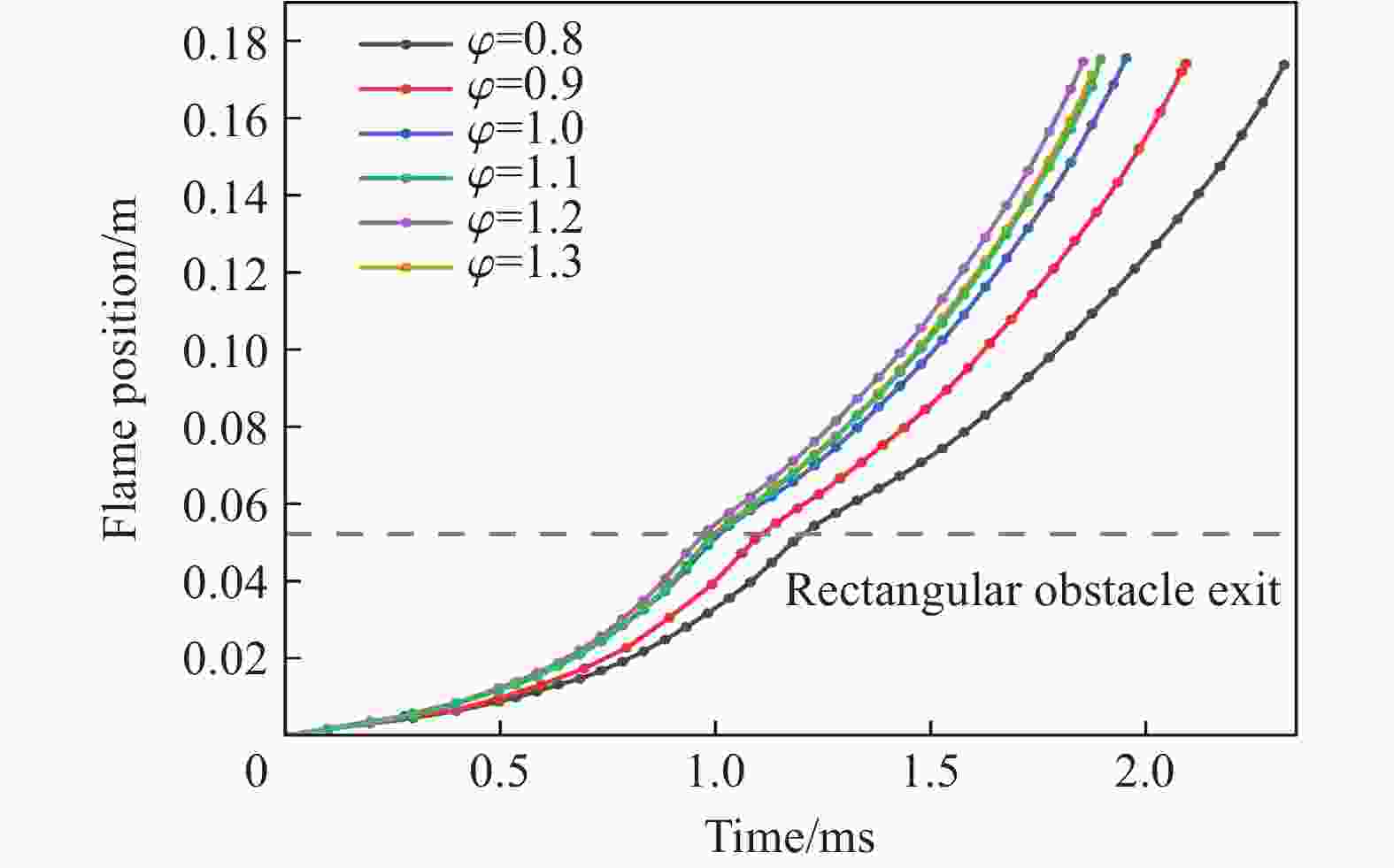
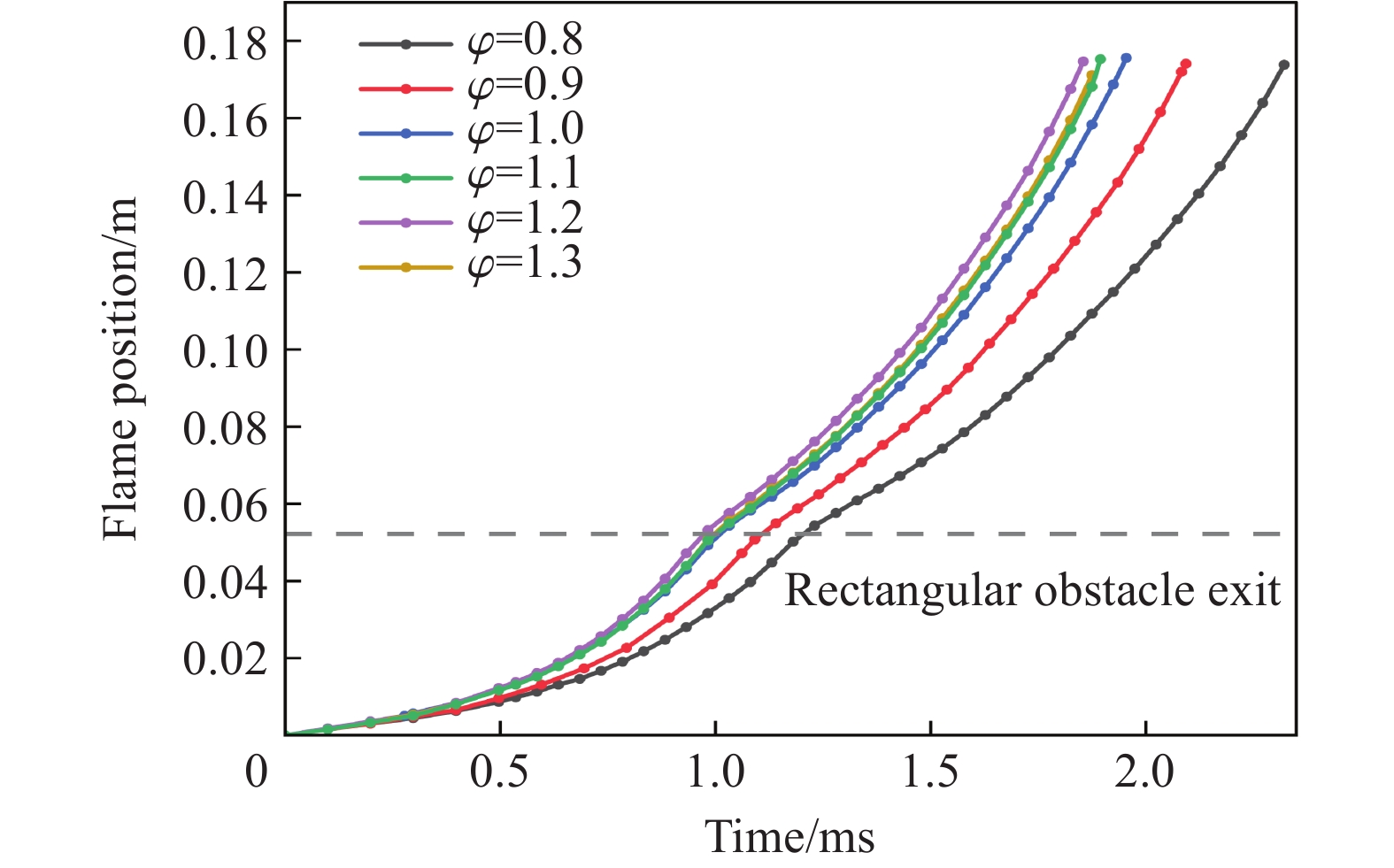
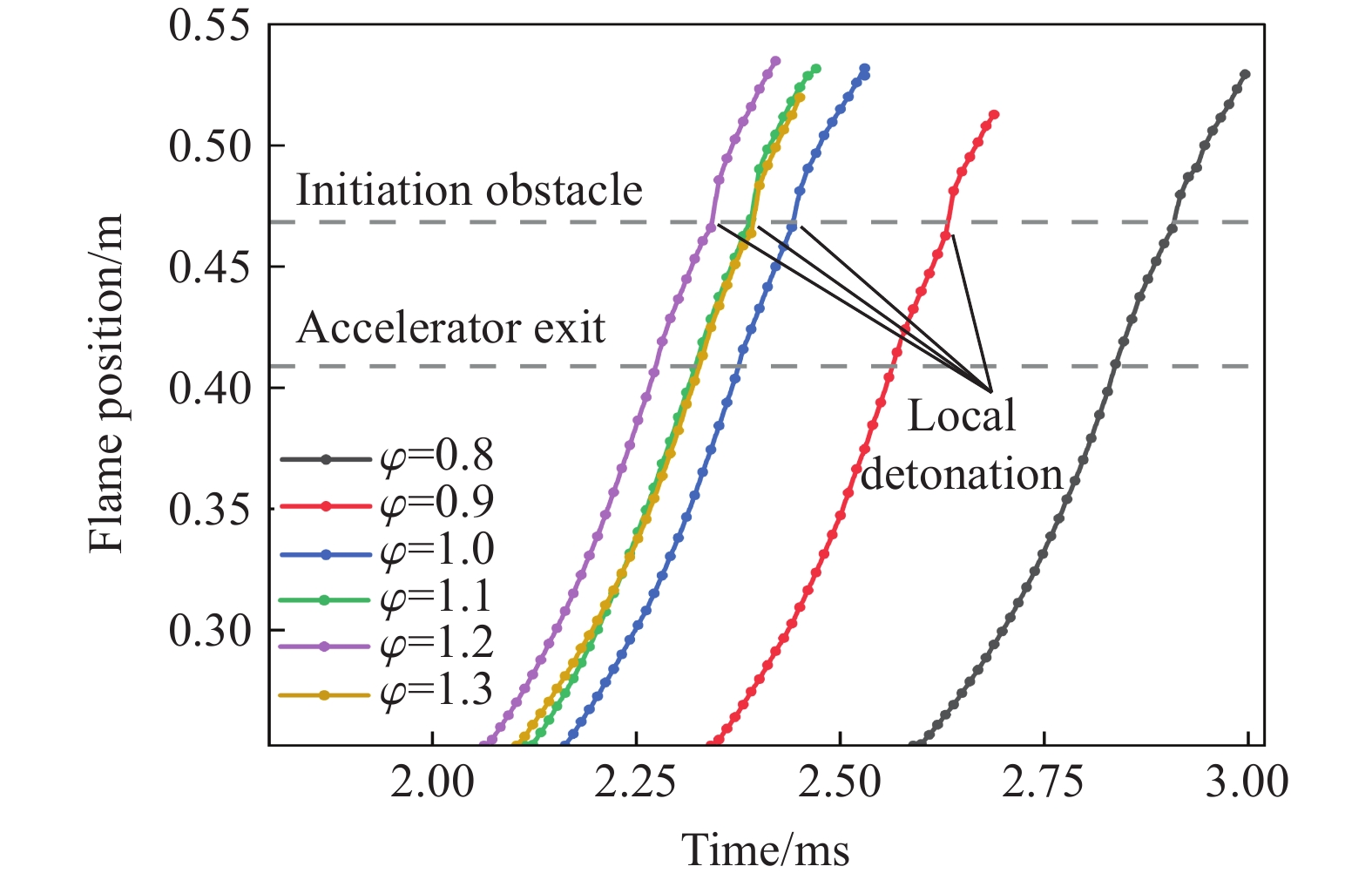
图 3 管道前段火焰前锋位置与时间的关系
Figure 3. Relation between flame position and time in the front section of the duct
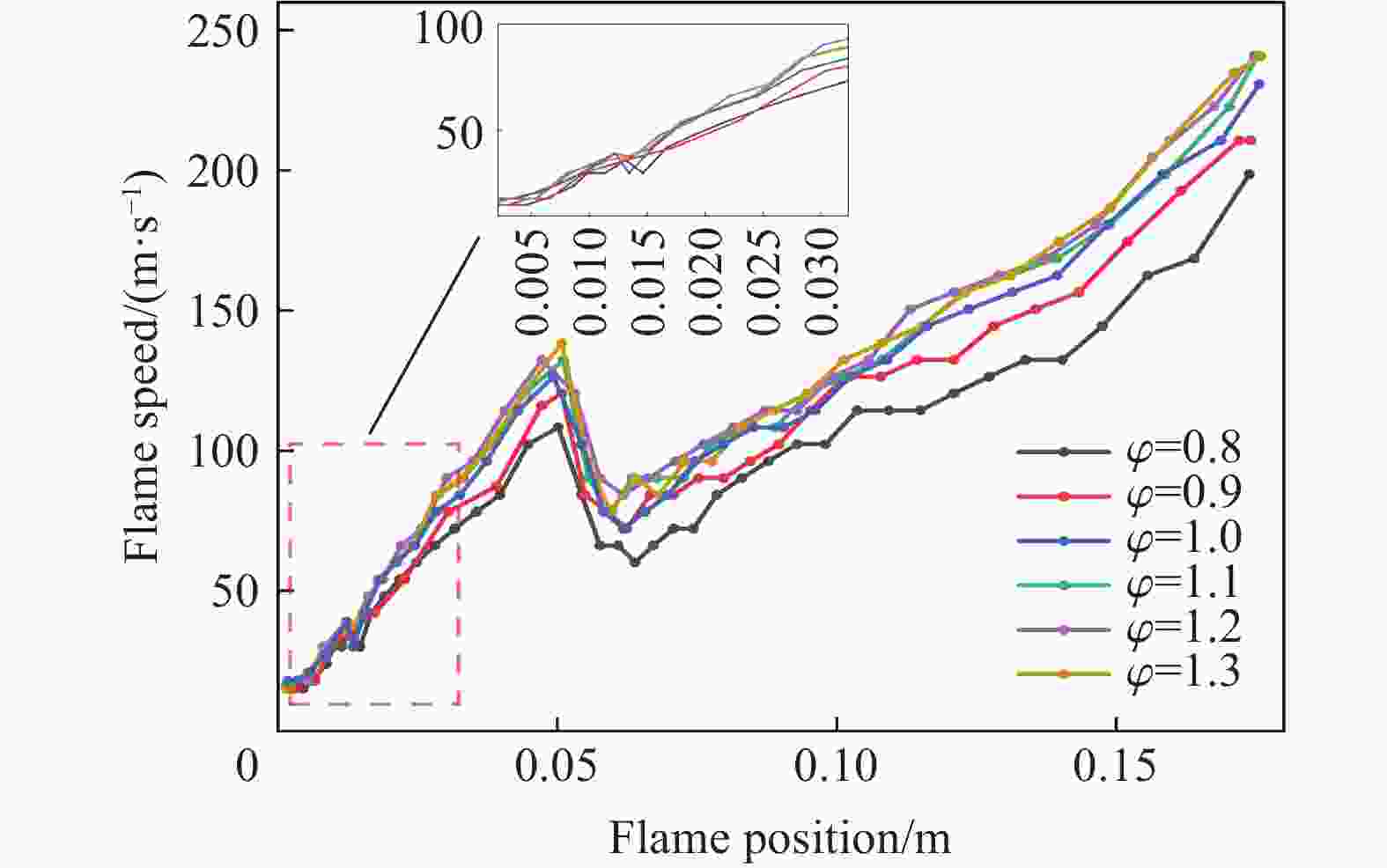
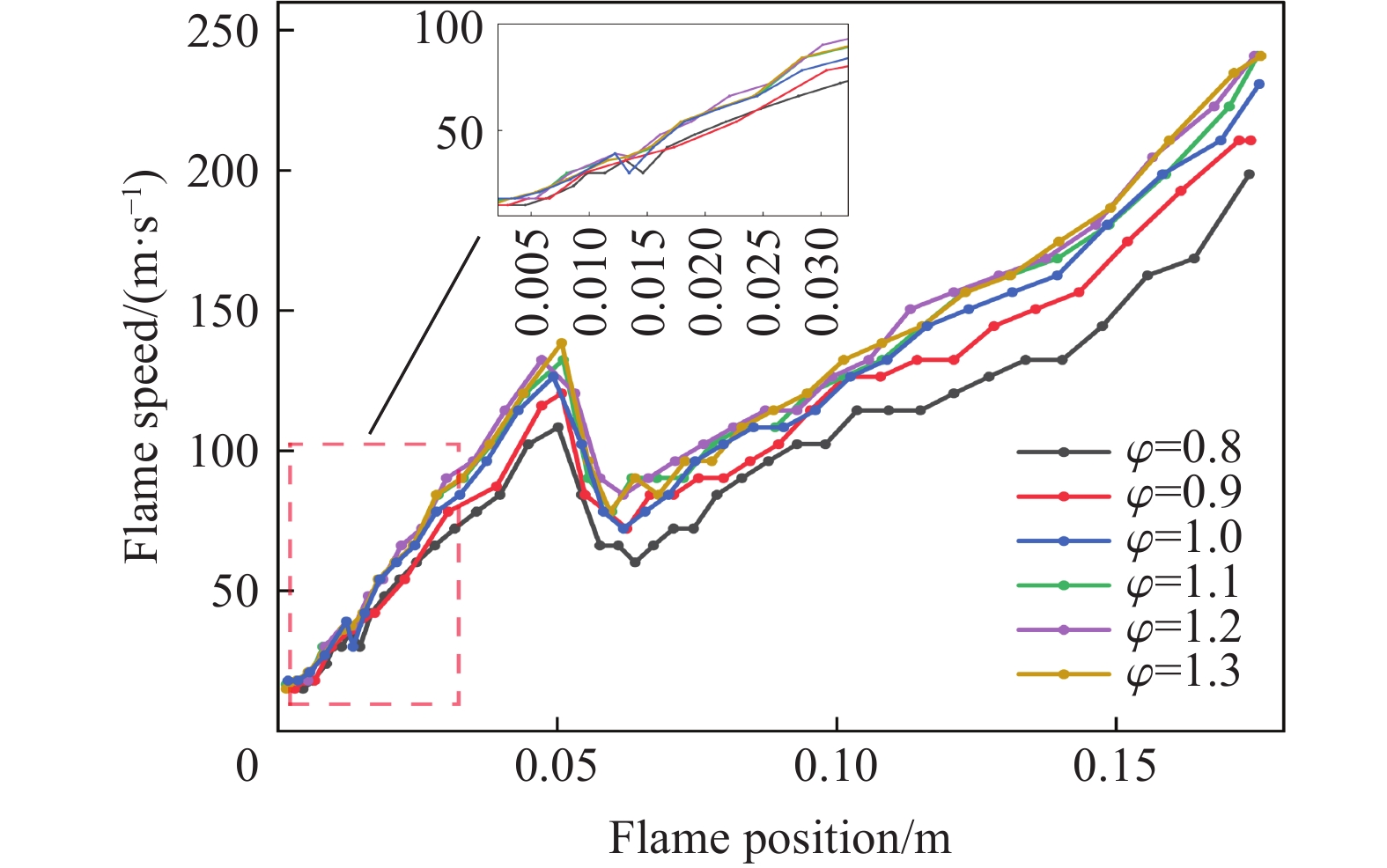
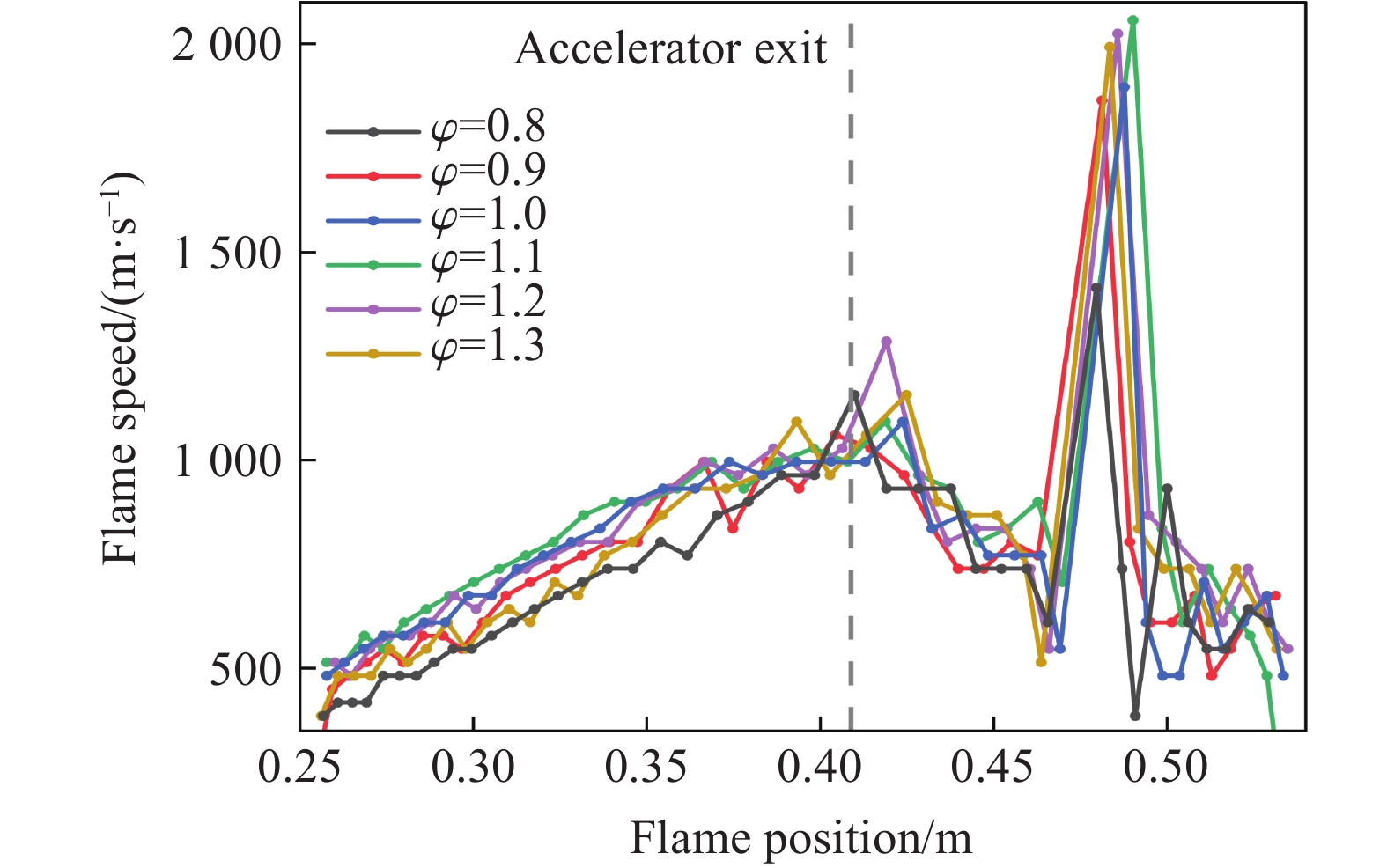
图 4 管道前段火焰前锋速度与位置的关系
Figure 4. Relation between flame speed and flame position in the front section of the duct
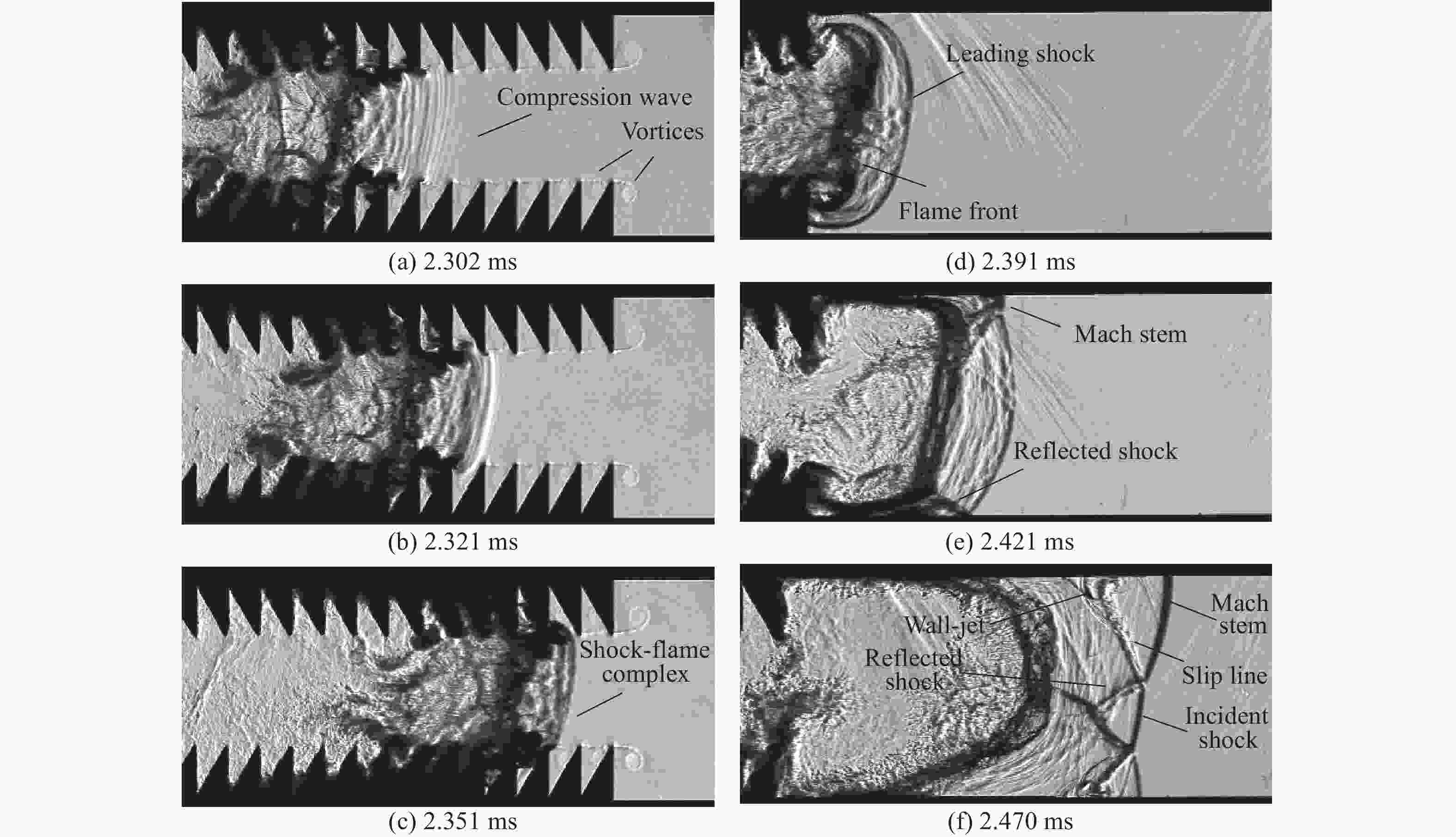
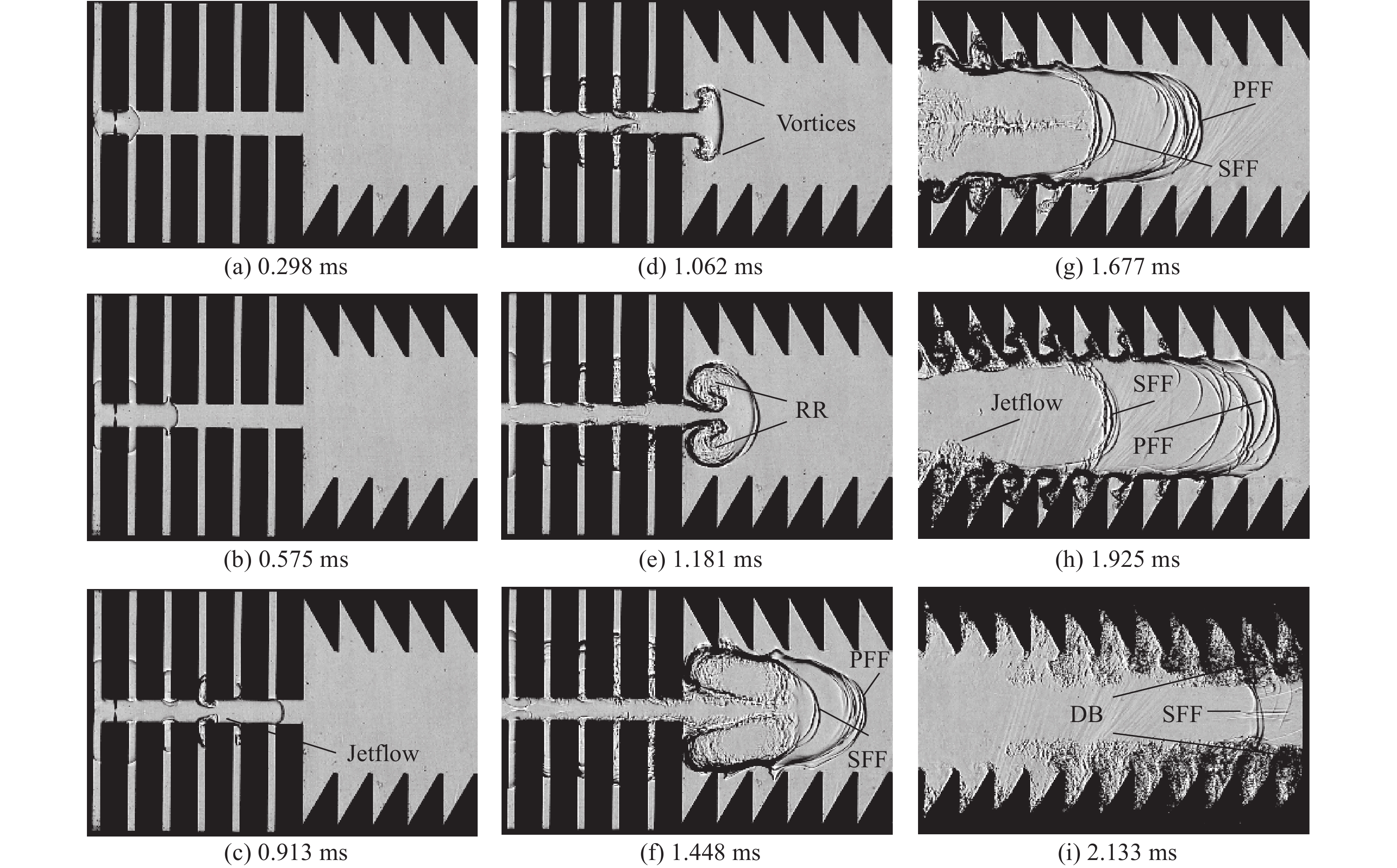
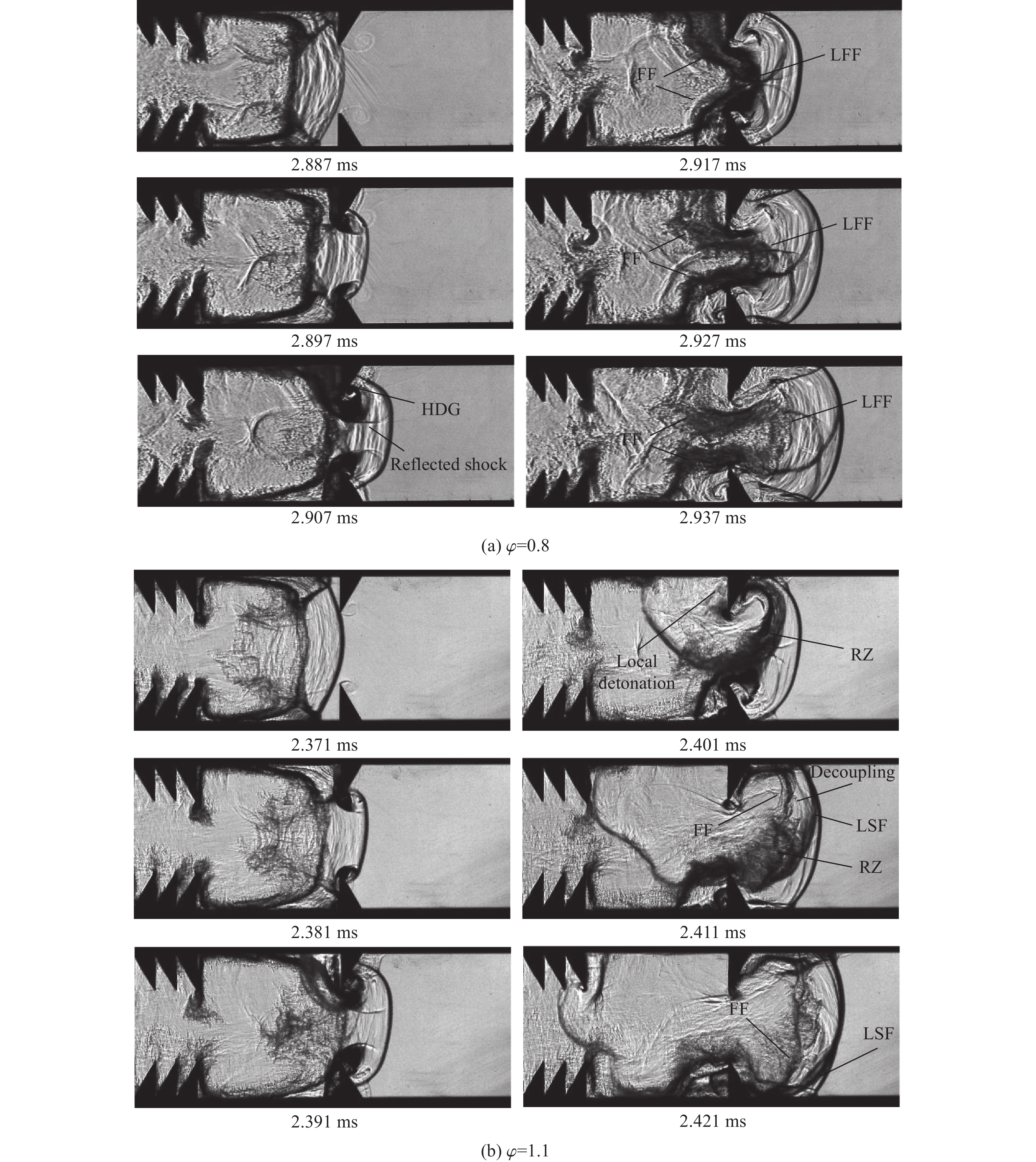
图 6 火焰传播与前导激波演化过程
Figure 6. Flame propagation process and the evolution process of leading shock wave
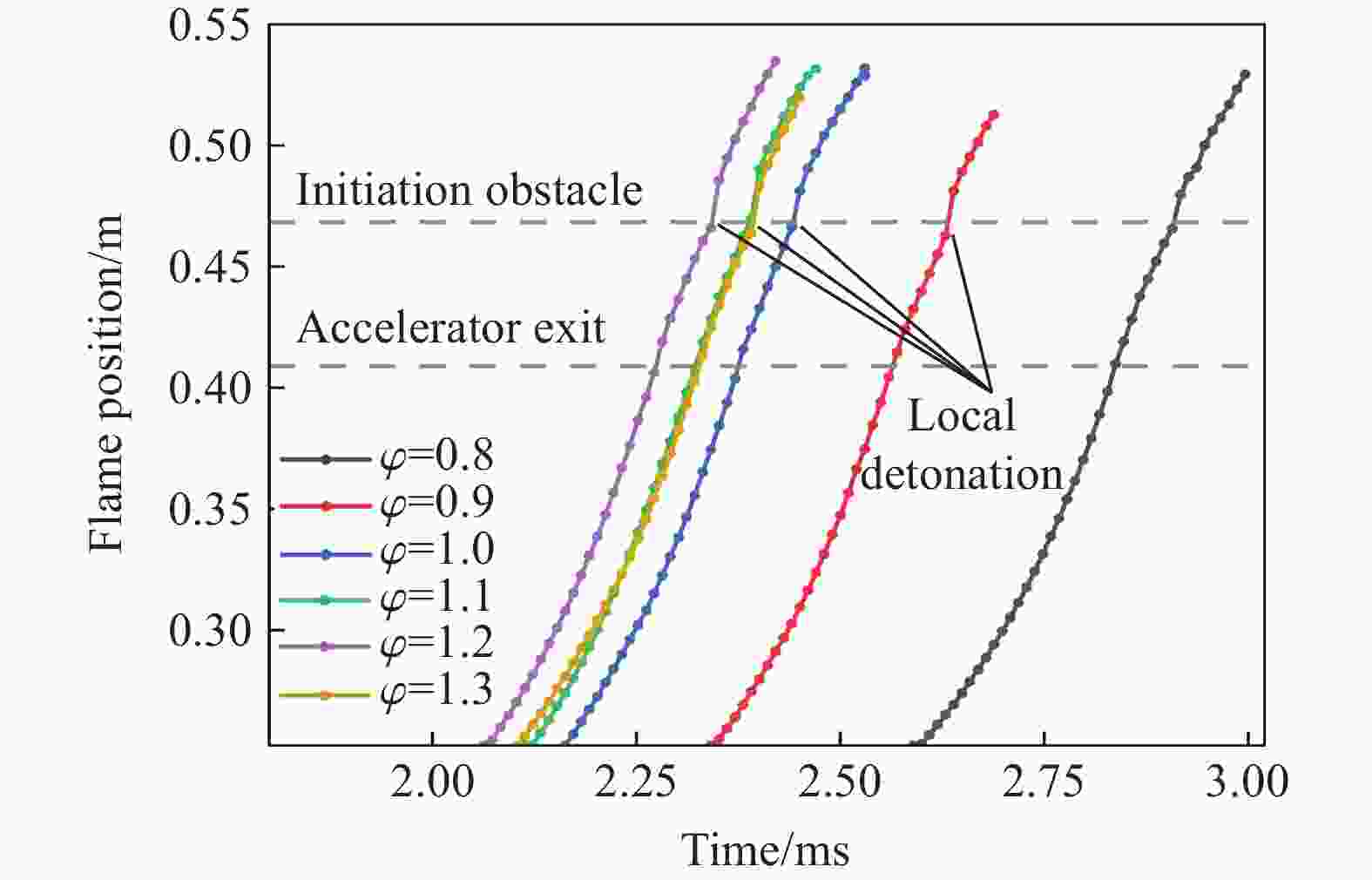
图 7 管道后段火焰前锋位置与时间的关系
Figure 7. Relation between flame position and time in the rear section of the duct
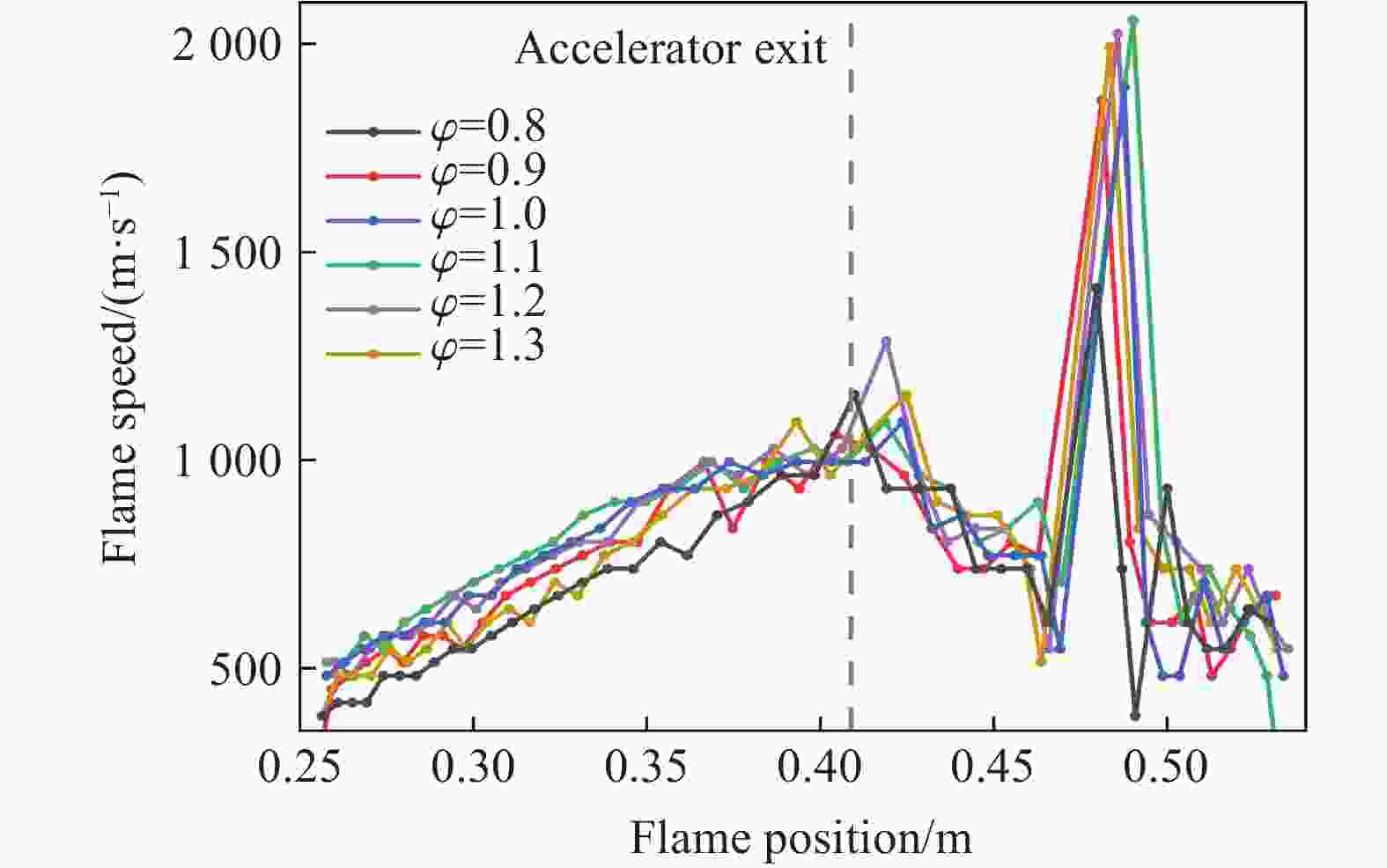
图 8 管道后段火焰前锋速度与位置的关系
Figure 8. Relation between flame speed and flame position in the rear section of the duct
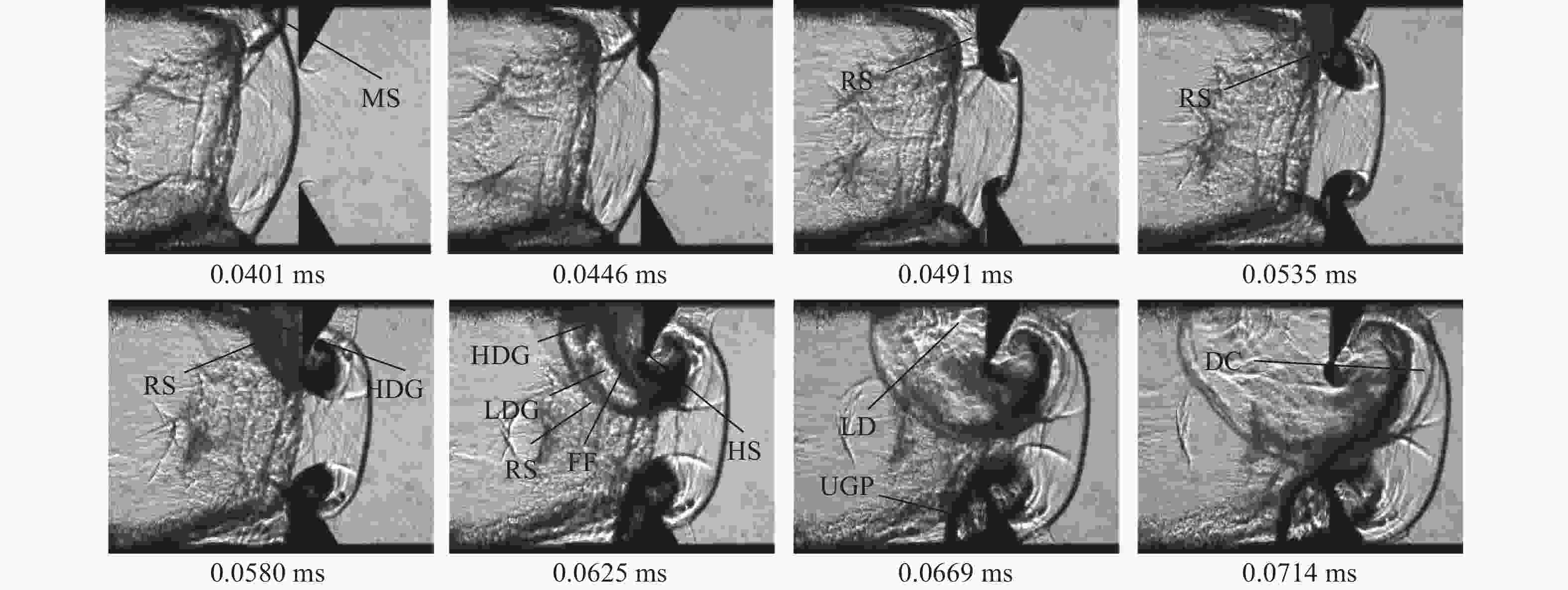
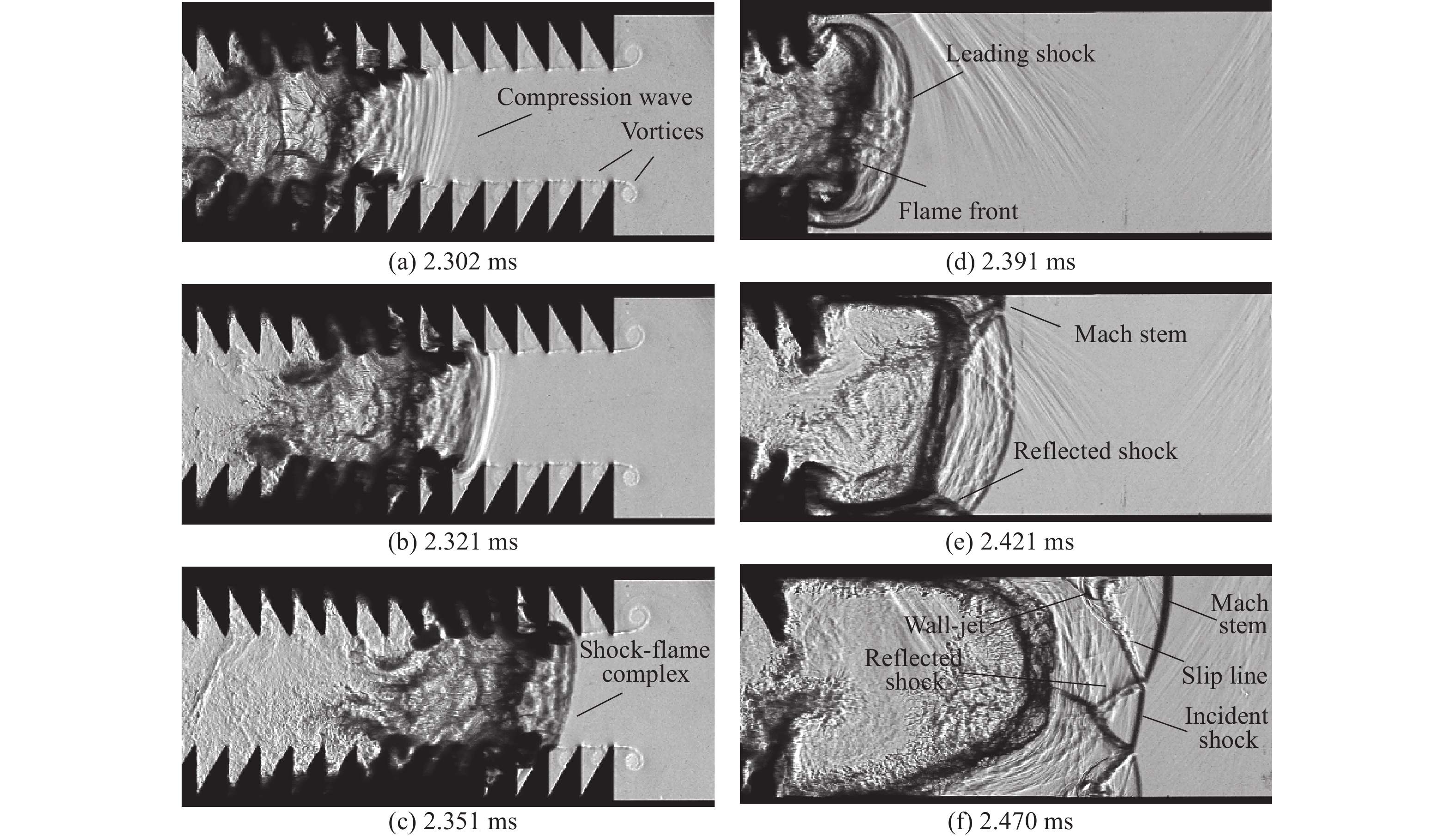
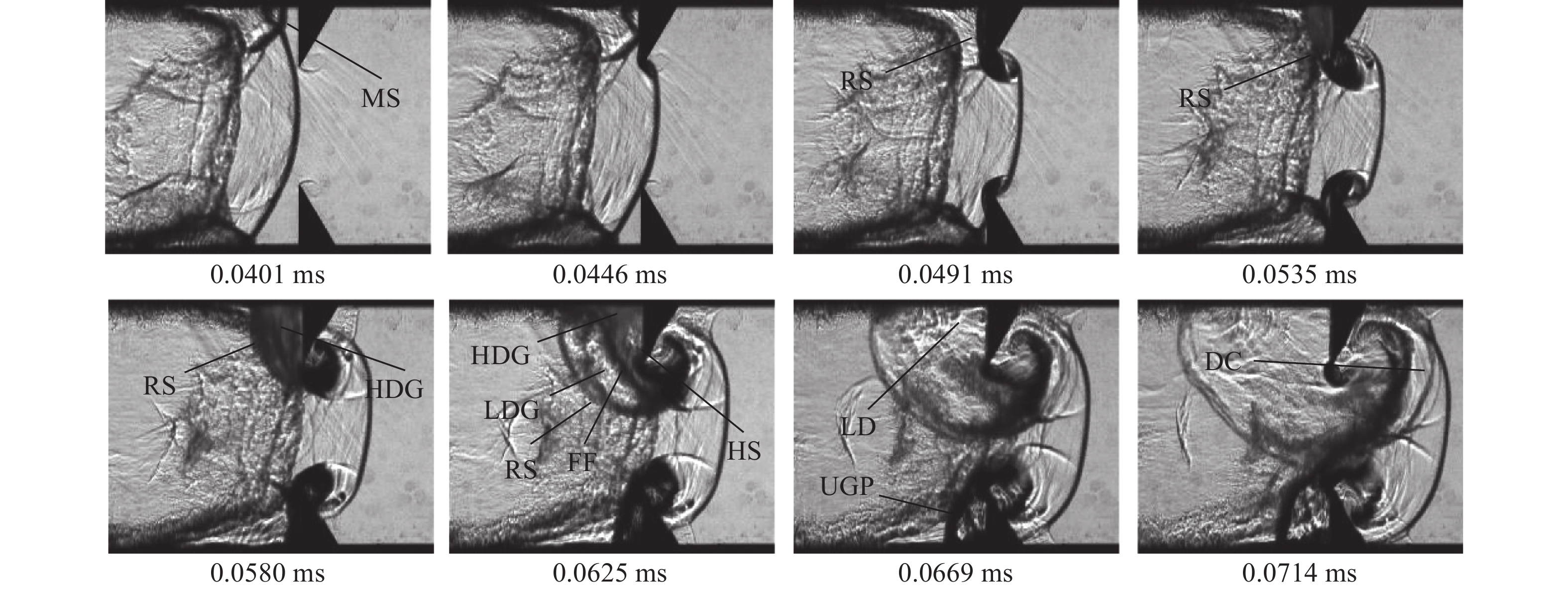
图 10 马赫杆反射诱导起爆纹影图像,$ \varphi =1.2 $,
224000 s−1Figure 10. Mach stem reflection induced detonation schlieren images,$ \varphi =1.2 $,
224000 s−1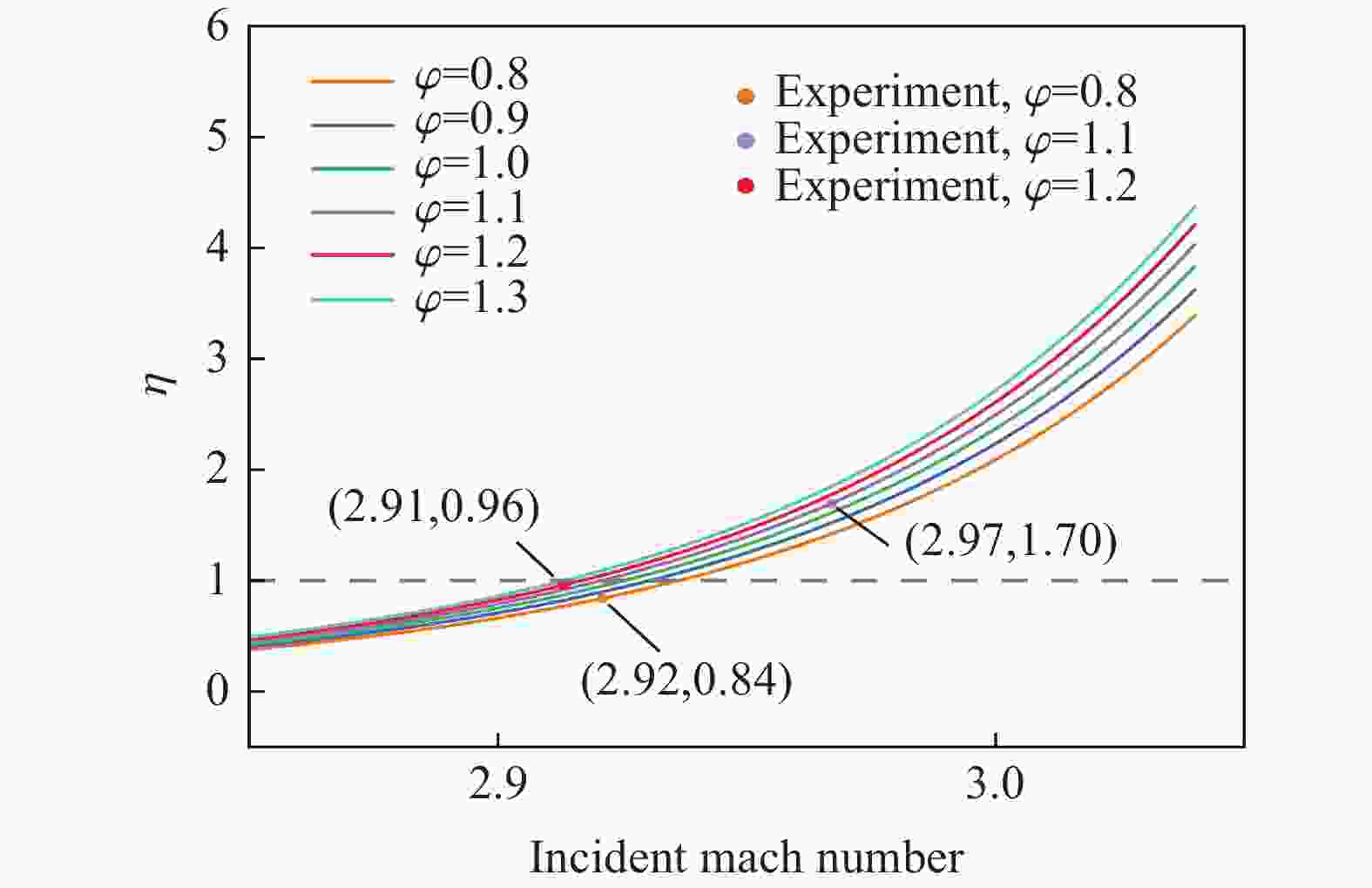
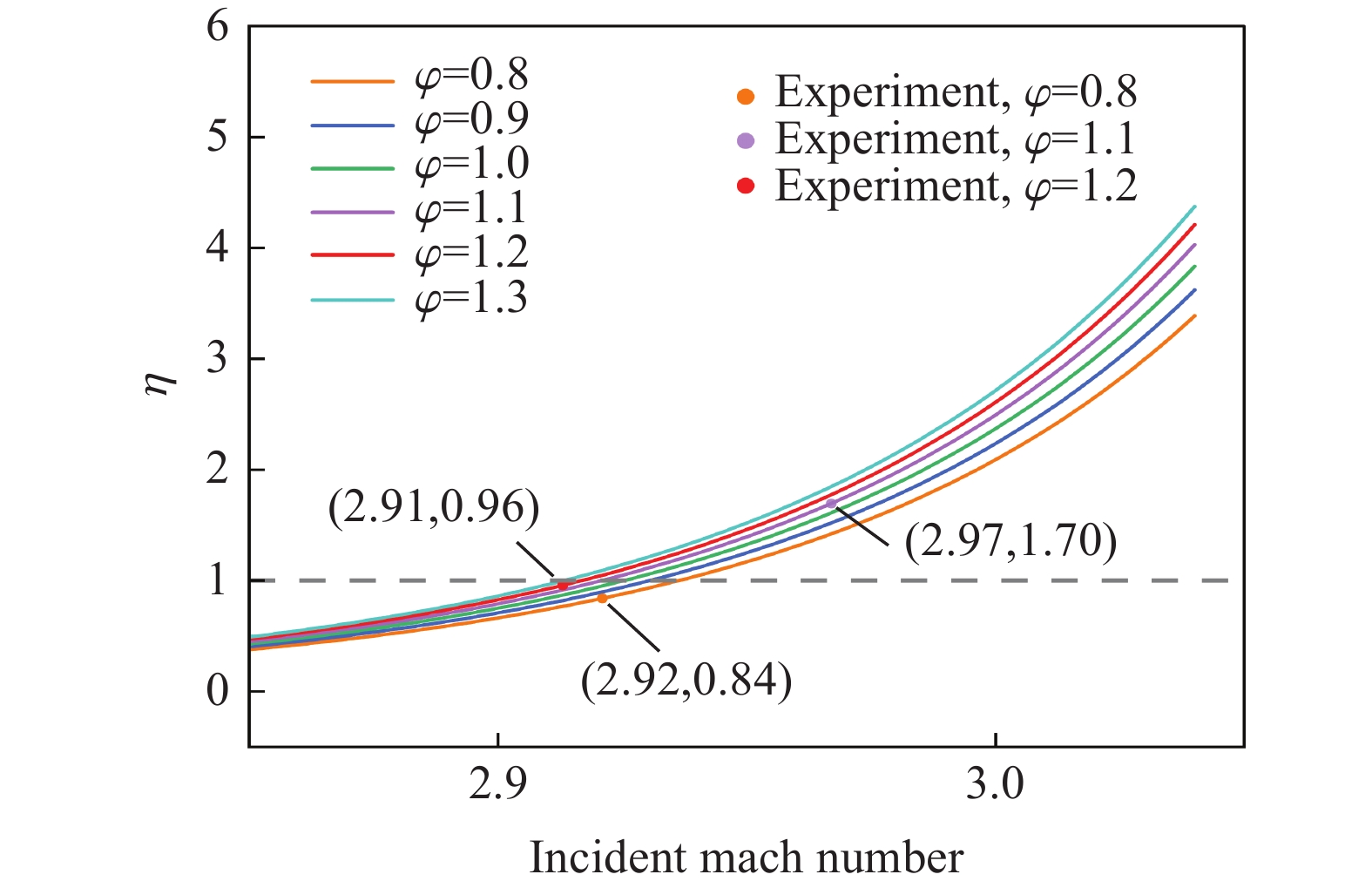
图 11 不同当量比下$ \eta $随入射激波马赫数的变化
Figure 11. Variation of$ \eta $with incident shock Mach number for different equivalence ratios
表 1 不同当量比下CJ爆轰速度与实验测量峰值速度对比
Table 1. Comparison between CJ detonation velocity and measured velocity at different equivalence ratios
当量比 CJ爆轰速度/(m·s−1) 实验测量峰值速度/(m·s−1) 相对误差 $ \varphi $ = 0.8 1859.9 1414.2 23.96% $ \varphi $ = 0.9 1918.8 1864.1 2.85% $ \varphi $ = 1.0 1965.4 1896.3 3.52% $ \varphi $ = 1.1 2000.4 2056.9 2.82% $ \varphi $ = 1.2 2027.0 2024.8 0.11% $ \varphi $ = 1.3 2048.1 1992.7 2.70%  下载: 导出CSV
表 2 临界起爆参数修正前后对比
Table 2. Comparison of the critical initiation parameter before and after correction
当量比 MaI MaMS hI/mm hMS/mm ar,I/(m·s−1) ar,MS/(m·s−1) τign/μs η ηseg 实验现象 $ \varphi $ = 0.8 2.36 2.92 8.94 6.06 683.77 794.45 22.45 0.84 0.92 未起爆 $ \varphi $ = 1.1 2.50 2.97 10.85 4.15 742.30 839.06 10.54 1.70 1.86 起爆 $ \varphi $ = 1.2 2.40 2.91 7.35 7.65 731.32 839.25 18.65 0.96 1.03 起爆 注:(1) MaI为前导激波马赫数,MaMS为马赫杆马赫数。
下载: 导出CSV
-
[1] LEE J H S. The detonation phenomenon [M]. Cambridge: Cambridge University Press, 2008. [2] ALLGOOD D, GLASER A, CALDWELL N, et al. Acoustic measurements of a pulse detonation engine [C]//Proceedings of the 10th AIAA/CEAS Aeroacoustics Conference. Manchester, United Kingdom, 2004. (AIAA Paper 2004-2879). DOI: 10.2514/6.2004-2879. [3] WOLANSKI P. Detonative propulsion [J]. Proceedings of the Combustion Institute, 2013, 34(1): 125–158. DOI: 10.1016/j.proci.2012.10.005. [4] ROY G D, FROLOV S M, BORISOV A A, et al. Pulse detonation propulsion: challenges, current status, and future perspective [J]. Progress in Energy and Combustion Science, 2004, 30(6): 545–672. DOI: 10.1016/j.pecs.2004.05.001. [5] FAN J M, LI M, XIAO H H. Effect of composition gradient on detonation initiation in fuel-rich hydrogen-air mixtures in an obstructed channel [J]. International Journal of Hydrogen Energy, 2024, 72: 976–990. DOI: 10.1016/j.ijhydene.2024.05.443. [6] DOROFEEV S B. Flame acceleration and explosion safety applications [J]. Proceedings of the Combustion Institute, 2011, 33(2): 2161–2175. DOI: 10.1016/j.proci.2010.09.008. [7] 李敏, 肖华华. 障碍物交错阵列内气体爆燃转爆轰研究 [J]. 爆炸与冲击, 2025, 45(11): 111001. DOI: 10.11883/bzycj-2024-0284.LI M, XIAO H H. Study on deflagration-to-detonation transition in a staggered array of obstacles [J]. Explosion And Shock Waves, 2025, 45(11): 111001. DOI: 10.11883/bzycj-2024-0284. [8] POLUDNENKO A Y, CHAMBERS J, AHMED K, et al. A unified mechanism for unconfined deflagration-to-detonation transition in terrestrial chemical systems and type Ia supernovae [J]. Science, 2019, 366(6465): eaau7365. DOI: 10.1126/science.aau7365. [9] ORAN E S. Understanding explosions – From catastrophic accidents to creation of the universe [J]. Proceedings of the Combustion Institute, 2015, 35(1): 1–35. DOI: 10.1016/j.proci.2014.08.019. [10] PINTGEN F, SHEPHERD J E. Detonation diffraction in gases [J]. Combustion and Flame, 2009, 156(3): 665–677. DOI: 10.1016/j.combustflame.2008.09.008. [11] 喻健良, 詹潇兵, 吕先舒, 等. 不同角度分叉管道内氢气-空气爆轰传播特性 [J]. 爆炸与冲击, 2022, 42(12): 125401. DOI: 10.11883/bzycj-2022-0100.YU J L, ZHAN X B, LYU X S, et al. Propagation characteristics of hydrogen-air detonation in bifurcated tubes with different angles [J]. Explosion and Shock Waves, 2022, 42(12): 125401. DOI: 10.11883/bzycj-2022-0100. [12] 鲍磊, 王鹏, 党茜, 等. 石化装置工业尺度管道爆轰传播实验研究 [J]. 爆炸与冲击, 2021, 41(9): 095401. DOI: 10.11883/bzycj-2020-0295.BAO L, WANG P, DANG Q, et al. Experimental study on detonation propagation in industrial scale pipelines used in petrochemical plants [J]. Explosion and Shock Waves, 2021, 41(9): 095401. DOI: 10.11883/bzycj-2020-0295. [13] LEE J H S. Initiation of gaseous detonation [J]. Annual Review of Physical Chemistry, 1977, 28: 75–104. DOI: 10.1146/annurev.pc.28.100177.000451. [14] BACH G G, KNYSTAUTAS R, LEE J H. Direct initiation of spherical detonations in gaseous explosives [C]//The Combustion Institute. Twelfth Symposium (International) on Combustion. Pittsburgh: The Combustion Institute, 1969: 853–864. DOI: 10.1016/S0082-0784(69)80466-2. [15] YOUSEFI-ASLI V, LAU-CHAPDELAINE S, CICCARELLI G. Novel weak detonation initiation from normal shock reflection in square cross-section shock tubes [J]. Combustion and Flame, 2024, 266: 113502. DOI: 10.1016/j.combustflame.2024.113502. [16] XIAO H H, ORAN E S. Shock focusing and detonation initiation at a flame front [J]. Combustion and Flame, 2019, 203: 397–406. DOI: 10.1016/j.combustflame.2019.02.012. [17] 董刚, 唐敖, 叶经方, 等. 激波聚焦诱导点火和爆轰的数值研究 [J]. 爆炸与冲击, 2005, 25(5): 437–444. DOI: 10.11883/1001-1455(2005)05-0437-08.DONG G, TANG A, YE J F, et al. Numerical studies on initiation and detonation induced by shock wave focusing [J]. Explosion and Shock Waves, 2005, 25(5): 437–444. DOI: 10.11883/1001-1455(2005)05-0437-08. [18] LIU Z R, LI X X, LI M, et al. Flame acceleration and DDT in a channel with fence-type obstacles: effect of obstacle shape and arrangement [J]. Proceedings of the Combustion Institute, 2023, 39(3): 2787–2796. DOI: 10.1016/j.proci.2022.08.046. [19] LI X X, DONG J Z, JIN K Q, et al. Flame acceleration and DDT in a channel with continuous triangular obstacles: effect of blockage ratio [J]. Combustion Science and Technology, 2024, 196(10): 1554–1574. DOI: 10.1080/00102202.2022.2120767. [20] STREHLOW R A, COHEN A. Initiation of detonation [J]. The Physics of Fluids, 1962, 5(1): 97–101. DOI: 10.1063/1.1706497. [21] VOEVODSKY V V, SOLOUKHIN R I. On the mechanism and explosion limits of hydrogen-oxygen chain self-ignition in shock waves [J]. Symposium (International) on Combustion, 1965, 10(1): 279–283. DOI: 10.1016/S0082-0784(65)80173-4. [22] CHAN C K. Collision of a shock wave with obstacles in a combustible mixture [J]. Combustion and Flame, 1995, 100(1-2): 341–348. DOI: 10.1016/0010-2180(94)00139-J. [23] THOMAS G O, WARD S M, WILLIAMS R Ll, et al. On critical conditions for detonation initiation by shock reflection from obstacles [J]. Shock Waves, 2002, 12: 111–119. DOI: 10.1007/s00193-002-0148-z. [24] 滕宏辉, 吕俊明, 姜宗林. 可燃气体中激波与障碍物作用在下游形成爆轰波的数值研究 [J]. 爆炸与冲击, 2007, 27(3): 251–258. DOI: 10.11883/1001-1455(2007)03-0251-08.TENG H H, LV J M, JIANG Z L. Downstream detonation initiation induced by interaction between shock wave and obstacle in combustible gas mixtures [J]. Explosion and Shock Waves, 2007, 27(3): 251–258. DOI: 10.11883/1001-1455(2007)03-0251-08. [25] CICCARELLI G, DE WITT B. Detonation initiation by shock reflection from an orifice plate [J]. Shock Waves, 2006, 15: 259–265. DOI: 10.1007/s00193-006-0026-1. [26] GAMEZO V N, OGAWA T, ORAN E S. Flame acceleration and DDT in channels with obstacles: Effect of obstacle spacing [J]. Combustion and Flame, 2008, 155(1-2): 302–315. DOI: 10.1016/j.combustflame.2008.06.004. [27] LI Q, KELLENBERGER M, CICCARELLI G. Geometric influence on the propagation of the quasi-detonations in a stoichiometric H2-O2 mixture [J]. Fuel, 2020, 269: 117396. DOI: 10.1016/j.fuel.2020.117396. [28] ZHOU L P, FAN J M, LI M, et al. Numerical study of the effect of stepped distribution of obstacle height on flame acceleration in a stoichiometric hydrogen-air mixture [J]. International Journal of Hydrogen Energy, 2025, 100: 736–748. DOI: 10.1016/j.ijhydene.2024.12.304. [29] CICCARELLI G, JOHANSEN C T, PARRAVANI M. The role of shock–flame interactions on flame acceleration in an obstacle laden channel [J]. Combustion and Flame, 2010, 157(11): 2125–2136. DOI: 10.1016/j.combustflame.2010.05.003. [30] JOHANSEN C T, CICCARELLI G. Visualization of the unburned gas flow field ahead of an accelerating flame in an obstructed square channel [J]. Combustion and Flame, 2009, 156(2): 405–416. DOI: 10.1016/j.combustflame.2008.07.010. [31] BYCHKOV V, VALIEV D, ERIKSSON L E. Physical mechanism of ultrafast flame acceleration [J]. Physical Review Letters, 2008, 101(16): 164501. DOI: 10.1103/PhysRevLett.101.164501. [32] XIAO H H, LI X X. Experimental and numerical study of flame acceleration and DDT in a channel with continuous obstacles [J]. Combustion Theory and Modelling, 2023, 27(4): 459–486. DOI: 10.1080/13647830.2023.2171905. [33] SHI X F, ZHU Y J, YANG J M, et al. Mach stem deformation in pseudo-steady shock wave reflections [J]. Journal of Fluid Mechanics, 2019, 861: 407–421. DOI: 10.1017/jfm.2018.920. [34] PERALDI O, KNYSTAUTAS R, LEE J H. Criteria for transition to detonation in tubes[C]//Symposium (International) on Combustion, 1988, 21(1): 1629–1637. DOI: 10.1016/S0082-0784(88)80396-5. [35] KNYSTAUTAS R, LEE J H S, PERALDI O, et al. Transmission of a flame from a rough to a smooth-walled tube [C]// BOWEN J R, LEYER J-C, SOLOUKHIN R I. Dynamics of Explosions. New York, NY, USA: American Institute of Aeronautics and Astronautics, 1986: 37–52. DOI: 10.2514/5.9781600865800.0037.0052. [36] GORDON S, MCBRIDE B J. Computer program for calculation of complex chemical equilibrium compositions and applications. Part 1: Analysis: NASA-RP-1311[R/OL]. Cleveland, OH, USA: National Aeronautics and Space Administration, 1994. [2026-02-23]. https://ntrs.nasa.gov/api/citations/19950013764/downloads/19950013764.pdf. [37] LEE J H. On the critical diameter problem [C]// BOWEN J R (ed). Dynamics of exothermicity: in honor of Antoni Kazimierz Oppenheim. (Combustion science and technology book series, v. 2). Amsterdam: Gordon and Breach, 1996: 321–336. [38] Ó CONAIRE M, CURRAN H J, SIMMIE J M, et al. A comprehensive modeling study of hydrogen oxidation [J]. International Journal of Chemical Kinetics, 2004, 36(11): 603–622. DOI: 10.1002/kin.20036. [39] GOODWIN D G, MOFFAT H K, SCHOEGL I, et al. Cantera: An object-oriented software toolkit for chemical kinetics, thermodynamics, and transport processes[CP/OL]. Version 3.1. 0, (2024-12-14)[2025-07-02]. https://www.cantera.org. DOI: 10.5281/zenodo.14455267. [40] EDL. SDToolbox: Numerical Tools for Shock and Detonation Wave Modeling[R/OL]. Pasadena, CA: California Institute of Technology, 2023[2025-07-02]. http://shepherd.caltech.edu/EDL/PublicResources/sdt/. (GALCIT Report FM2018.001). -

计量
- 文章访问数: 600
- HTML全文浏览量: 71
- PDF下载量: 74
- 被引次数: 0